







Jonte Richardson: How Bafta broadcast edits, a Tourette-linked slur and cut acceptance speeches are hitting winners and viewers

jonte richardson searches will turn up coverage of an awards night that has become a flashpoint: a racial slur uttered during involuntary tics, a broadcaster apology and the removal of a politically charged line from a winner’s speech. That combination is reshaping conversations about live editing, disability, editorial judgement and how awards bodies handle sensitive moments — and it’s the people on stage and in the audience who feel the immediate impact.
Immediate impact on winners, presenters and audiences — Jonte Richardson lens
Here's the part that matters: winners and presenters were directly affected by two parallel editing controversies. The casting director Lauren Evans — Camarthenshire-born and in "complete shock" after winning a best casting award for her work on the film I Swear — said the evening had been "overshadowed" by a racist slur made during the broadcast. The lead actor Robert Aramayo, who won Best Actor for his role in I Swear, also appears in the mix of reaction and scrutiny. Evans said her goal was to prompt discussion and raise awareness about Tourette syndrome, but the broadcast incident diverted attention from that purpose.
What’s easy to miss is the overlap between disability, editorial choices and public reaction: the event spotlighted how involuntary medical tics can intersect with live television’s unforgiving schedule.
What happened on stage and in the edit room
At the Royal Festival Hall in London, the Tourette syndrome campaigner John Davidson shouted a racial slur during involuntary tics while two Black actors — Michael B Jordan and Delroy Lindo — were presenting an award for special visual effects. The broadcaster later apologised for not editing that incident from the recorded telecast. Its chief content officer, Kate Phillips, told staff that another racial slur had been removed from the coverage and expressed regret for the distress caused.
The broadcaster removed the original recording from its website around midday on Monday as backlash mounted. The broadcaster also said its producers had not heard the N-word while editing the show for transmission two hours after the live event; one account said staff were "working from a truck" during that editing window. When it became audible on the broadcaster’s online catch-up service, the chief content officer asked for it to be taken down.
Edited acceptance speech: My Father’s Shadow and the missing line
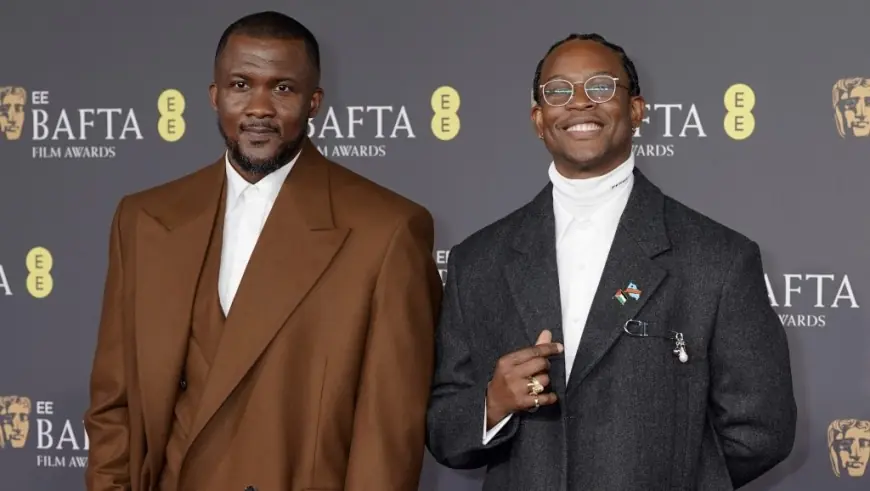
Separately, the filmmakers Wale Davies and Akinola Davies Jr. won the film award for Outstanding Debut for a British Writer, Director or Producer for My Father’s Shadow. Akinola Davies Jr. ’s closing remarks included a sequence of dedications — to migrants, to those under occupation, persecution and genocide, and a final line naming "free Palestine. " That section was removed from the broadcast; the edit instead showed Davies Jr. thanking his family and his brother Wale.
The broadcaster explained the live event ran three hours and had to be cut to fit a two-hour on-air slot, saying other speeches were similarly shortened to deliver the programme to time. The broadcaster also said all winners’ speeches would be available to watch Bafta’s channel online. A trade outlet noted the broadcaster had prepared for politically charged speeches after a prior incident at a major festival where a performer chanted a controversial slogan.
Reactions, apologies and the review under way
Bafta executives told members a comprehensive review is under way; their letter said they recognise the impact, want to address what happened and apologise to those affected. Sara Putt, chair of Bafta, and Jane Millichip, the chief executive, quoted parts of Bafta’s statement that took responsibility for putting guests in a difficult situation and apologised unreservedly to Delroy Lindo and Michael B Jordan.
At an afterparty, Delroy Lindo said he had wished someone from Bafta spoke to presenters afterward. John Davidson said he was "deeply mortified if anyone considers my involuntary tics to be intentional or to carry any meaning. " Putt was among presenters and winners on stage at moments when Davidson shouted verbal tics; others included the host Alan Cumming and filmmakers behind the family film winner Boong.
Public figures voiced criticism in days after the ceremony: a Conservative party leader called the broadcaster’s failure a "horrible mistake, " and a Labour MP accused it of an "obvious bias" and a "failure of duty of care, " calling the broadcast "painful and unforgivable"; the context of one of her comments is unclear in the provided context.
Warner Bros, the studio behind Sinners, flagged concern with Bafta during the ceremony and said it had been assured the request to remove the audible slur would be passed on to the broadcaster.
- Key factual timeline (compressed): the ceremony took place on Sunday; the broadcaster removed the original recording from its website around midday on Monday; further statements and internal notes to staff followed on Tuesday.
The real question now is how the review will change live-editing protocols and care for guests with medical conditions during awards shows. The review and apologies are the immediate response; policy changes or technical fixes are potential next steps but remain to be confirmed.
What to take away: winners and presenters had their moments reframed by editorial choices; disability advocacy and live-broadcast processes collided in public view; Bafta has launched a review and the broadcaster has apologised and removed the original recording while acknowledging mistakes.
jonte richardson searches may surface this episode as part of wider interest in how awards coverage handles sensitive speech and editing decisions.