





















Babar Azam — babar azam fighting to stay relevant in format that favours big hitting

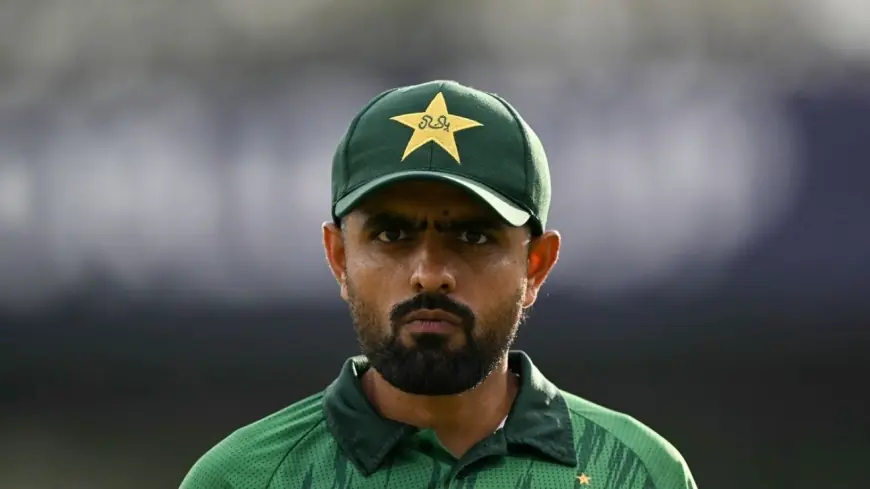
babar azam will not regain his place at the top of the Pakistan batting order, coach Mike Hesson appeared to confirm ahead of Pakistan's Super Eights game against New Zealand. Hesson described him as "a fine player through the middle if required" and highlighted concerns about his powerplay approach and strike rate in major tournaments.
Coach Mike Hesson's assessment
Hesson said Babar Azam "will not regain his place at the top of the Pakistan batting order, " and indicated that the decision was already reflected in team selection ahead of the Super Eights meeting with New Zealand. He criticised Babar's approach in the powerplay, saying: "Babar's well aware that his strike rate in the powerplay is less than 100 in T20 World Cups. That's not a role we think we need here. We think he's a fine player through the middle if required. If we're in a little bit of trouble, or as we saw against the USA, once he gets himself set, he can increase his strike rate at that point. "
Powerplay strike rate concerns
The numbers Hesson cited are stark: across the four T20 World Cups Babar has played, he has faced 217 deliveries in the powerplay and scored 187 runs, equating to a strike rate of 86. 17. That record makes him the only player in T20 World Cup history to have faced 200 balls in the powerplay and ended up with a strike rate below 90. Mohammad Rizwan, Babar's long-time opening partner, sits third on that list with a strike rate of 98. 17.
Role at No. 4 and Asia Cup
Babar's dip in T20 form first cost him a place in the side altogether. After his recall following the Asia Cup, he has moved down the order and No. 4 has become his modal position. He batted at No. 4 during Pakistan's bilateral T20I series against Australia and has continued in that role for the first three games of this World Cup. At No. 4 his returns have been serviceable rather than explosive, with a strike rate of just over 120.
T20 World Cups numbers and match sequence
There are signs that the window in which Babar is useful to Pakistan's T20I side is shrinking. Against Namibia, Pakistan's second wicket did not fall until the 13th over; Khawaja Nafay and then Shadab Khan were sent out, and that sequence meant it was the first time in Babar's T20I career that he did not come out to bat. Hesson explained that there were others in the team able to perform the finishing role "more efficiently. " He added: "It's what the team requires [Babar batting lower down the order]. Babar's well aware of that. We brought Babar back in for a specific role post the Asia Cup. We wanted some batsmanship through the middle, and he certainly brings that for us. And he did many games through the last ten. The other day we got to the 12th over mark and from that point, Babar's not the best person to come in. "
New Zealand challenge and left-arm spin
New Zealand, whom Pakistan face in the first Super Eights game, present particular challenges in the middle overs when Mitchell Santner and Rachin Ravindra find room to operate. Despite perceptions of Babar's struggle against left-arm spin, neither Santner nor Ravindra has ever dismissed him: Santner has gone wicketless in nine innings against him, and Ravindra wicketless in two T20I meetings with Babar. Even so, Babar has not been free-scoring against them; he made 61 in 56 balls against the New Zealand captain, and against Ravindra he managed 11 in 12 balls.
Broadcast commentary and framing
Urooj Mumtaz looks ahead to Pakistan's match against India in Colombo (1: 34) in a related preview element, and commentary on Babar's innings has featured voices such as Ian Bishop and Urooj Mumtaz. The coverage has posed questions about what Babar's role should now be as the format increasingly favours big hitting and finishing power.
Closing: Mike Hesson's comments have formalised a shift for Babar Azam from the top of the order to a defined middle-order role, driven by powerplay strike-rate figures and recent match sequences that have limited his opportunities at the crease.