















Mexico reels after El Mencho’s death as troops rush to Jalisco and violence spreads

mexico mobilised thousands of soldiers after a wave of violence erupted following the death of Nemesio Ruben Oseguera Cervantes, known as "El Mencho, " touching off attacks, roadblocks and widespread travel disruption at the weekend.
Mexico: Military reinforcements and casualties
Defence Secretary Ricardo Trevilla said an extra 2, 500 soldiers were sent to western Mexico on Monday, bringing the total number deployed since Sunday to about 9, 500 troops. The deployment followed unrest that the government says has affected at least 20 states.
The country’s security minister said at least 25 members of the National Guard have died in Jalisco state since the violence began. The defence ministry said three members of the Mexican military were injured and that at least six of El Mencho’s security guards were killed during the operation to capture him.
Security Secretary Omar Garcia Harfuch said a prison guard, a member of the state prosecutor’s office, and 30 members of El Mencho’s criminal organisation had been killed in the unrest since the drug lord’s death. Federal police were pictured guarding the security secretary’s building as officials worked to restore order.
How El Mencho was captured and killed
Nemesio Ruben Oseguera Cervantes, the leader of the Jalisco New Generation Cartel and widely known as "El Mencho, " was shot during an attempt to capture him in Tapalpa in Jalisco state. Trevilla said forces tracked down a romantic partner he was meeting, and the drug lord was seriously injured in a firefight between his bodyguards and the military commandos deployed to capture him.
He died while military personnel were transporting him from Tapalpa to Mexico City. The Jalisco New Generation Cartel is described as one of the country’s most feared criminal organisations and its leader had been the country’s most wanted man.
Attacks on towns, roads and businesses
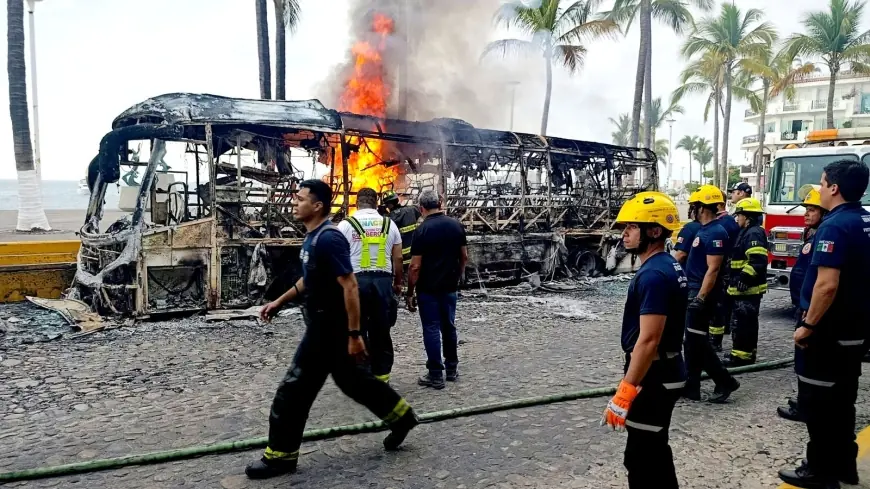
As news of El Mencho’s death spread, members of his cartel launched coordinated attacks in many towns and cities where the CJNG is active. In Jalisco, images showed the charred wreckage of a bus that appeared to have been set on fire, and smoke billowed from burning buses in Puerto Vallarta on Sunday.
In some towns, gunmen blocked roads by throwing spikes and nails onto the tarmac; in others they commandeered buses and other vehicles and then torched them in the middle of roads. Authorities cleared those road blocks by Monday morning, but dozens of banks and local businesses had already been damaged after being set alight. Videos posted online showed gunmen patrolling streets and smoke rising over cities.
Travel disruption, warnings and flights
Governments and airlines moved to protect citizens and restore services. The US government advised Americans in Jalisco to shelter indoors until further notice, and the US State Department opened a 24/7 crisis hotline and urged Americans to shelter in parts of the country including Cancun, Cozumel and Puerto Vallarta. The UK Foreign Office warned Britons in affected areas to stay indoors and avoid unnecessary travel.
Canada cancelled flights to the Puerto Vallarta airport, and flight-tracking services showed many aeroplanes returning to their departure airports. Mexico’s president said flights from Puerto Vallarta were expected to resume either today or tomorrow. An airline announced flights to and from Guadalajara, Puerto Vallarta, Manzanillo and Tepic would gradually resume from today, and another carrier said it would operate flights to Mexico from Frankfurt and Munich today.
What this means for the World Cup and the CJNG's reach
Officials and analysts warned the unrest could complicate large events this year: Guadalajara, the capital of Jalisco and home to more than a million people, is scheduled to host four matches at this summer’s Fifa World Cup; Mexico City is scheduled to host five matches and Monterrey four.
Javier Eskauriatza, assistant professor of criminal law at the University of Nottingham, said, "When you push down on the cartels you do get pushback — the danger is that it can be very difficult to manage a security situation that spirals out of control. " He added that cartels have an economic interest in keeping major events peaceful because they own hotels and restaurants and pay off local officials.
The CJNG is estimated to be worth more than £10bn and to have tens of thousands of members. The organisation has been responsible for a string of massacres, kidnappings and the killings of politicians since its formation in 2009, though some cartel figures retain local popularity by financing infrastructure and services. A cartel member described elements of the violence as "revenge" for their leader’s death, and analysts noted the group’s responses are often designed to look national and to be amplified on social media.
Pictures on newsstands in Mexico City showed the story dominating the morning’s editions, and the priority remains restoring security. The next confirmed developments are the gradual resumption of flights at affected airports and ongoing recovery and security operations led by the armed forces and federal police.