
























Lirr and the Blizzard Aftermath: Northeast U.S. Digs Out from a Historic Bomb Cyclone That Disrupted Flights and Canceled School

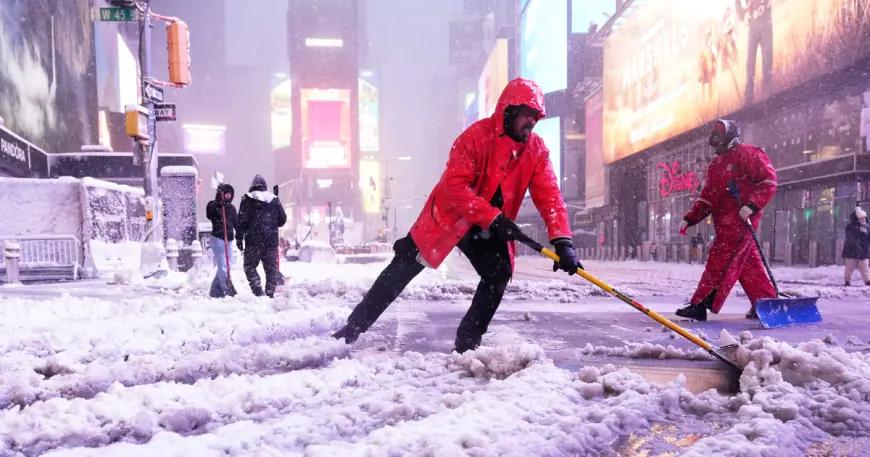
The northeastern United States is digging out after a brutal, in some areas record-breaking blizzard that brought record snowfall to the East Coast; lirr is mentioned here as a search keyword but its status is unclear in the provided context. Neighbors, government workers and a powerful railroad snow‑clearing machine nicknamed "Darth Vader" scrambled to clear snow after the storm dumped more than 2 feet in parts and triggered thousands of flight cancellations and widespread disruption.
Lirr: Status Unclear in the Provided Context
lirr: unclear in the provided context. No factual details about the entity identified by that keyword appear in the provided information, so its operational status, schedule impacts or role in the storm response are not described here.
Storm Overview and Immediate Impact
Meteorologists called Monday's event the strongest storm in a decade and described it as a classic bomb cyclone/nor'easter off the Northeast coast. The blizzard blanketed large portions of the region, with at least 20 locations meeting official blizzard criteria and 39 locations reporting more than 30 inches of snow. In many hard-hit areas the storm dumped more than 2 feet of snow.
Transportation Disruptions and Flight Cancellations
The storm resulted in widespread travel chaos, with more than 2, 000 flights in and out of the United States canceled on Tuesday. Most cancellations involved airports in New York, New Jersey and Boston. By Tuesday roads were beginning to reopen and mass transportation was coming back online in some cities, but recovery was uneven across the region.
Power Losses, Emergency Response and Cleanup
Hundreds of thousands lost power across multiple states; by Tuesday power had been restored for some of those customers in Massachusetts, New Jersey, Delaware and Rhode Island. Government workers, neighbors and heavy equipment—including the railroad snow‑clearing machine nicknamed "Darth Vader"—worked to clear streets, sidewalks and tracks. The scale of cleanup remains large, and officials emphasized the difficulty of removing huge drifts and piles that still block access in many neighborhoods.
Schools, Local Officials and Public Reaction
Schools were disrupted across the region. New York City canceled classes on Monday, and Mayor Zohran Mamdani announced that schools would reopen for in-person learning on Tuesday, a decision that prompted questions about feasibility with sidewalks still piled high with snow. Staten Island Borough President Vito Fossella said schools should remain closed, while Michael Mulgrew, president of the United Federation of Teachers, described the situation as a big mess. Spokespersons for Mamdani did not respond to an email seeking comment, but the schools chief, Chancellor Kamar Samuels, said in a post on social media that they were confident in the decision to reopen. Philadelphia switched to online learning Monday and Tuesday, and districts on Long Island and elsewhere in the New York suburbs canceled school again on Tuesday.
What Forecasters Are Watching Next
The National Weather Service is tracking another storm that could bring more snow to the region later in the week. Forecasters said the areas hardest hit by the blizzard will likely see only light amounts from the next system—dustings up to 3 inches are possible—but even a few additional inches on top of the already heavy accumulations could complicate cleanup efforts. Frank Pereira, a meteorologist for the National Weather Service in College Park, Maryland, said any additional snow at this point is probably not going to be welcome.
Forecast models in the provided context indicate a clipper system moving from the upper Midwest into the Northeast over the next 24 hours, bringing several inches of snow to the Upper Peninsula of Michigan, the Tug Hill Plateau and parts of the Appalachians. Another system expected on Thursday could bring rain to the Southeast and Mid‑Atlantic and a mixture of rain and snow to the Northeast; that Thursday system was not expected to produce additional snowfall accumulation.
The storm's characterization as a bomb cyclone was explained in the provided information as a rapid drop in storm pressure within 24 hours, a phenomenon that can occur when frigid Arctic air collides with warmer air masses in fall and winter.
Recovery will continue as communities clear roads, restore power and reassess school and transit plans in the days ahead. Several operational details referenced by local agencies are unclear in the provided context and may evolve as cleanup continues.