

























New York Snow and north-east blizzard shut down travel as records fall

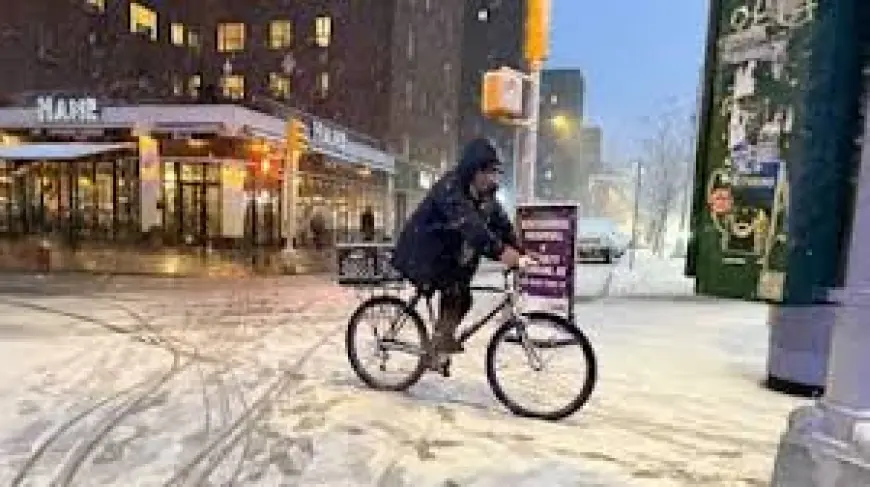
new york snow from a major nor'easter on Monday shut down flights, prompted travel bans and left hundreds of thousands without power as communities across the US north-east dug out. The storm's record accumulations and high winds forced mass cancellations, local executive orders and widespread service disruptions at the worst of the event.
New York Snow grounds thousands of flights and alters transit
More than 5, 000 flights were cancelled across the region and another account placed the number at almost 6, 000, with the bulk of cancellations concentrated in New York, New Jersey and Boston. At Rhode Island’s TF Green international airport close to 38 inches of snow had fallen by 7pm local time and all scheduled departing and arriving flights were cancelled through the day. Public transit was suspended in some areas, though services in New York continued to run with delays and service changes.
Rhode Island and Massachusetts post historic totals, Central Park and Providence hit hard
Parts of Rhode Island and Massachusetts recorded nearly 37 inches (94 cm) of snowfall, and New York City's Central Park measured more than 19 inches. Providence, the capital of Rhode Island, received 36 inches (91 cm), surpassing the single-storm record of 28. 6 inches (72. 6 cm) set in February 1978. The National Weather Service noted snow accumulations of 1–2 feet (30–61 cm) were expected near the north-east coastline and that snowfall totals reached at least 2 feet in 21 cities and towns across New Jersey, New York, Rhode Island and Massachusetts.
Rhode Island declared worst-ever storm; forecasters and meteorologists note the scale
Rhode Island, the nation's smallest state, appeared to receive the most snow and the event was described as the worst snowstorm to ever hit the state. An NWS meteorologist in Boston, Candice Hrencecin, said, "It completely smashed it, " adding that forecasters were as shocked as everyone else. Forecasters warned the storm would move away from New England on Monday evening and that snowfall rates were likely to fall below an inch per hour after sunset, though strong winds were expected to persist along coastal areas.
State and local travel bans, executive orders and emergency alerts
Bans on non-essential travel were imposed in Rhode Island and in neighbouring Connecticut. Massachusetts Governor Maura Healey later issued a travel ban, and also signed an executive order implementing a ban on non-essential vehicles in Bristol, Plymouth and Barnstable counties. Healey called the storm "a doozy" and "serious and severe, " saying that "the snow is still coming down pretty hard" and warning that wind gusts had reached hurricane-force levels in some places, at up to 80 mph, reducing visibility to near zero. She asked neighbouring states such as Vermont and New York for additional resources to support clearing efforts.
City alerts, lifted bans and continuing dangers on the roads
Cellphones across New York City received wailing push alerts on Sunday night announcing a ban on non-emergency travel on all streets through noon on Monday because of "dangerous blizzard conditions. " At noon the city's travel ban was lifted by the mayor, who urged drivers to "exercise caution, travel slowly, and be mindful of others on the road. " New Jersey's travel ban was lifted early on Monday afternoon while Rhode Island planned to keep its ban in effect as heavy snow continued into Monday evening. Officials warned that lingering snowfall combined with strong winds would continue to produce blizzard conditions and blowing snow, and that sharply reduced visibility would make travel treacherous into early Tuesday.
Power outages, white-out conditions and personal disruption
More than 600, 000 properties on the US east coast experienced power outages as strong winds and heavy snow battered communities. Millions of people were effectively stuck at home during the height of the storm. White-out and blizzard conditions created near-zero visibility in places; a white-out is when snow significantly reduces visibility. Wind gusts of more than 30 mph (48 km/h) were reported in some areas, compounding drifting and hazardous travel.
Boston resident and avid walker Bradley Jay described the personal impact, saying the storm made him feel like a "prisoner" and that, "I won't be able to really walk around town for another ten days. So I'm stuck inside. "
Regional scope: warnings from the mid-Atlantic to eastern Canada
Weather warnings extended from North Carolina to northern Maine, with some warnings in place further north in parts of eastern Canada. Blizzard warnings reached from Maryland to Maine and were estimated to affect roughly 40 million people. The nor'easter moved away from the US and across coastal parts of eastern Canada, but forecasters cautioned that strong winds and lingering blizzard conditions would persist along the Northeastern Seaboard even after snowfall rates eased.