






















Ibm Stock Plunges 13% as AI 'Scare Trade' Sparks Broad Market Sell-Off

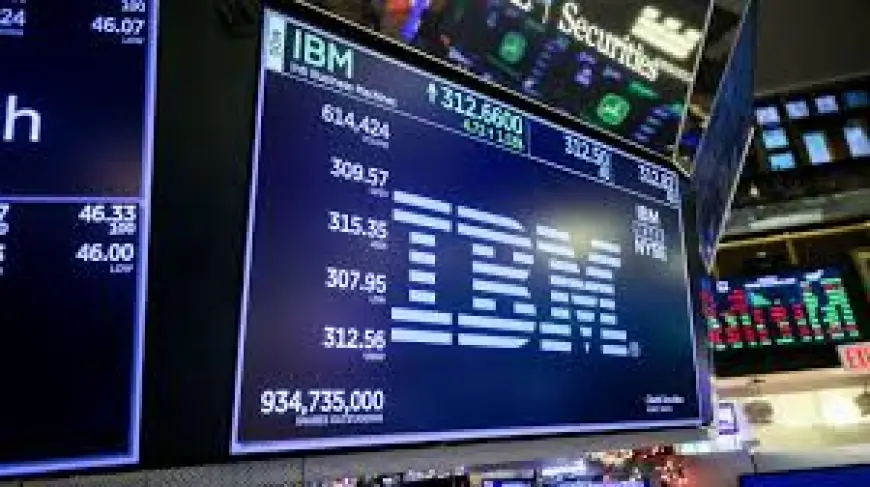
The latest market upheaval sent ibm stock down sharply, with shares closing 13% lower in the biggest one-day decline since 2000. Traders and investors reacted after a sequence of developments over the weekend and Monday that reawakened fears about AI-driven disruption across delivery, payments and software industries.
Ibm Stock reaction and the market swing
ibm stock suffered its steepest single-session fall in 25 years as selling spread through multiple sectors. The downshift coincided with a bearish scenario note released on social media over the weekend and follow-up commentary early in the week that highlighted potential AI-driven disruption to established business models.
What the weekend scenario outlined and who produced it
A little-known firm, Citrini Research, published a bearish, hypothetical scenario set in June 2028 that sketched a future of AI-driven upheaval. The scenario described mass unemployment among white-collar workers, weakening consumer spending, software-backed loan defaults and broader economic contraction. The note was framed as a thought exercise rather than a prediction, with a preface saying the sole intent was modeling an underexplored scenario and that readers should use it to prepare for potential left-tail risks as AI alters the economy.
Anthropic's blog post and the COBOL angle
Shortly after the scenario circulated, AI startup Anthropic posted that its Claude Code tool can help modernize COBOL, a legacy programming language still largely running on IBM machines. That claim fed fears that AI tools could directly displace legacy workloads tied to specific hardware and enterprise stacks, intensifying pressure on companies perceived as exposed.
Wider market casualties: delivery, payments and software names
The sell-off hit a swath of businesses named in the weekend scenario and subsequent commentary. DoorDash, American Express, KKR and Blackstone each slumped by at least 6%. Other companies referenced saw drops of 4% or more, including Uber, Mastercard, Visa, Capital One and Apollo. The scenario had called out food-delivery services and credit-card companies among segments vulnerable to AI-driven shifts.
Voices amplifying the scare: Citrini, Andy Fang and Nassim Taleb
Citrini Research, founded by James van Geelen, explicitly cautioned that some of the scenarios it presented would not materialize and reminded investors they still have time to reassess portfolio exposures that may rest on fragile assumptions. The report also described an outcome where delivery apps such as DoorDash and Uber Eats are displaced by so-called "vibe-coded" alternatives.
In response to the scenario, DoorDash co-founder Andy Fang wrote in a social post that he believes agentic commerce will be transformative and that the ground is shifting, warning the industry will need to adapt. Separately, Nassim Taleb urged investors to brace for escalating volatility and even bankruptcies in the software sector as the current AI rally enters a fragile phase, a warning that helped widen the sell-off.
Preface language and investor framing
The weekend note included explicit framing language: it presented a modeling exercise meant to surface underexplored risks and emphasized that what followed was a scenario, not a prediction. The note also encouraged readers to consider how much of their portfolios rely on assumptions that may not survive the decade.
Access note: verification prompt and subscription message
Readers encountering the market coverage were met with an access verification message instructing them to click a box to confirm they are not a robot. The message advised ensuring browsers support JavaScript and cookies and are not blocking those functions. It directed users with inquiries to contact a support team and to include a provided reference ID, and it noted that a subscription is required to receive the most important global markets news at the publisher's service.
Recent updates indicate this story unfolded across a weekend scenario release followed by early-week commentary and a company blog post; details may continue to evolve as markets absorb the implications for enterprise software and legacy systems.