


















Bill Self and the Fog of March: Why Darryn Peterson’s Availability Is Kansas’ Biggest Uncertainty

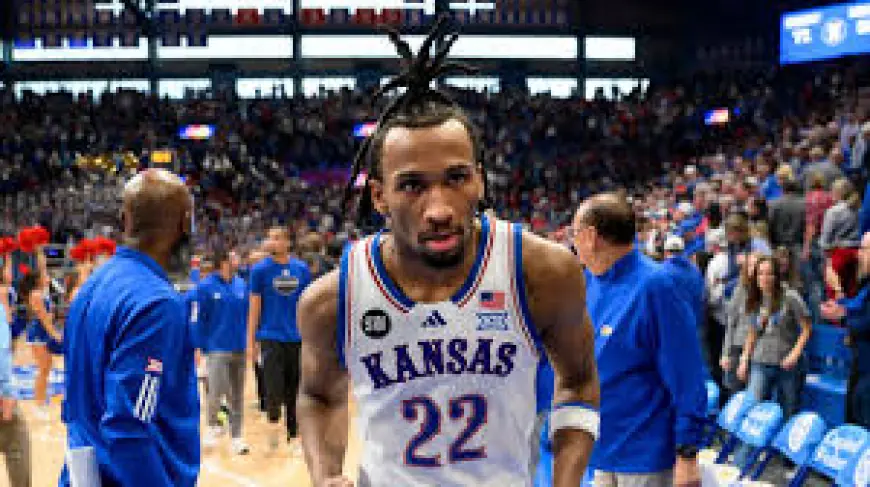
Why this matters now: with March approaching, bill self is contending with uncertainty that can reshape the Jayhawks’ path in the tournament. Darryn Peterson has frequently been out of Kansas’ lineup this season; he is a 19‑year‑old projected to be a top‑three NBA draft pick and is rumored to be earning millions through NIL and revenue‑sharing arrangements. That mix of injury, outsized professional upside and outside money makes availability a live, high‑stakes question.
Bill Self and the central uncertainty: roster choices under competing incentives
Risk and ambiguity are at the heart of the current Kansas story. The central tension is not just that Peterson has missed time, but that his intermittent availability forces immediate competitive tradeoffs against longer‑term professional calculus. The team that enters March must balance short‑term tournament urgency with the reality that one player’s health and valuation are linked to a projected franchise future.
Here’s the part that matters: Peterson’s hesitancy on court has been read as more than injury management; for many observers it has become a referendum on toughness and commitment. That interpretation adds pressure to every lineup decision around him, because availability now influences perception as much as outcome.
Event details and the larger pattern around Darryn Peterson
Darryn Peterson has frequently been out of Kansas’ lineup this season and does not look right on the court when present. He is a 19‑year‑old who has been a favorite of draft analysts for more than a year and projects to be a top‑three NBA draft pick. Projection language about his pro upside is explicit: he projects to be a franchise cornerstone, a pure‑shooting bucket‑getter with the potential to average 25 points per game. At the same time, he is rumored to be earning millions through NIL and revenue‑sharing arrangements, which compounds the calculus around playing through pain.
- Availability pattern: frequently out of the lineup this season; visibly hampered when playing.
- Professional stake: projected top‑three pick; potential to be a franchise cornerstone with high scoring upside.
- Financial context: rumored NIL and revenue‑sharing earnings that shift incentives toward long‑term career health.
The debate is not whether the kid is inventing injuries—a line that observers have already rejected—but how to interpret cautious play in a world where college basketball is increasingly a holding pattern for elite prospects. The dynamic sits at the intersection of medical management, individual career calculus and the tournament’s competitive intensity.
It’s easy to overlook, but the skepticism about Peterson’s on‑court body language and availability changes how opposing teams prepare, how rotations are set, and how narrative momentum forms heading into March.
Key takeaways:
- Availability affects seeding and rotation choices: an intermittently present top scorer forces conservative lineup planning.
- Perception matters: cautious play is being interpreted as calculation, which alters public and internal pressure on the roster.
- Economic incentives change the timeline: rumored NIL earnings and a clear path to a high‑value pro career shift the balance between this season’s stakes and future reward.
- Measuring confirmation: sustained on‑court performance through multiple high‑pressure games, or a clear medical update, would reduce uncertainty; continued absences would increase it.
The real question now is how Kansas — and the people making availability decisions — prioritize a single tournament run against a prospect’s long‑term career. The sport has lived with that tension since the NBA instituted a 19‑year‑old age limit in 2005 and created the one‑and‑done era; in Peterson’s case the tension feels particularly acute because the professional upside and present fragility are so visible.
Micro timeline (contextual):
- 2005 — NBA instituted the 19‑year‑old age limit, starting the one‑and‑done era.
- More than 20 years — the arrangement between college urgency and pro preparation has persisted.
- Current season — Peterson has frequently missed games and remains a focal point of preseason and March discussion.
What’s easy to miss is how much this is less about a single player’s pain tolerance and more about the structural incentives now embedded in top‑level college basketball. The outcome this March will say as much about roster management and institutional priorities as it does about any single performance.
Readers will be watching availability reports and game‑by‑game minutes as immediate signals. If Peterson appears in a series of high‑leverage games and looks like his pre‑college self, the uncertainty will recede. If absences continue, the season and narrative will be reframed around durability and decision‑making under competing incentives.