




















Jack Hughes Teeth Turned Bloody Resilience into an Olympic Gold Moment for Team USA

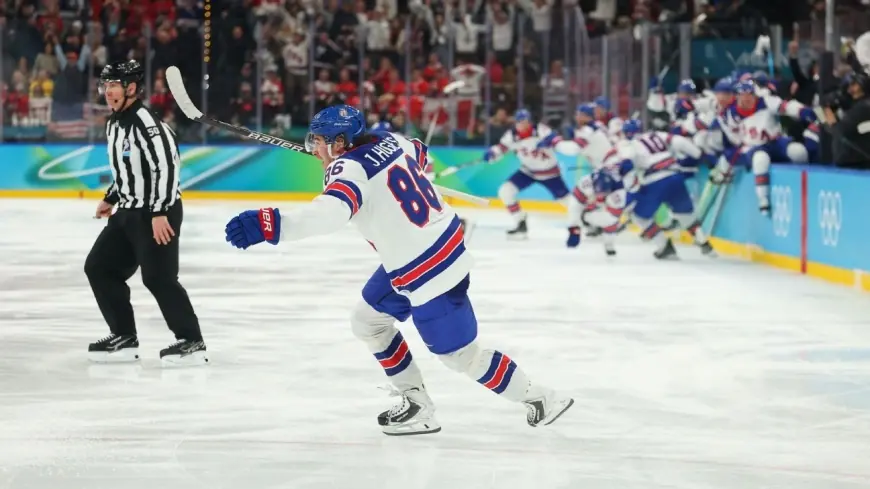
For players, staff and fans, the image of jack hughes teeth — a bloody mouth and missing front teeth — became inseparable from the U. S. men’s hockey gold. The injury didn’t slow him: Jack Hughes scored the decisive overtime goal in a 2-1 victory over Canada in Milan that delivered the United States its first Olympic men’s hockey gold since 1980. The moment changed how the final will be remembered.
Jack Hughes Teeth as a symbol for teammates, fans and the tournament
Here’s the part that matters: the tooth injury and the winning goal combined into a shorthand for sacrifice and payoff. Teammates celebrated wildly on the ice — gloves flew and players described a blackout of euphoria — while veterans and commentators framed the performance as generational. P. K. Subban expressed full praise for the U. S. squad after the win, and players leaned on a longstanding internal mantra of "gold or bust. " What’s easy to miss is how personal threads — a tribute to a fallen teammate, and a goalie redemption arc — stitched into the team’s identity over the tournament.
Event details embedded: how the goal and the injury unfolded
The final, played in Milan at the Milan Cortina Games, finished 2-1 in 3-on-3 overtime when Jack Hughes put the puck in the net. One account said the goal came less than two minutes into the extra period; another described it as less than three minutes; an note placed it at a little more than 1½ minutes. The play was set up when Zach Werenski wrestled the puck away from Nathan MacKinnon and delivered a cross-ice feed to an open Hughes, who beat Canadian goalie Jordan Binnington with the decisive shot.
Earlier in the third period Hughes took a high-sticking penalty from Sam Bennett and had at least one front tooth chipped, which produced visible bleeding: teammates noted Hughes was "spittin’ chiclets" after the incident and that he looked down on the ice and saw his teeth. He has previously had one tooth knocked out in an NHL game a few years ago. Hughes is 24 and listed as a forward for the New Jersey Devils; his older brother Quinn, 26, is a defenseman for the U. S. team and praised Jack’s toughness and passion.
U. S. goalie Connor Hellebuyck was central to keeping the game level. Multiple descriptions of his night exist: one noted he stopped 41 shots to keep the teams tied through regulation, while another called his stat line 41 of 42 saves. He made a critical paddle stop on Devon Toews in the third period and robbed Connor McDavid on a breakaway in the second. Commentators and teammates framed Hellebuyck’s performance as elite; one voice put it alongside the best U. S. goaltending performances in Olympic history. Hellebuyck was described both as the reigning Vezina and Hart Trophy winner and elsewhere as a three-time Vezina Trophy winner; he had a difficult 2025 Stanley Cup playoffs in which he was pulled three times in the first round against the St. Louis Blues. Players responded that critics can keep writing while the team put the result on the ice.
Wider context, rituals and legacy threads
The victory marked the United States’ first men’s Olympic hockey gold since the 1980 "Miracle on Ice, " a connection explicitly invoked by observers; another write-up noted it came 46 years to the day after that upset. Teammates also honored Johnny Gaudreau in the celebration: had tragedy not intervened in his life and his brother’s, he would have been part of this squad — teammates skated with his jersey and brought his children out for the team photo. Players tied this roster’s arc to previous national moments, referencing the 2010 loss in Vancouver to Sidney Crosby’s golden goal and the 2014 shootout run led by T. J. Oshie as formative inspirations. The women’s team had earlier beaten Canada 2-1 in overtime, completing a clean sweep of golds for USA Hockey. Two weeks and 116 medal events later, the 2026 Winter Olympics concluded.
- Jack Hughes is 24 and a forward for the New Jersey Devils; Quinn Hughes is 26 and a U. S. defenseman.
- Hughes took a high-sticking penalty from Sam Bennett in the third period and had at least one front tooth chipped; he had a previous NHL tooth loss a few years earlier.
- Zach Werenski created the overtime chance by taking the puck from Nathan MacKinnon and feeding Hughes across the ice; Jordan Binnington was the Canadian goalie on the play.
- Connor Hellebuyck made multiple signature saves, including on Devon Toews and Connor McDavid; his night was described both as 41 saves and as 41 of 42 saves, and he is characterized in different accounts as a reigning Vezina and Hart winner and as a three-time Vezina winner.
If you’re wondering why this keeps coming up: the mix of visible injury (the bloody mouth and missing teeth), a last-gasp winner and a storied goalie performance created a compact narrative that will follow this team. The real question now is how that moment will be remembered against other Olympic hockey touchstones — a debate already framed by references to 1980, 2010 and 2014.
• It matters to teammates who lived the celebration on the ice; Charlie McAvoy described the scene as a blackout of pure joy. • It matters for narratives about Hellebuyck’s redemption after a rough club playoff run. • It matters for youth fans and recruits who will watch a battered-but-triumphant image and link resilience with national gold. • A confirming signal for this team’s continuity would be how players and staff build on the tournament, including roster choices and public remembrance rituals around honored teammates.
It’s easy to overlook, but the celebrations included visible homages and personal moments — teammates skated with a late friend’s jersey and his children were brought forward for the team photo — which helped turn a game-winning goal into a broader cultural moment.