













Mexico News: El Mencho Killed, Cartel Violence Erupts Across 20 States

Mexico is in the grip of its most severe security crisis in years. On February 22, 2026, the Mexican army killed Nemesio Rubén Oseguera Cervantes — the infamous cartel boss known as "El Mencho" — triggering a nationwide wave of cartel retaliation that has paralyzed major cities, stranded thousands of tourists, and raised urgent questions about the country's ability to host the FIFA World Cup 2026.
El Mencho Killed: Mexico Takes Down Its Most Wanted Cartel Leader
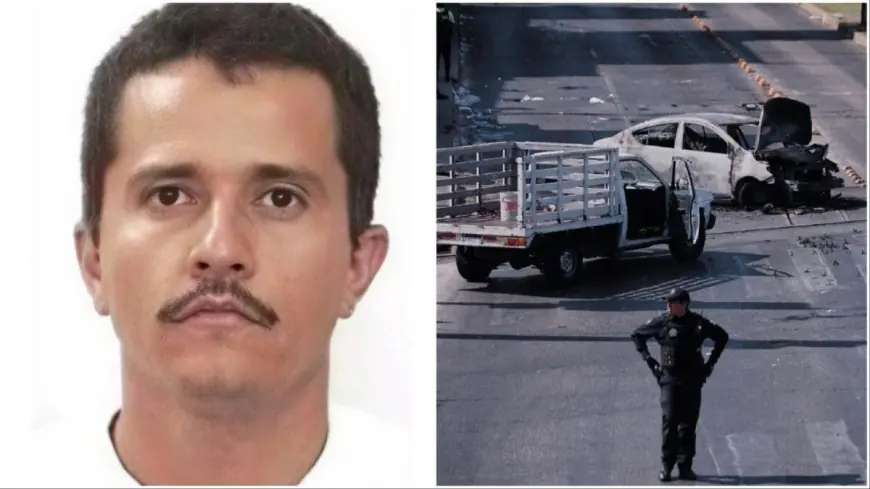
The Mexican Secretariat of National Defence confirmed Oseguera Cervantes was wounded in a clash with soldiers in the town of Tapalpa, in Jalisco state, on Sunday and died while being flown to Mexico City.
The U.S. State Department had placed a $15 million USD bounty on his head. The Mexican Defence Secretariat said the raid was carried out with "complementary information" from U.S. authorities, and that four CJNG members were killed, two others died during transfer, two were arrested, and armoured vehicles, rocket launchers, and other arms were seized.
Oseguera, a former police officer and avocado farmer, co-founded the CJNG around 2007 and built it into what the FBI considers Mexico's most powerful trafficking organization, responsible for the bulk of cocaine, heroin, methamphetamine, and fentanyl entering the U.S.
Cartel Retaliation: Violence Spreads Across Mexico
The CJNG's response was swift and violent. Cars set on fire by cartel members blocked roads in nearly a dozen Mexican states and left smoke billowing into the air. Guadalajara was paralyzed, stores closed, and residents sheltered in place.
States affected by road blockades and unrest:
| Region | Status (as of Feb. 24 ET) |
|---|---|
| Jalisco (Guadalajara, Puerto Vallarta) | Code Red, partial recovery |
| Michoacán | 13 municipalities affected |
| Guerrero, Colima, Nayarit | Blockades reported |
| Guanajuato, Veracruz, Tamaulipas | Unrest reported; stabilizing |
| Cancún, Tulum, Cozumel | Shelter-in-place lifted |
There is no obvious successor to Oseguera, raising fears the violence could intensify before it stabilizes.
Travel Chaos: Flights Cancelled, Tourists Stranded
On Sunday alone, 56 flights were cancelled and 35 were delayed out of Guadalajara International Airport due to security concerns, creating a ripple effect into Monday's travel schedule.
Every major North American carrier issued travel waivers: American Airlines issued change-fee waivers through March 3; United Airlines suspended all Puerto Vallarta and Guadalajara operations; Delta Air Lines issued a travel advisory through February 26 for all Mexico routes; and Southwest Airlines scrapped Cancún rotations.
As of February 23, all airports in Mexico are open and most are operating normally, with the exception of Guadalajara and Puerto Vallarta, where some disruptions remain.
U.S. Embassy Issues Shelter-in-Place Orders
The U.S. Embassy directed all government staff at Consulate General Monterrey to remain in the Monterrey metropolitan area, and ordered U.S. government staff not to travel to Mazatlán through Wednesday, February 25. U.S. government staff in Guadalajara, Puerto Vallarta, Ciudad Guzmán, Tijuana, Chiapas, and Michoacán were placed under shelter-in-place orders.
U.S. Deputy Secretary of State Christopher Landau praised the operation, calling Oseguera "one of the bloodiest and most ruthless drug kingpins" and adding it was "a great development for Mexico, the U.S., Latin America, and the world."
FIFA World Cup 2026: Mexico's Hosting Role Under Scrutiny
Four high-level football matches were postponed on Sunday, February 22, and an international friendly between Mexico and Iceland, scheduled for Wednesday at Corregidora Stadium in Querétaro, was canceled by the Mexican Football Federation. Akron Stadium on the outskirts of Guadalajara is set to host four World Cup group-stage matches in June.
There is no indication FIFA plans to move any matches, and no official word from FIFA or Mexican authorities suggesting changes to the World Cup schedule. However, the security crisis has placed Mexico's co-hosting role under intense international scrutiny just four months before kickoff.