
























Zia Yusuf and Reform UK’s church plan: the concrete changes proposed for worship sites and Britain’s public life

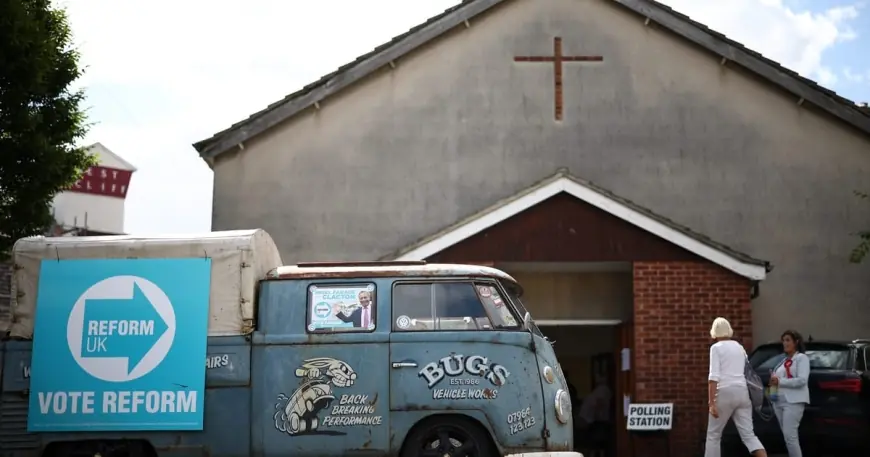
What changes next is the central question after zia yusuf set out a package that would lock churches into protected status and bar their conversion into other faith buildings. The proposals—framed as protecting Britain’s Christian heritage and pushed by a party that leads in the opinion polls—touch planning, heritage law and counterterror policy, and could reshape how places of worship are treated if the party wins power.
Consequences for buildings, communities and public policy
Reform UK’s blueprint would immediately alter the legal and cultural treatment of church buildings: automatic listed status for churches would stop alterations to their character and block conversion into places of worship for other religions. That shift affects not only conservation practice but also communities that currently use or seek to adapt historic buildings for different religious needs.
Zia Yusuf’s pitch and the cultural argument behind it
Zia Yusuf, the party’s home affairs spokesperson, spoke on the south coast and in Dover as he made the cultural case: he said the party aims to protect what it calls Britain’s Christian heritage and argued that Christianity is core to the country’s history and DNA, with a renewal of religious faith positioned as a remedy for a wider cultural crisis of meaning. Yusuf, who is a Muslim, also said Britain is losing Christian values because of the "sheer quantities of people that came to the country in a short period of time" and described the nation without culture as merely an economic zone.
Policy specifics announced alongside the heritage move
- Automatic, immediate listed status for churches, preventing alterations to their character.
- Prohibition on converting churches into places of worship for other religions, cited explicitly with mosques as an example.
- Designation of the Muslim Brotherhood and the Islamic Revolutionary Guard Corps as proscribed terrorist organisations under the party’s plan.
- A pledged overhaul of the Prevent programme, which aims to stop people from becoming terrorists.
Public and political reactions, and the wider religious landscape
Religious faith is typically a sensitive topic for U. K. politicians: one recent prime minister is described in the context as an atheist, and a leading Conservative is described as agnostic while saying she still feels like a cultural Christian. A former Lib Dem leader resigned after a general election because of difficulty reconciling party leadership with being a practising Christian. Critics challenged Reform’s migration-linked arguments: one commentator noted the irony that new migrant populations are slowing the decline of church attendance. Another prominent secular leader said the party failed to recognise that most people in Britain are not Christian in belief, practice or identity, and stressed that pre-Christian and non-Christian influences have also been important to Britain’s heritage.
Statistical context provided shows a marked shift in religious identity: 46. 2 percent of the U. K. population described themselves as Christian in the 2021 England and Wales census, down from 59. 3 percent in 2011; 37. 2 percent said they had no religion in 2021, up from 25. 2 percent a decade earlier.
Appointments, network links and a separate police note
A new group linking church interests and the party, named the Christian Fellowship for Reform, was launched last year. Earlier this month, James Orr, identified as a Christian and an associate professor of philosophy of religion at the University of Cambridge, was appointed the party’s head of policy. Separately, Thames Valley Police have released under investigation a man who had been arrested on suspicion of misconduct in public office; details are unclear in the provided context.
Here’s the part that matters: the proposals are both cultural and procedural—changing not only rhetoric but planning and counterterror frameworks if enacted. The real question now is whether the combination of public sentiment and the party’s polling position will translate into legislative traction.
- Immediate legal effect proposed for churches: automatic listed status and prevention of conversion for other faith use.
- Policy package pairs heritage protection with security measures (proscriptions and Prevent overhaul).
- Key voices pushed back on the migration-linked explanation for church decline and highlighted growing non-Christian identity in the population.
- Organisational ties: a Christian fellowship linked to the party launched last year; a new head of policy with an academic background was appointed earlier this month.
What’s easy to miss is how the proposals connect cultural rhetoric with concrete legal tools—changing heritage rules is a functional lever, not just a slogan. If enacted, the effects would be visible across planning decisions and community religious life.
Note on uncertainty: several claims and motivations are contested in the public debate, and details may evolve as the party refines policy or responds to pushback.