





















Cjng fallout: What is known about the operation that killed 'El Mencho' and the travel alerts shaking Mexico

The death of Nemesio Rubén Oseguera Cervantes, known as "El Mencho, " after a security operation in Tapalpa has intensified attention on the cjng and prompted travel alerts and widespread blockades across Mexico. The development matters because it unleashed immediate security reactions in many states and led the United States to update guidance for its citizens.
Cjng leadership, rewards and designation
Nemesio Rubén Oseguera Cervantes, age 59, was identified as the leader and co-founder of the Cartel Jalisco Nueva Generación (CJNG). The United States had offered a reward of US$15 million for his capture, while Mexico listed a reward of US$1. 75 million as the highest in its program. The federal government of Donald Trump previously designated the CJNG as a terrorist organization, characterizing it as a ruthless and violent cartel responsible for trafficking fentanyl, methamphetamine, cocaine and other illicit drugs toward the United States.
How the military operation unfolded
Mexican military authorities located Oseguera Cervantes in the municipality of Tapalpa, a mountainous area about 130 kilometers south of Guadalajara. Mexico's Secretariat of National Defense (Sedena) described a Special Forces-led operation supported by Air Force aircraft and the Guardia Nacional's Immediate Reaction Special Force. Sedena noted that the CJNG group involved had armored vehicles and heavy weaponry, including rocket launchers with the capacity to bring down aircraft.
During the operation, military personnel were attacked and repelled the aggression. Four members of the criminal group died at the scene. Three other presumed members were seriously injured and died while being transferred by air to Mexico City. Nemesio Oseguera was among the wounded who had been captured and later died during his transport to the capital. Two additional presumed CJNG members were detained. The Army sustained three personnel with serious injuries who were transferred to hospitals in Mexico City.
Intelligence cooperation and official statements
Mexican authorities stated the operation relied on "complementary information" provided within the framework of bilateral coordination with the United States. A White House spokesperson, Karoline Leavitt, noted that the United States provided intelligence support for the operation and praised the Mexican military for the cooperation and execution of the action.
Immediate security fallout: blockades and violence
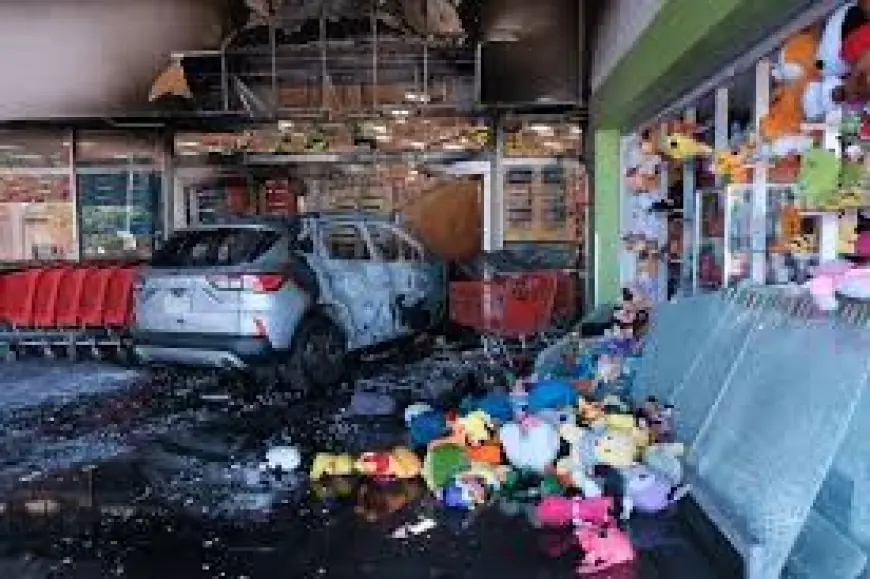
The operation prompted a wave of security incidents across the country. On Sunday, February 22, 2026, federal authorities carried out the Tapalpa operation. That same day, officials recorded 252 blockades across 20 states. By the night of February 22, there remained 23 active blockades and four partial closures. Jalisco registered the largest number of blockades, with 65 reported.
Other states where blockades were reported include Aguascalientes, Baja California, Chiapas, Colima, Estado de México, Guanajuato, Guerrero, Hidalgo, Michoacán, Nayarit, Nuevo León, Oaxaca, Puebla, Quintana Roo, Sinaloa, Tabasco, Tamaulipas, Veracruz and Zacatecas.
US travel alert and guidance for citizens in Mexico
The United States updated a travel alert in the early hours of Monday, February 23, 2026, identifying broad areas that could endanger the safety of US citizens. Named locations include the state of Jalisco (with Puerto Vallarta, Chapala and Guadalajara); Baja California (Tijuana, Tecate and Ensenada); Quintana Roo (Cancún, Cozumel, Playa del Carmen and Tulum); Nayarit (Nuevo Nayarit/Nuevo Vallarta, near Puerto Vallarta); and Sinaloa (Mazatlán). The alert also mentions zones of Colima, Guanajuato, Guerrero, Estado de México, Michoacán, Nuevo León, Oaxaca, Puebla, Querétaro, San Luis Potosí, Tamaulipas, Veracruz and Zacatecas.
The alert exhorts US citizens in various localities in Mexico to remain in their homes. It states that US government personnel in Guadalajara, Puerto Vallarta, Ciudad Guzmán, Cancún, Playa del Carmen, Cozumel, Reynosa, Tijuana and Michoacán will shelter in place and work remotely on Monday, February 23, 2026, and advises that US citizens should do the same. In Nuevo León, instructions were issued for staff at the Consulate General of Monterrey to remain in the metropolitan area, and US government staff were ordered not to travel to Mazatlán until Wednesday, February 25, 2026.
What this means next
The operation that resulted in the death of Nemesio Rubén Oseguera Cervantes and the subsequent security disruptions have created short-term instability across multiple Mexican states. Authorities and travelers face an evolving security environment. Details may continue to change as investigations and security operations proceed.