


















Mencho Killed in Tapalpa: What Is Known About the Operation That Ended Mexico and U.S.’s Most Wanted

The operation that led to the death of Mencho marks the end of a decade-long hunt for the man identified as Nemesio Oseguera Cervantes. He was wounded during a military raid in Tapalpa, Jalisco, and died while being transferred to Mexico City; the operation and its aftermath underline immediate security challenges in western Mexico.
Where Mencho Was Located: Tapalpa, Jalisco
The Secretaría de la Defensa Nacional (Sedena) said a Special Forces unit located the target in the municipality of Tapalpa, a mountainous area roughly 130 kilometers south of Guadalajara. Sedena described the operation as led by those Special Forces with support from Air Force aircraft and the Guardia Nacional’s Immediate Reaction Special Force.
Sedena reported that the criminal group involved had armored vehicles and heavy weaponry, including rocket launchers capable of downing aircraft. Military personnel were attacked during the operation and, in defending themselves, repelled the aggression.
How the Operation Unfolded and Immediate Casualties
Sedena said the engagement left four alleged members of the CJNG dead at the scene. Three additional suspected members were gravely wounded and later died during aerial transfer to Mexico City. Nemesio Oseguera Cervantes, identified as the man known as Mencho and said to be 59 years old, was among the wounded who were captured and who later died in transit to the capital.
Two other alleged members of the organization were detained. The military also sustained casualties: three soldiers were seriously injured and were transported to hospitals in Mexico City for urgent care.
Names and Identification: Multiple References
One communication listed Rubén ‘N’ (a) Mencho among those who died during the air transfer and noted that forensic authorities would carry out identification procedures. Separately, Nemesio Oseguera Cervantes was identified as among the wounded captured who died while being transferred to Mexico City. The context includes both distinct references to those names and the planned forensic work for formal identification.
International Cooperation and Official Statements
Sedena also stated that the operation relied on complementary information from the United States within a bilateral coordination framework. White House spokesperson Karoline Leavitt wrote on the social platform X that the United States provided intelligence support for the operation and praised Mexican military cooperation and execution.
Authorities noted the operation was carried out in coordination with partner-country information while led operationally by Mexican forces.
Who Mencho Was and the Broader Impact
Nemesio Oseguera Cervantes was described as the cofounder of the Cártel Jalisco Nueva Generación (CJNG), an organization that expanded over the last decade and grew into one of the country’s most violent and powerful criminal groups. The United States had offered a $15 million reward for his capture and Mexico had set its highest program reward at $1. 75 million. The government of Donald Trump designated the CJNG as a terrorist organization, characterizing it as a ruthless and violent cartel responsible for trafficking fentanyl, methamphetamine, cocaine and other illicit drugs toward the United States.
Security commentary in the provided context highlights that Mencho maintained a network of protection across rural and urban areas of Jalisco that allowed him mobility and concealment for years. He built a survival system based on constant movement, strategic refuges and information networks. Security and military circles noted he had been located by federal forces on more than 20 occasions, and he was often described as operating “a salto de mata, ” compelled to move frequently to evade capture.
Aftermath: Violence and Reinforcements
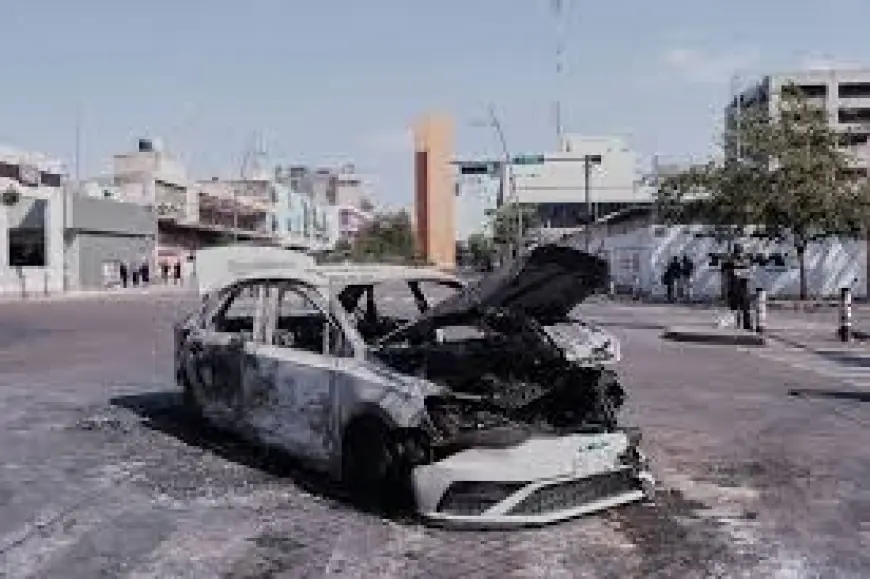
The fall of Mencho triggered a wave of violence in western Mexico. More than 60 violent incidents were recorded in the immediate fallout, including narcobloqueos, vehicle burnings, shootouts and attacks on convenience stores, which prompted reinforcement of federal and state security operations. The initial reaction was concentrated in Jalisco and later spread to neighboring states such as Guanajuato and Michoacán. One especially serious episode was reported in Lagos de Moreno, where there were accounts of an attack against a National Guard base; those accounts were described as unofficial in the provided context.
Security forces, including elements of the National Guard and army troops from central regions and states bordering Jalisco, were deployed to bolster security in the area. Authorities also reported the seizure of varied armament and armored vehicles, including rocket launchers capable of downing aircraft and destroying armored vehicles. These developments make clear that the operation’s tactical success is paired with a complex and volatile security environment in the aftermath.