






















Jessie Buckley’s Bafta best actress win shifts the spotlight to Irish performers and motherhood during awards season

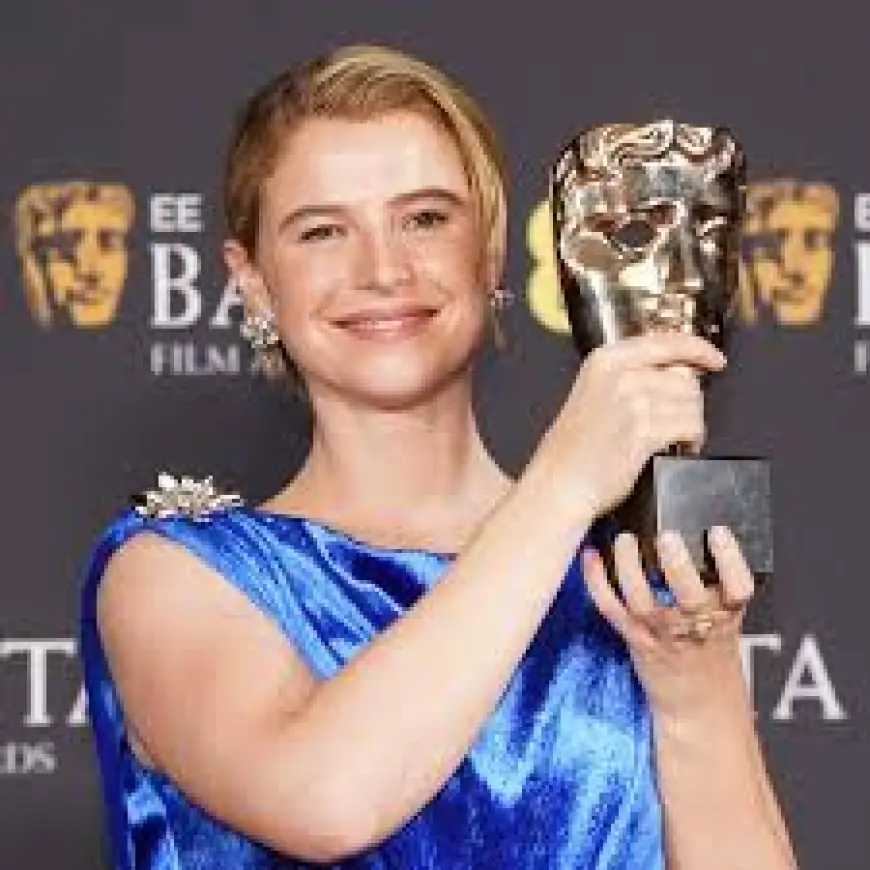
Here’s the part that matters: jessie buckley’s triumph at the EE British Academy of Film and Television Arts awards is being felt first by Irish performers and by the audience for intimate, character-led cinema. Two days after taking the equivalent Irish Film and Television Academy award in Dublin, she claimed the Bafta best actress prize — the first time an Irish performer has done so — and used her moment to underline the personal costs and rewards of life on the road.
How Jessie Buckley’s victory reframes Irish representation and the tone of awards speeches
The win changes a symbolic barrier: an Irish performer has now taken the Bafta best actress prize. Buckley framed the night around family and mentorship, sharing the accolade with her daughter and with the women who taught her craft. That focus nudges awards season away from mere career milestones toward how recognition intersects with caregiving and craft commitments.
- Buckley’s acceptance explicitly acknowledged her daughter’s presence on the road since six weeks old.
- Her speech and the choice of presenter signalled a stage-level nod to Irish talent and cross-national recognition.
- The timing — immediately after an Irish award — concentrates attention on Ireland’s growing awards influence.
What's easy to miss is how a single acceptance can reframe expectations: this was not just a personal win, it was an argument about who counts in film histories.
Event details and the moment at Royal Festival Hall
Buckley, nominated for playing a wracked Agnes Shakespeare in Chloé Zhao’s Hamnet, delivered a warm acceptance speech at the Royal Festival Hall on London’s South Bank. Luminous in blue, she received the award from compatriot Cillian Murphy — a presenting choice noted as a canny move by the ceremony — and spoke about the women who taught her how to work differently. She also said she shares the prize with her daughter and called motherhood the best role of her life, promising to continue to be disobedient so her daughter can belong to the world in all her wildness.
Wider winners: acting surprises and the films that dominated
There were a number of headline moments beyond Buckley. Paul Mescal, nominated for playing William Shakespeare in Hamnet, lost best supporting actor to an absent Sean Penn, who was described as sinister as a messianic despot in Paul Thomas Anderson’s One Battle After Another. Stellan Skarsgård had looked the favourite in that category, and Penn’s win was noted as opening the corresponding Oscar race considerably.
One Battle After Another emerged as the evening’s big winner, taking six Baftas including best film, best director and best adapted screenplay. Hamnet won best British film but could not overcome One Battle After Another for overall best film.
Craft, debuts and shocks: visuals, first films and an unexpected best actor
Richard Baneham won a second Bafta in special visual effects for Avatar: Fire and Ash; the Tallaght man thanked Jim Cameron and crew teams in New Zealand and LA from the podium. Element Pictures, the Oscar-winning Dublin-based production company, were credited as proud co-producers of Akinola Davies jnr’s My Father’s Shadow, which won the outstanding debut by a British writer, director or producer — a prize Akinola Davies jnr shares with co-writer Wale Davies.
The evening’s biggest shock was Robert Aramayo, the young star of Kirk Jones’s I Swear, beating Timothée Chalamet and Leonardo DiCaprio to the best actor prize. I Swear, which tells the story of John Davidson, a courageous Scottish campaigner for those with Tourette syndrome, was a significant hit in the UK and Ireland but has barely registered with awards bodies elsewhere. The Yorkshireman, who also won rising star, seemed stunned.
Genre wins and awards-season implications
Ryan Coogler’s Sinners claimed three Baftas — original screenplay, original score and best supporting actress for Wunmi Mosaku. Anderson’s One Battle After Another now looks a healthy favourite for best picture at the Oscars with Sinners next in its wake. Mosaku’s victory over Carey Mulligan and Teyanna Taylor was treated as a minor upset; she thanked the ceremony and dedicated the honour to her daughter.
The real question now is whether these Bafta outcomes — from Buckley’s landmark best actress win to Penn’s supporting-actor victory and the multiple awards for One Battle After Another and Sinners — will map onto the Oscars in the same way, or whether they will signal a different spread of momentum.
- jessie buckley won Bafta best actress two days after an IFTA award in Dublin.
- She is the first Irish performer to take Bafta’s best actress prize.
- One Battle After Another took six Baftas including best film; Hamnet won best British film.
- Other notable winners: Richard Baneham (special visual effects), Akinola Davies jnr and Wale Davies (outstanding debut), Robert Aramayo (best actor and rising star), Ryan Coogler’s Sinners (three wins), Wunmi Mosaku (best supporting actress).
If you’re wondering why this keeps coming up: these results compress national pride, awards momentum and how performers position themselves around family and career into a single awards night narrative. Recent updates indicate the landscape could evolve as the season continues.