


















Olympic Closing Ceremony in Verona Caps Spread-Out Milan Cortina Games and Passes the Torch to France

Why this matters now: The olympic closing ceremony in Verona sealed a 17-day, record-setting Winter Games model that spanned mountain, valley and city venues — and immediately redirected attention to France and the 2030 Winter Olympics. That handover, Italy’s record medal haul and several last-hour results leave clear signals about venue planning, accessibility and the calendar through the Paralympics.
Context rewind: how a sprawling Games reached this finale
What's easy to miss is how the Milan Cortina approach — events spread across distant sites — shaped nearly every element of the final night. The twin flames in co-host cities Milan and Cortina d'Ampezzo were extinguished inside Verona's ancient Arena, roughly mid-distance between mountain, valley and city venues, closing what has been described in coverage as the most spread-out Winter Games ever.
Olympic Closing Ceremony: Verona's send-off
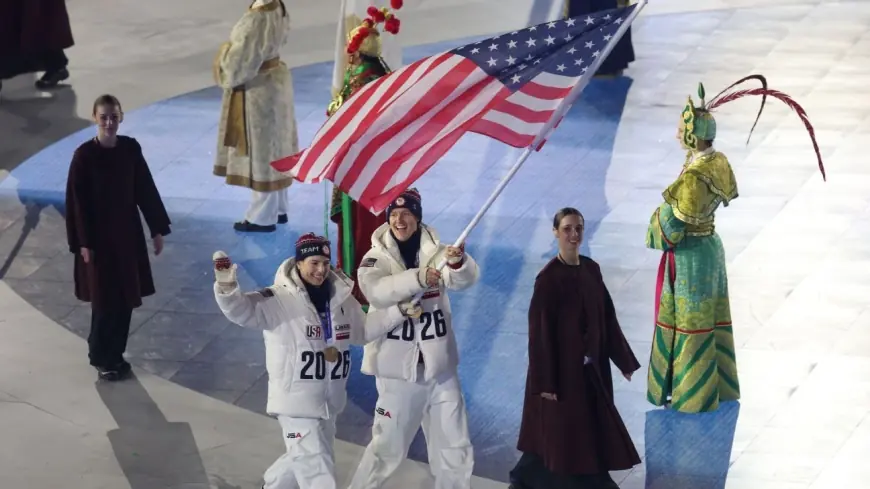
The 2½-hour ceremony carried a theme of pageantry and modern pop: "Beauty in Action. " Organizers opened with a whimsical tribute to Italian lyric opera, unpacking characters such as Madama Butterfly and Aida from mirrored crates while 17th-century musicians played "Libiamo ne' lieti calici" from La Traviata. Opera figures, led by the jester Rigoletto, spilled into the piazza and mixed with athletes, some of whom filmed the scene on their phones.
Onstage moments included a pop-to-DJ sequence featuring Gabry Ponte that got 1, 500 athletes dancing amid confetti, and Achille Lauro closing the night with the song "Incoscienti Giovani. " Ballet star Roberto Bolle made his first-ever aerial performance inside a blazing ring over a stage designed as the Venetian lagoon, dancing to a haunting song by Joan Thiele. The Olympic flame, encased in Venetian glass, was carried into the Arena by Italian gold medalists from the 1994 Lillehammer Games.
Medals, milestones and the handoff to France
- A total of 116 medal events were contested across eight sports and 16 disciplines; ski mountaineering debuted during the 17 days of competition.
- The final events concluded just hours before the ceremony, with the 50-kilometer mass start men's and women's cross-country medals awarded inside the Arena.
- Host Italy finished with a record 30 medals: 10 gold, 6 silver and 14 bronze, surpassing Italy's previous Winter Olympic record of 20 medals set at Lillehammer in 1994.
- Team USA finished the Games with 33 medals.
- Johannes Høsflot Klæbo became the most decorated gold medalist in a single Winter Olympics with six wins; he entered the closing ceremony as Norway's flag bearer after winning every race he started, and he said he nearly skipped an event because of a sore throat but pushed through.
- P. K. Subban discussed the impact of Sidney Crosby's absence after Canada's gold medal loss to Team USA.
Giovanni Malagò, president of the Milan Cortina Foundation, praised the Italian athletes seated behind him wearing headbands emblazoned with "Italia, " saying their performances united the country and were fundamental to the Games' success.
Looking ahead: Paralympics, 2030 planning and logistics
The Olympic flag was handed off to France in the official ceremony moment that turned focus to the 2030 Winter Games. France plans a spread-out model staging events in the Alps and Nice on the Mediterranean, with speedskating to be hosted either in Italy or the Netherlands. Edgar Grospiron, president of the organizing committee for the 2030 French Alps Winter Olympics, acknowledged limited time and tight finances but expressed confidence that the country would follow recommendations and make it work.
The Arena will transform again for the Paralympic Winter Games opening on March 6; that program's theme, "Life in Motion, " was framed as a tribute to change and a redefinition of disability through a new harmony between people and environment. Organizers invested 20 million euros to enhance accessibility throughout Verona for an inclusive experience. Mike Tirico also pointed to the road ahead, noting that the 2028 Los Angeles Summer Games are expected to be the biggest Summer Olympics ever.
Short Q&A about immediate implications
Here’s the part that matters for planners and fans alike:
- Q: What does Italy's medal surge change? A: A national record of 30 medals shifts expectations for host-nation investment and legacy planning.
- Q: Does the handover alter the event model? A: France has signaled it will use a similarly spread-out footprint across Alps and Nice, with uncertainty only over the exact speedskating host (Italy or the Netherlands).
- Q: When does the next event start in Verona? A: The Paralympic Winter Games open on March 6 in the same Arena.
The real test will be whether the spread-out model, heavy on transport and local accessibility upgrades, proves reproducible under tighter budgets and compressed timelines.
Micro timeline: Milan Cortina Games ran for 17 days; Italy set a new medal record previously held from Lillehammer in 1994; the Arena will host the Paralympic opening on March 6.
It’s easy to overlook, but the concentration of cultural spectacle alongside rapid medal decisions — with final medals awarded just hours before the ceremonial close — is likely to shape how future hosts schedule closing events and multilocation logistics.