























Connor Hellebuyck’s stick save propels U.S. to first Olympic men's hockey gold since 1980

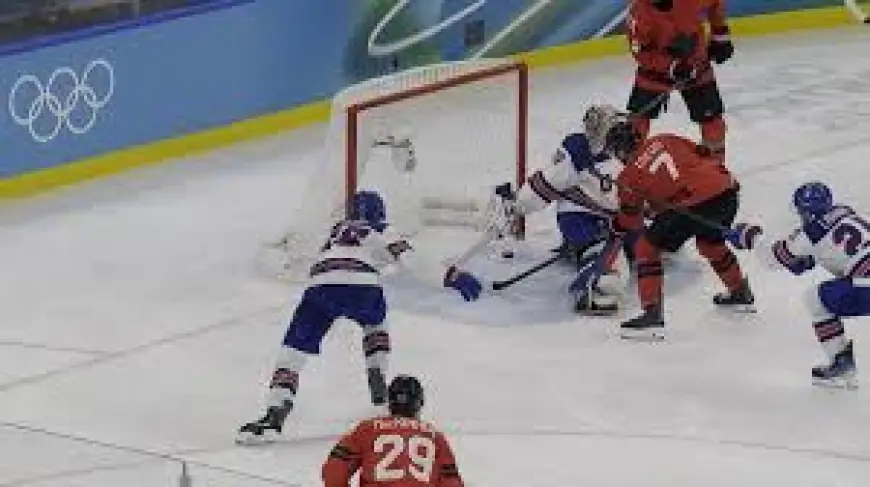
Connor Hellebuyck made a last-ditch stick save in the second period that preserved a 1-1 score and ultimately helped Team USA beat Canada 2-1 in overtime to claim the nation’s first Olympic men’s hockey gold since the 1980 Lake Placid team. The performance stood out not only for a single highlight but for a 41-save night that kept the Americans alive through the regulation minutes and into Jack Hughes’ sudden-death winner.
Connor Hellebuyck's stick save in the second period
The crucial moment came when Canada’s Mitch Marner moved into the offensive zone and sent a shot toward Hellebuyck’s net with defenseman Devon Toews stationed in front. Toews lifted the puck slightly, and Hellebuyck reacted by throwing out his stick; the pad of his stick stopped the puck and denied what might have been a near-certain goal. At the time the score was 1-1, and that sequence preserved the tie through the second and third periods, forcing overtime.
Jack Hughes' overtime goal and Zach Werenski's assist
The game ended in sudden-death when Jack Hughes scored on a shot that followed a pass from defenseman Zach Werenski, ripping past Canada’s netminder Jordan Binnington. That tally produced a 2-1 victory in overtime and clinched the gold medal for the United States. The U. S. finished the match having relied on sustained goaltending and a late, decisive offensive play.
Milano Santagiulia Ice Hockey Arena, Feb. 22, 2026 — day 16
The final Olympic event took place on Feb. 22, 2026, at the Milano Santagiulia Ice Hockey Arena in Milan on day 16 of the Milano Cortina Games. Hellebuyck’s 41 saves came in that Sunday afternoon matchup, and his performance ended with a gold medal placed around his neck after Hughes’ game-winning shot slipped past Binnington.
Canada's pressure: Mitch Marner, Devon Toews and Cale Makar
Canada controlled much of the game and repeatedly threatened the American cage. Mitch Marner’s play in the offensive zone set up the second-period scramble that ended with Hellebuyck’s stick thwarting Devon Toews. Earlier in the second period Hellebuyck conceded a goal to Colorado Avalanche defenseman Cale Makar, which produced the game-tying score that led to the tense middle frames and eventual overtime.
Reaction and statistics: Hellebuyck, Taylor Heise and the final box
Thirty-two-year-old Hellebuyck was widely praised for his work throughout the contest and immediately after Hughes’ overtime winner. He described the result plainly to NBC after the game: "It’s a dream come true. " Team USA women’s hockey gold medalist Taylor Heise expressed belief that the men could replicate the women’s success, noting the shared pride in U. S. hockey gold.
Beyond the single stick save, the measurable impact was clear: Hellebuyck stopped 41 shots, absorbing repeated pressure after allowing the goal to Makar and delivering a sequence of saves that kept the U. S. within reach. Those stops directly caused the game to reach overtime, which in turn created the opportunity for Hughes and Werenski to produce the goal that won the gold.
What makes this notable is the combination of momentary instinct and sustained performance: the stick save was a split-second intervention, but the 41-save total reflects a full-game resistance to a Canadian attack that otherwise dominated long stretches.
Site note from The Patriot Ledger
Separately, The Patriot Ledger displayed a notice stating its site is built to take advantage of the latest technology to make the experience faster and easier to use. The notice advised readers that their browser was not supported and urged downloading an updated browser for the best experience.
The 2-1 overtime victory over Canada gives the United States its first Olympic men’s hockey gold since the 1980 Lake Placid team, and Hellebuyck’s combination of the second-period stick stop, the 41 saves and steady play after surrendering a goal to Cale Makar remains central to how the game unfolded and how the U. S. ultimately prevailed.