




















Death of 'El Mencho' in Tapalpa ends decade-long evasion of Cjng leader

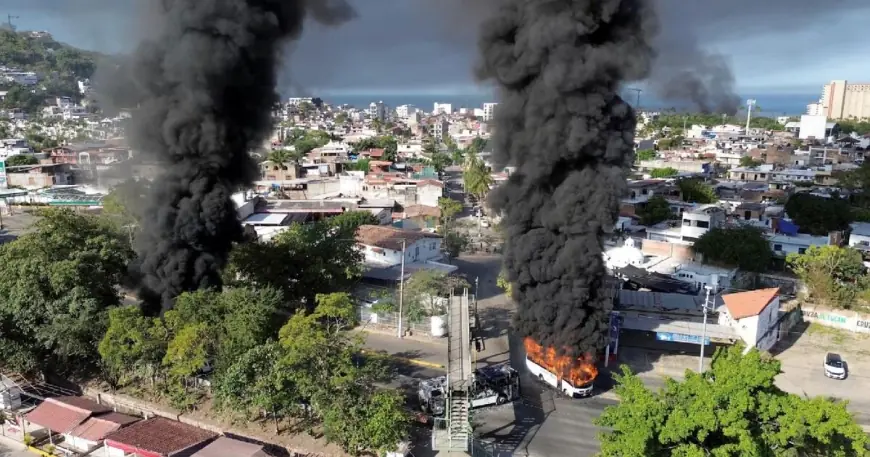
Mexican security forces carried out an operation that resulted in the death of Nemesio Oseguera Cervantes, the 59-year-old co-founder of the Cartel Jalisco Nueva Generación, known in shorthand as cjng. The outcome has immediate security and diplomatic ripple effects, including U. S. intelligence participation in the action and Department of State security alerts for Americans in Mexico.
Nemesio Oseguera Cervantes: capture, wounds and death
Nemesio Oseguera Cervantes, nicknamed "El Mencho, " had evaded capture through multiple operations for more than a decade before his death in an operation authorities described as occurring on a Sunday. He was among the wounded who were captured at the scene and later died while being transferred to the capital. Authorities confirmed his age as 59.
Cjng presence in Tapalpa and the geography of the operation
The operation located Oseguera in the municipality of Tapalpa, a mountainous area about 130 kilometers south of Guadalajara. For years he relied on a protection network across rural and urban parts of the state of Jalisco that helped preserve his freedom of movement and operations,.
Sedena and the coordinated military operation
The Secretaría de la Defensa Nacional (Sedena) led the operation, deploying a command of Fuerzas Especiales with support from Fuerza Aérea aircraft and the Fuerza Especial de Reacción Inmediata de la Guardia Nacional. Sedena described the action as carried out within a framework of bilateral coordination and said it included "información complementaria" provided by the U. S. government.
Weapons, vehicles and combat: armored cars and rocket launchers
Sedena detailed that the criminal group deployed armored vehicles and heavy weaponry, including rocket launchers with capability to down aircraft. Military personnel were attacked during the engagement and, in defending themselves, repelled the aggression. The confrontation left four members of the cartel dead at the scene and three others severely wounded who later died during air transfer to Mexico City.
Arrests, military casualties and hospital transfers
In addition to the fatalities, two other members of the cartel were detained during the operation. The Army sustained three wounded of grave condition who were evacuated to hospitals in Mexico City for treatment. Nemesio Oseguera was counted among the wounded captured and did not survive the transfer to the capital.
U. S. role, Karoline Leavitt and diplomatic fallout
The U. S. government had offered US$15 million for the capture of Oseguera, while Mexico had set the highest reward in its program at US$1. 75 million. The Trump administration had designated the Cartel Jalisco Nueva Generación a terrorist organization, describing it as a "despiadado y violento" cartel responsible for trafficking fentanyl, methamphetamine, cocaine and other illicit drugs into the United States. The White House spokeswoman Karoline Leavitt wrote on X that the United States provided intelligence support to Mexican authorities for the operation and praised and thanked Mexican military forces for their cooperation and the successful execution of the action.
Department of State alerts and bilateral reactions on Feb. 23, 2026
On Feb. 23, 2026 the Department of State issued security alerts for U. S. citizens in Mexico. The U. S. government formally congratulated Mexican counterparts for the operation that concluded with the death of "El Mencho, " and described the outcome as beneficial to bilateral relations. The timing matters because the operation combined domestic military action with international intelligence support, producing both a tactical result and immediate diplomatic and security responses.
What makes this notable is the convergence of a long-running manhunt—with rewards of US$15 million from the United States and US$1. 75 million from Mexico—and a coordinated military operation that confronted heavy resistance, produced multiple casualties and detainees, and prompted near-term security advisories for foreigners in Mexico.