























Jack Hughes' overtime rocket and missing teeth lift U.S. to Winter Olympics hockey gold in Milan

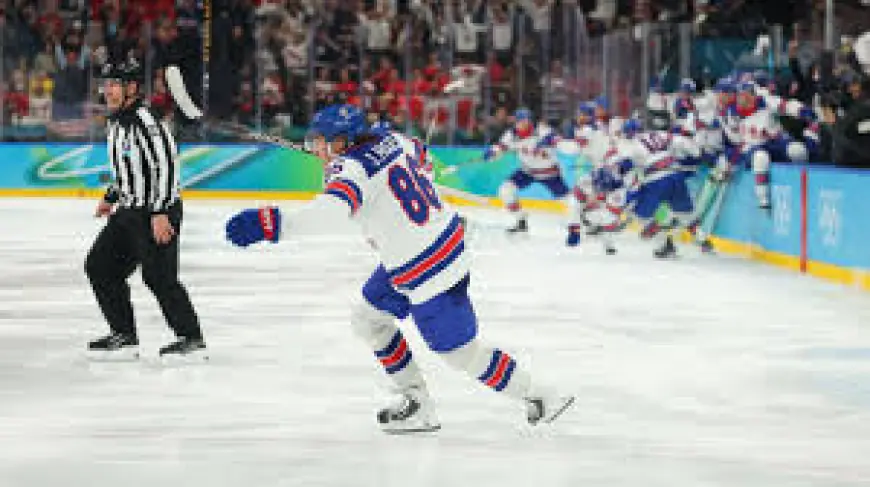
Jack Hughes scored an overtime rocket from the left faceoff circle to win the U. S. men’s hockey gold in Milan, delivering the nation’s first Olympic hockey title since the Miracle on Ice 46 years ago. The 24-year-old’s game-winner capped an unlikely arc from fourth-line role to frontline star and came after a dramatic late third-period penalty and a bloody, toothless moment that almost ended his night.
Jack Hughes panicked in the penalty box late in the third period
Late in Sunday’s third period in Milan, Hughes skated to the penalty box after accidentally striking a Canadian player in the face with his stick while battling for a loose puck in the corner. He feared that the penalty would hand Canada’s potent power play a chance to score the go-ahead goal in the final minutes of regulation. Hughes said he imagined being mocked on a popular sports media platform and feared becoming the scapegoat if Canada converted.
Jack Hughes played through a bloody mouth and two missing front teeth
Earlier in the game Hughes took a stick to the face; his mouth was bloody and two of his front teeth were missing. Despite that injury he climbed over the boards and reentered the contest on a line change just over a minute into 3-versus-3 overtime. The image of him returning to play with that injury became part of the evening’s narrative of sacrifice and payoff.
The golden goal: a left-circle rocket to end the drought
Hughes’ golden goal was an overtime rocket from the left faceoff circle that delivered one of the legendary moments in American hockey history and ended the long drought since a group of unheralded amateurs staged the Miracle on Ice 46 years earlier. The goal provided an exclamation point on an Olympics in which Hughes tied for the team lead with seven points, including a combined three goals in the semifinals and the gold-medal match.
Key sequence: Hellebuyck, McDavid, Makar, Werenski and MacKinnon
Almost immediately after Hughes rejoined play in overtime, he faced Connor McDavid charging at him with the puck and no one between McDavid and the U. S. goal. Hughes called McDavid "the best player in the world — maybe ever. " U. S. goaltender Connor Hellebuyck disrupted that threat by lashing the puck away from McDavid before a shot could be taken, keeping the game alive.
Moments later the U. S. countered. The chance for a 2-on-1 developed when Canada’s Cale Makar gambled to intercept a sloppy Zach Werenski pass intended for Hughes but failed to do so. Hughes poked the puck through the neutral zone into the attacking zone, and Werenski chased the loose puck. Werenski then capitalized on hesitation from Canada’s Nathan MacKinnon over whether to pursue the puck, outbattled MacKinnon for control and delivered a perfect pass to Hughes that set up the decisive shot.
From fourth-line depth to frontline trust: the arc and the coach’s praise
Hughes began the Olympics on the United States’ fourth line but emerged as one of the team’s frontline players by tournament’s end. He rebounded from a poor 4 Nations Face-Off the previous year and earned the trust of American coach Mike Sullivan. Sullivan said Hughes was at the center of many positive moments for the team and praised him as a high-stakes player who delivered when it mattered most. Hughes tied for the U. S. lead with seven points during the Olympic tournament.
Postgame exchange and a social post that captured the moment
During the postgame news conference Hughes joked to Sullivan about facing Nathan MacKinnon in the rush, saying, "You probably were loving that, huh? McKinnon coming down at me!" Sullivan replied that Hughes had done a great job defending him. A social post dated February 22, 2026 declared in all caps that "JACK HUGHES DELIVERS AMERICA'S GOLDEN MOMENT IN OVERTIME. "
One detail in the supplied text is unclear in the provided context
The supplied account includes a final sentence fragment — "From there, it was all Hughes. He fired a shot past Canadian goalten" — and the last word is incomplete. That final detail is unclear in the provided context.
What is clear from the available material is that Jack Hughes overcame a tense penalty situation, a facial injury that cost him two front teeth, and a high-pressure overtime matchup against elite opponents to score a tournament-defining goal and deliver the United States its first men’s Olympic hockey gold in 46 years.