






















Mexico in Crisis: CJNG Cartel Boss "El Mencho" Killed, Violence Erupts Across Multiple States

Mexico was thrown into a state of emergency on Sunday, February 22, after the Mexican military killed Nemesio Rubén Oseguera Cervantes — known as "El Mencho" — the head of the Jalisco New Generation Cartel (CJNG), triggering a violent retaliatory wave that spread across at least a dozen Mexican states and prompted urgent warnings to American and Canadian travelers.
Who Was El Mencho and Why His Death Matters
El Mencho co-founded the Jalisco New Generation Cartel in 2009, building it into what the FBI and DEA consider Mexico's most powerful trafficking organization, responsible for moving massive quantities of cocaine, heroin, methamphetamine, and fentanyl into the United States. He was 59 years old and a former police officer and avocado farmer from Michoacán. The U.S. State Department had placed a $15 million bounty on his head, and since 2017 he had been indicted multiple times in U.S. federal court. The Trump administration had designated CJNG as a foreign terrorist organization earlier this year.
How the Operation Went Down
On February 22, El Mencho and six others were killed in a military operation in Tapalpa, Jalisco. The operation was led by the Mexican Army with support from the National Guard, the Mexican Air Force, and intelligence personnel from the Attorney General's Office. Mexican authorities confirmed coordination with U.S. agencies, which provided complementary intelligence in the planning of the mission. He was wounded during the raid and died while being flown to Mexico City.
Cartel Retaliation: Chaos Erupts Across Mexico
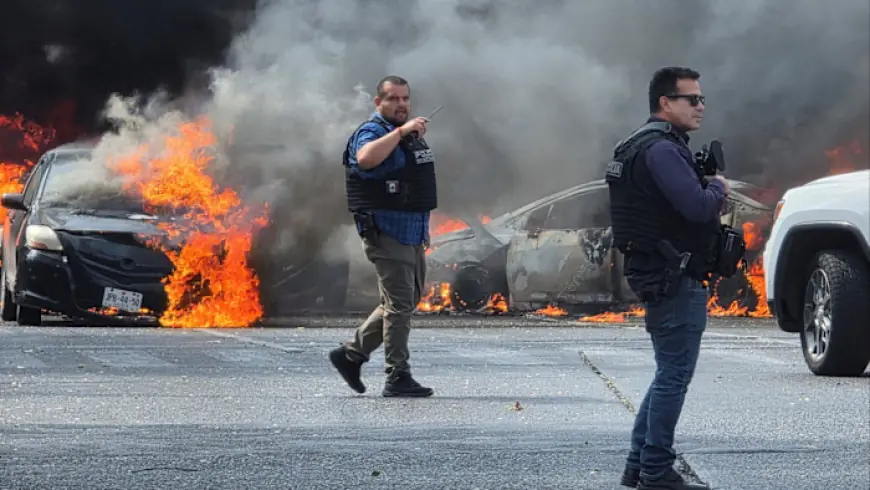
The killing immediately triggered a violent backlash. Gunmen torched cars and blocked highways in more than half a dozen states, including Jalisco, Colima, Michoacán, Nayarit, Guanajuato, and Tamaulipas. Jalisco's capital, Guadalajara, was turned into a ghost town as civilians hunkered down. Videos on social media showed people sprinting through the Guadalajara airport in panic and smoke billowing over the tourist city of Puerto Vallarta. Mexico's Security Cabinet reported 21 active highway blockades as of midday Sunday.
U.S. Embassy Issues Shelter-in-Place Orders for Americans
The U.S. Embassy in Mexico City issued urgent security alerts covering a wide swath of the country. Americans in Jalisco (including Puerto Vallarta, Chapala, and Guadalajara), Baja California (including Tijuana and Cancun), Quintana Roo (including Cancun, Playa del Carmen, and Tulum), and areas of Guanajuato, Guerrero, Michoacán, Oaxaca, Nuevo León, and Tamaulipas were told to shelter in place until further notice. All U.S. government staff at Consulate General Tijuana and consular personnel in Guerrero, Michoacán, and Quintana Roo were also directed to shelter in place.
Flights Canceled, Tourists Stranded
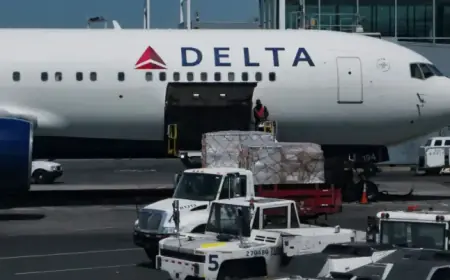
Grupo Aeroportuario del Pacífico reported that all international operations and most domestic flights at Puerto Vallarta International Airport were cancelled. Airlines suspending service included Southwest, Alaska, United, Delta, Air Canada, WestJet, and Porter Airlines. One Texas resident described being among the last passengers to board a plane out of Puerto Vallarta, with the captain opening the aircraft's doors to allow roughly 80 additional people on board in a last-ditch effort to evacuate.
What Comes Next: A Power Vacuum and a World Cup Warning
Analysts warn there is no obvious successor to El Mencho and that Mexico's military must move quickly to dismantle CJNG's infrastructure — its logistics, money laundering operations, and armed wings — before the power vacuum ignites a prolonged security crisis. The timing is particularly sensitive as Mexico is set to co-host the FIFA World Cup, with Guadalajara serving as a host city. Mexican President Claudia Sheinbaum acknowledged the unrest while stressing that most of the country was operating normally. U.S. Deputy Secretary of State Christopher Landau called the operation a major development for Mexico, the U.S., and Latin America.