





















Mencho killed in Tapalpa after Mexican military operation, officials say

Nemesio Oseguera Cervantes, known as "El Mencho" (mencho), the 59-year-old co-founder of the Cártel Jalisco Nueva Generación, died after being wounded in a military operation in Tapalpa, Jalisco, that authorities say ended a decade-long run of evasion.
Where they killed Mencho: operation in Tapalpa, Jalisco
The Mexican army said the operation located him in the municipality of Tapalpa, a mountainous area about 130 kilometers south of Guadalajara, and that a Special Forces command carried out the raid with support from Air Force aircraft and the Guardia Nacional’s Fuerza Especial de Reacción Inmediata.
How the operation unfolded and the losses on both sides
Sedena said the armed group had armored vehicles and heavy weaponry, including rocket launchers capable of downing aircraft. Military personnel were attacked during the operation and, the statement said, they repelled the aggression; four alleged CJNG members died at the scene and three others were seriously wounded and later died while being flown to Mexico City (CDMX). Nemesio Oseguera Cervantes was among the wounded who were captured and died during transfer to the capital.
Names, bounties and a U. S. role
Oseguera Cervantes had been Mexico and the United States’ most-wanted figure; the U. S. had offered US$15 million for his capture and Mexican authorities listed US$1, 75 million as the largest reward in its program. The U. S. government under President Donald Trump designated the CJNG as a terrorist organization as a "cartel despiadado y violento responsable del tráfico de fentanilo, metanfetaminas, cocaína y otras drogas ilícitas hacia EE. UU. ", a label cited by officials discussing the case. Sedena said the operation included "información complementaria" from the U. S. within bilateral coordination, but it gave no details on the type of information provided.
Equipment seized, detainees and wounded
The Defense said other members of the group were detained and that diverse armament and armored vehicles were secured, including rocket launchers the statement said could also destroy armored vehicles. Two other alleged CJNG members were detained. The Army had three personnel seriously injured; those soldiers were transferred to hospitals in Mexico City for treatment.
Aftermath: reprisals and security reinforcements
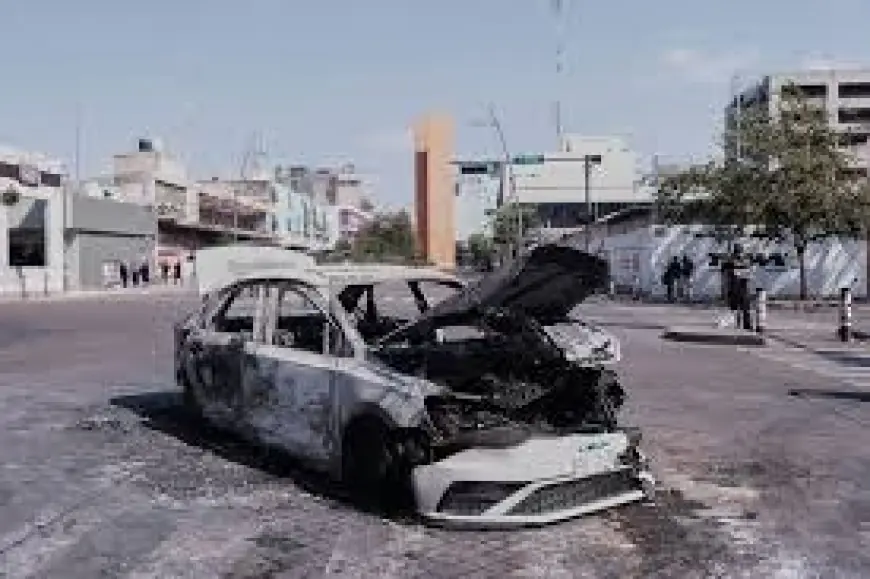
Authorities reported a surge of violent incidents in western Mexico after the operation: more than 60 episodes including narcoblockades, burning vehicles, shootouts and attacks on convenience stores that prompted federal and state forces to reinforce security. Initial unrest centered in Jalisco and then spread to neighboring states such as Guanajuato and Michoacán. One episode of concern was reported in Lagos de Moreno, where unofficial accounts indicated an attack on a Guardia Nacional base. In response, elements of the Guardia Nacional and Army from central regions and states neighboring Jalisco were sent to bolster security there.
Why Mencho had eluded capture for years
Officials and security analysts described how, for more than a decade, Oseguera Cervantes built a system of mobility, strategic refuges and intelligence networks that allowed him to evade operations. In security circles he was described as a capo "a salto de mata", forced to change locations constantly but able to stay ahead of federal forces; authorities said he had been located on more than 20 occasions by federal forces prior to this operation.
U. S. cooperation and Mexican command of the raid
Pentagon there was support from the Fuerza de Acción Conjunta Interagencial Anticarteles, which collaborates with the Mexican Army through U. S. Northern Command, while a U. S. military official emphasized, "this was a Mexican military operation, so the success is theirs. "
an identification process will be handled by the appropriate forensic authorities; one Defense statement named Rubén "N" (a) Mencho among those who died after being captured wounded, and noted formal pericial activities will confirm identification. The next confirmed steps are forensic identification and continued security operations and reinforcements in Jalisco and neighboring states as authorities process the scene and detainees.