













Olympic Hockey Overtime Rules: Why current formats and review gaps leave outcomes uncertain

There’s a growing mismatch between the spectacle fans saw across a frantic stretch of games and the patchwork of overtime mechanics and review systems now being used. Olympic Hockey Overtime Rules are at the center of that mismatch: tied knockout matches, split formats for different rounds, and divergent approaches to video review create clear uncertainty for competitors, officials and event planners.
Risk focus: how uneven formats and review practice create uncertainty
The immediate risk is practical: player deployment, injury exposure, scheduling and officiating consistency are all unsettled the moment formats and review authority vary from game to game. The real question now is which element — overtime format, player safety, or review procedure — will force a consistent rule change first.
What happened on the ice that put these issues in the spotlight
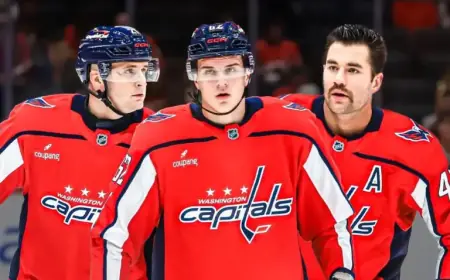
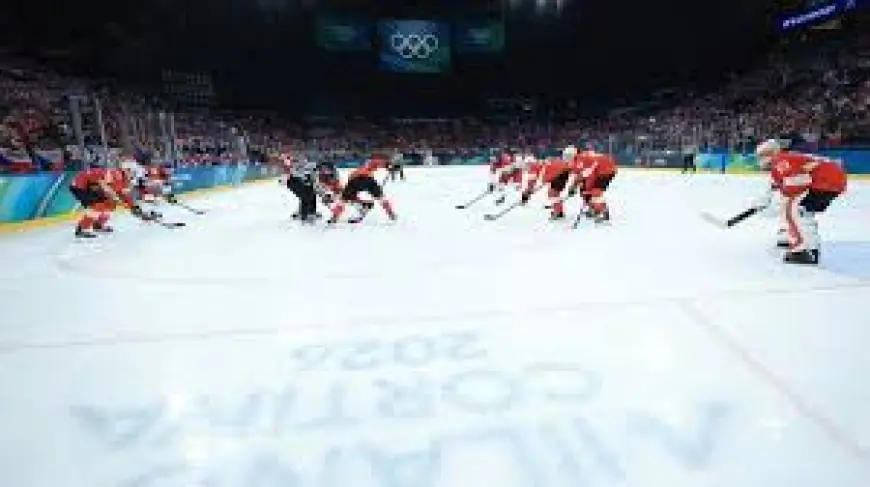
Over about 34 hours, spanning from early Wednesday morning to Thursday afternoon, sports fans were reminded of two things: first, Olympic hockey is amazing — three of the four men’s quarterfinal games on Wednesday and the women’s gold medal game on Thursday were each tied at the end of regulation. In each of those four games the game-tying goal came with less than 3: 30 left in the third period, a run of drama that creates new hockey fans. Second, three-on-three overtime when the games matter is widely criticized; it's viewed as a gimmick that marginalizes physical, toughness-driven players who are central to the first three periods.
The formats people are arguing about
- Group stage and preliminary medal round: 5 minutes of three-on-three followed by a shootout (same as the NHL regular-season model).
- Quarterfinals and semifinals: one description states 10 minutes of three-on-three followed by a shootout.
- Finals: one description states recurring 20-minute periods of three-on-three until there is a winner.
- Alternative descriptions in recent discussion introduce different options: a medal-round sequence that lists preliminaries, quarterfinals and semifinals as 10 minutes of five-on-five followed by a shootout, and a men's final that could use one 20-minute period of five-on-five before moving to three-on-three or a shootout.
These conflicting descriptions leave a core point unclear in the provided context: which exact sequence is being applied consistently across the tournament schedule.
Why the NHL and international constraints matter
Part of the constraint is supply-side: when the NHL moved to eliminate ties after the lockout in 2004, it experimented until settling on three-on-three for five minutes followed by a shootout in the regular season. The NHL will not accept Stanley Cup–style, open-ended five-on-five overtimes in the Olympics because players return to club duty and the league is reluctant to expose them to extended overtimes that could reach two or three extra periods. Event logistics are also an issue — Olympics rely on volunteers who may have shifting responsibilities — so organizers have leaned toward formats that limit indefinite extension. That combination helps explain why a gimmick persists at key moments.
Video review and coach’s challenge: who gets the final word?
The review systems diverge sharply. In the NHL, in the last minute of play in the third period or at any time in overtime, a Situation Room in Toronto can initiate a review. Under the international model laid out for these Olympics, teams must initiate a coach’s challenge at all times in the game. Recent commentary put that difference on trial with a panel of jurors — Sean Gentille, Shayna Goldman and Sean McIndoe — who examined whether league practices should change. All three rejected adopting the IIHF-style coach’s challenge into the NHL: McIndoe warned of unintended consequences and excessive challenges in overtime; Goldman expressed a preference for league-initiated efficiency and reluctance to penalize coaches with risk to a penalty kill; Gentille preferred removing responsibility from coaches and pointed to other leagues’ replay changes as precedent. What’s easy to miss is that the Olympic refereeing model also differs operationally: refs in the Olympic tournament will not have people in a Situation Room influencing their decisions; they will speak by headset to someone helping them navigate video review, but the remainder of that setup is unclear in the provided context.
One recent site also flagged a technical note unrelated to on-ice rules: a message stated that a user's browser is not supported and suggested downloading updated browsers for the best experience on the event site.
What’s at stake beyond a single game result is both perception and process: the formats affect who coaches deploy in crunch moments, and the review rules affect how confident teams and fans can be about the outcomes.
Short Q&A (brief):
Q: Will three-on-three be removed for medal games?
A: The provided coverage presents conflicting formats for medal-round play; the precise path forward is unclear in the provided context.
Q: Could review procedures shift mid-tournament?
A: Jurors in recent rule discussion pushed against coach-initiated universal challenges for reasons of efficiency and unintended consequences; any change would need agreement beyond that commentary.
The bigger signal here is that multiple tensions — fairness in deciding winners, player safety and tournament logistics — are colliding right now, and the available descriptions point to no single, settled solution.
If you’re wondering why this keeps coming up, it’s because both formats and review authority directly affect which players matter in decisive moments and whether final goals will stand without protracted dispute.