
















Eve Muirhead’s 2022 gold hangs over Team GB as curling silver and a late medal surge reshape closing-day expectations

Here’s the part that matters: eve muirhead’s 2022 Olympic gold—earned on her fourth attempt—now sits in sharp contrast with Great Britain’s fresh disappointment as the men’s curling rink took silver after a one-shot finale. That emotional swing matters for athletes, coaches and fans because it reframes Team GB’s most successful Winter Games ever and changes how the closing day is being approached.
Eve Muirhead and the emotional frame for Team GB’s close
Eve Muirhead’s 2022 victory is explicitly referenced by concerned teammates and observers as Britain processes the curling loss. The men’s rink received silver and looked gutted on the podium; Bruce Mouat managed a smile and a wave while reflecting on the result. The comparison to Muirhead’s gold is present in commentary and in the mood inside the team.
Curling final: the decisive shot and the reaction
The Gold went to Canada after a brilliant final stone by their skip Brad Jacobs left Bruce Mouat needing to take out two yellow stones with his last red stone; he was unable to execute that removal. Canada celebrated; Great Britain were described as dejected and heartbroken. Team members Grant Hardie and Bruce Mouat were interviewed moments after defeat and appeared utterly dejected; Mouat struggled for words and choked back tears while saying he felt shocked and that the team had felt they were the better side. Hardie reflected that their friendship was a driving motivation and recalled the pain from four years earlier, which is why they returned for another attempt.
How Team GB’s medal picture has changed this week
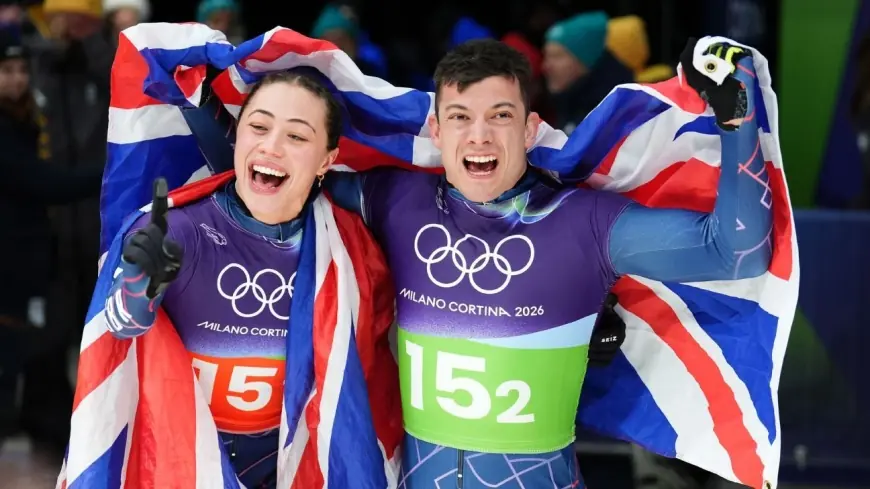
Team GB have not only earned silver in men’s curling but also matched a Games-best total of five medals for the nation, a mark previously achieved in 2014 and 2018. This edition became the most successful Winter Games in Team GB history by gold count: three medals this year have been gold, and on one memorable day two golds were secured by British athletes.
- Matt Weston won men’s skeleton and finished 0. 88 seconds ahead of Germany’s Alex Jungk and Christopher Grotheer.
- Charlotte Bankes and Huw Nightingale won a snow event together, with Bankes crossing first to secure a British first on snow.
- Matt Weston and Tabby Stoecker combined to take a team skeleton gold by 0. 17 seconds; Weston became the first British athlete at these Games to win two medals.
- Marcus Wyatt and Freya Tarbit finished fourth in a skeleton event; Tarbit expressed mixed emotions—happiness for teammates and disappointment at missing a medal.
- Zoe Atkin’s bronze on the final day pushed Team GB to match the five-medal total; she had earlier qualified top of the freestyle skiing halfpipe standings and was due to compete in a re-arranged Women’s Freeski Halfpipe Final.
What’s easy to miss is how individual breakthroughs—Weston’s double-medal performance and the snow pairing’s victory—have altered Team GB’s narrative from modest expectations to record-setting success.
Other podiums, schedule notes and the closing-day backdrop
Germany claimed gold in the two-woman bobsleigh with Laura Nolte and Deborah Levi, while teammates Lisa Buckwitz and Neele Schützen finished 0. 53 seconds slower for silver. The USA pairing of Kaillie Armbruster Humphries and Jasmine Jones took bronze. Brad Hall is set to pilot the Four-Man Bobsleigh for Great Britain, and the re-arranged Women’s Freeski Halfpipe Final includes Zoe Atkin on the start list.
In men’s ice hockey, Finland were moving toward the bronze medal with a 4-1 lead over Slovakia in the third period; the gold-medal match was scheduled for tomorrow at 1pm GMT between the USA and Canada.
Timeline and wider standings
Milan–Cortina 2026 has generated several temporal reference points: one summary described the day as the 16th and final day, while event schedules note that the Games got underway on 4 February, the opening ceremony took place on 6 February, and the program runs until the closing ceremony on 22 February, with 116 medal events across 19 days. The venues are split across four zones: Milano (ceremonies, ice hockey, speed skating, figure skating), Valtellina (freestyle skiing and snowboard), Cortina (women’s Alpine skiing and ice sports such as curling, skeleton and luge) and Val di Fiemme (ski jumping and cross-country skiing).
Nation-by-nation, Norway continued to lead, having exceeded the 16 golds they claimed in Beijing four years earlier and sitting four golds clear of second-placed Germany. The USA were in a position to claim second overall, with host Italy and the Netherlands not far behind. Team GB had set a target of four to eight medals and, with three golds already secured and a late bronze, are guaranteed at least the lower end of that target; the three golds followed a brilliant double on what was called ‘Super Sunday’.
The real question now is how Team GB will carry the mood from curling’s narrow defeat into the final events and into preparations for the next Games.
Key takeaways:
- Team GB matched a five-medal Games total and recorded three golds, the most successful showing by gold count in their Winter Games history.
- The curling final hinged on Brad Jacobs’ shot and one missed multi-stone takeout by Bruce Mouat, leaving Great Britain with silver and visible emotion.
- Matt Weston’s dominant skeleton performances and the snow team win were pivotal to Britain’s gold surge.
- Several scheduling notes and venue assignments remain relevant for the closing day; some brief references to the Games’ length differ across coverage, so exact framing may evolve.
The broader closing-day picture is a mix of celebration for historic golds and the raw grief of near-misses—both will shape Team GB’s narrative coming out of these Olympics.