

























Winter Weather Advisory Blankets the East Coast as Nor'easter Targets Millions This Weekend

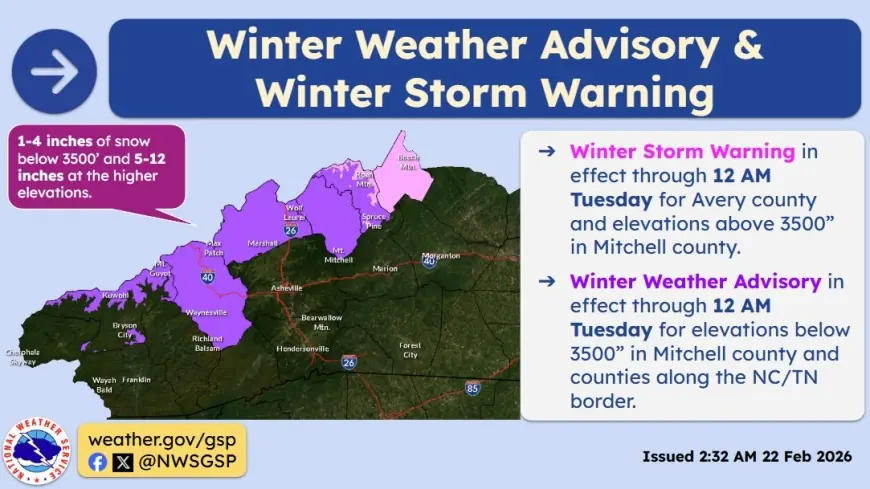
A powerful winter storm is tightening its grip on tens of millions of Americans from the Mid-Atlantic to New England, triggering a widespread winter weather advisory across major population centers and raising serious concerns about dangerous travel conditions through Monday morning. The system, expected to rapidly intensify into a classic nor'easter, is forcing residents and commuters to prepare for one of the most disruptive weather events of the season.
Winter Weather Advisory in Effect Across the D.C. and Virginia Region
A winter weather advisory is currently in effect for the nation's capital, northern Virginia, and central and southern Maryland from 5:00 PM ET Sunday through 10:00 AM ET Monday. Snow accumulations of 2 to 4 inches are forecast across those areas, with wind gusts climbing as high as 35 mph. The advisory carries a direct warning to residents: slippery road conditions are expected and the hazardous travel window overlaps squarely with the Monday morning commute. Drivers are being urged to slow down, allow additional stopping distance, and avoid unnecessary travel during the overnight hours.
Nor'easter Rapidly Intensifies Off the Atlantic Coast
The storm system responsible for the winter weather advisory is no ordinary late-February nuisance. A low-pressure center developing over the Atlantic is forecast to rapidly intensify — a process meteorologists refer to as "bombogenesis" — transforming the storm into a full nor'easter for much of the Interstate 95 corridor. The D.C. and northern Virginia region sits on the warmer western edge of the system, which means a wintry mix of snow and sleet rather than a straight snowfall event. Areas closer to the coast and farther northeast will see far higher totals and more dangerous conditions.
Blizzard Conditions Threaten New Jersey and Delaware Coast
While a winter weather advisory covers inland communities, coastal New Jersey and Delaware are facing a significantly more dangerous scenario. Blizzard conditions — defined by near-zero visibility and winds gusting up to 55 mph — are forecast to make travel virtually impossible along the Atlantic shore. Storm watches have been upgraded in those areas, and coastal flood watches are now in place for much of Atlantic coastal New Jersey and Delaware. Snowfall rates of 2 inches per hour or more are possible during the storm's most intense periods, with blowing and drifting snow compounding the threat.
Great Lakes and Northeast Already Battered Before Nor'easter Arrives
The current storm is only the latest blow in a relentless stretch of winter weather. Earlier this week, Winter Storm Warnings and winter weather advisories were issued across portions of Michigan's Upper Peninsula, northern New York, Vermont, New Hampshire, and southwest Maine. Warning-level snow totals of 5 to 8 inches fell across parts of New Hampshire and southern Maine, while southern New England — including Connecticut, Massachusetts, and Rhode Island — faced a mix of snow, sleet, and ice accumulations. Michigan's Upper Peninsula counties, including Baraga, Marquette, Iron, and Dickinson, received an additional 4 to 10 inches of accumulation, pushing snowpack to significant levels heading into the weekend storm.
What a Winter Weather Advisory Means for Everyday Life
A winter weather advisory sits one tier below a winter storm warning but should not be treated as an all-clear. It signals that snow, sleet, freezing rain, or blowing snow is expected to create hazardous travel conditions and disrupt daily routines — even when total accumulations appear modest on paper. Bridges and overpasses ice well before road surfaces, and even a thin glaze of freezing rain or sleet can be more dangerous than several inches of dry snow. Schools, transit agencies, and employers may still implement delays or cancellations based on local conditions. Individuals attempting to "beat the storm" often add the most risk to the roads during precisely the worst window.
Safety Precautions and What to Do Now
Forecasters and emergency managers are advising residents under any winter weather advisory to complete essential travel before conditions deteriorate Sunday evening, keep emergency kits stocked in vehicles, and charge devices in the event of power outages. Residents near the coast should monitor coastal flood watches closely, as storm surge and wave action could affect low-lying areas alongside the snow and wind. Road condition hotlines and state transportation websites are being updated regularly. If travel must occur Monday morning during the commute window, drivers are urged to add significant time, keep headlights on, and maintain at least double the normal following distance on all treated and untreated surfaces.
The storm is expected to clear most of the Mid-Atlantic by midday Monday, with temperatures climbing back into the mid-50s by midweek — but not before leaving a significant mark on one of the most densely populated stretches of the Eastern Seaboard.