

























Alaska Airlines’ Fleet Rewind: Why Dropping the 737-900 Was a Straightforward Move

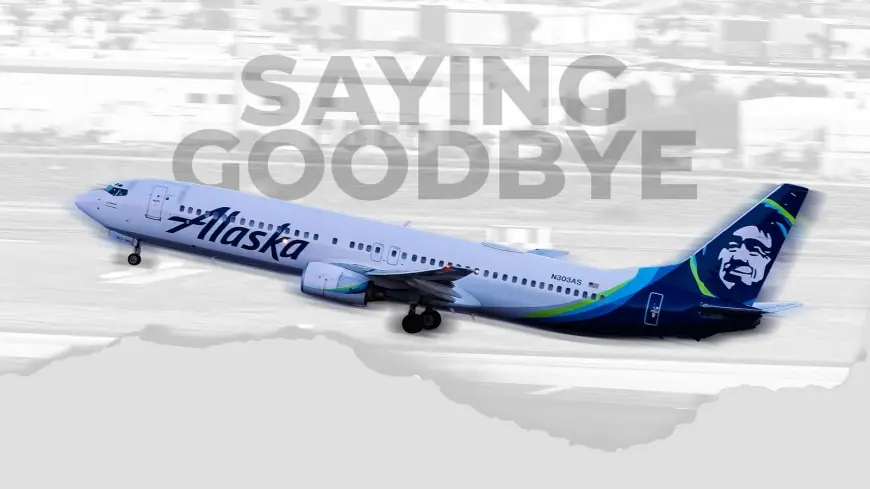
Why this matters now: alaska airlines’ phased retirement of the Boeing 737-900 completes a long-running shift toward higher-range, more standardized narrowbodies — a practical move that reshapes scheduling flexibility and operating economics across the carrier’s network. The exit closes a chapter that began with early-2000s deliveries and accelerates the push toward aircraft with greater range and lower costs per seat.
Alaska Airlines’ fleet logic: range, capacity choices and operating costs
Here’s the part that matters for operations and travelers: the 737-900 became redundant as newer 737 variants entered service with greater range or better economics. The airline had a large overall 737 fleet — hundreds of 737-family aircraft — but the 737-900 was a small subset that was incrementally less useful once extended-range and more modern models were available. Choosing replacements that offer either more range or lower operating cost makes it simpler to schedule longer sectors and to match capacity to demand.
- Fleet snapshot (details from carrier data): the airline operated a broad 737 fleet, with the 737-900 numbering in the low double digits over its lifetime.
- Capacity tradeoffs: the earlier 737-900 the carrier used seated up to 178 passengers in a two-class layout; the 737-900ER and later MAX 9 offered higher potential capacities but the airline kept similar published passenger counts on some replacements for consistency.
- Operational advantage: extended-range variants provided greater stage length, allowing the carrier to serve longer routes with the same narrowbody family.
What's easy to miss is how much a relatively small subfleet can complicate crew scheduling, maintenance pools and spare-part logistics; standardizing on fewer variants reduces those friction points and can speed recovery from irregular operations.
Mini timeline (concise):
- May 2001 — first 737-900 delivered to the airline.
- 2012 — the 737-900ER began joining the fleet, providing extended range capability.
- 2024 — reductions of 737-900s accelerated, cutting the type’s numbers roughly in half by year-end.
- April 2025 — the carrier retired its first 737-900 after nearly 24 years in service; withdrawals were completed by September.
The sequence closes that model’s presence while consolidating around ER and MAX variants; schedule effects from that consolidation will continue to appear as the carrier fully integrates replacements.
How the retirement unfolded and what followed
The decision to withdraw the 737-900 was implemented over multiple seasons rather than in a single mass retirement. The 737-900ER became the immediate technical replacement in many cases because it retained the family commonality while adding extended range (advertised range figures for that model are notably higher). Later, the 737 MAX 9 became the preferred long-term narrowbody choice for its similar capacity and improved operating economics.
Operationally, the airline maintained a consistent passenger layout when shifting types in some cases — keeping the same business and main-cabin counts while adjusting extra-legroom seating. That approach helps preserve product continuity for frequent flyers and eases seat-planning across the network.
The 737 MAX program’s temporary halt earlier in its lifecycle — prompted by two fatal accidents involving unrelated operators — is part of the background to any modern narrowbody decision. Those events remain a factor when carriers weigh fleet renewal timelines and public perception.
The real question now is how quickly the carrier will realize cost and scheduling gains from a narrower set of 737 variants, and how that will influence route choices on longer thin markets where range matters.
Key indicators that will show the next turn: measurable improvements in schedule stability on longer routes, fewer maintenance substitutions for spare parts, and more predictable seat-mile costs once the replacements are fully absorbed into operations.
Micro takeaways for travelers and observers: retirements like this are operational decisions more than spectacle — they tend to smooth airline logistics and enable longer nonstop flying with a consistent product. Expect timetable and aircraft-type notes to reflect the simplified fleet as the year progresses.
The bigger signal here is fleet simplification: fewer unique narrowbody variants translates to clearer maintenance planning and route deployment, even if individual aircraft types look similar from the gate.