












Punch Monkeys Draw Crowds: Fans, keepers and a surprising social turn at Ichikawa City Zoo

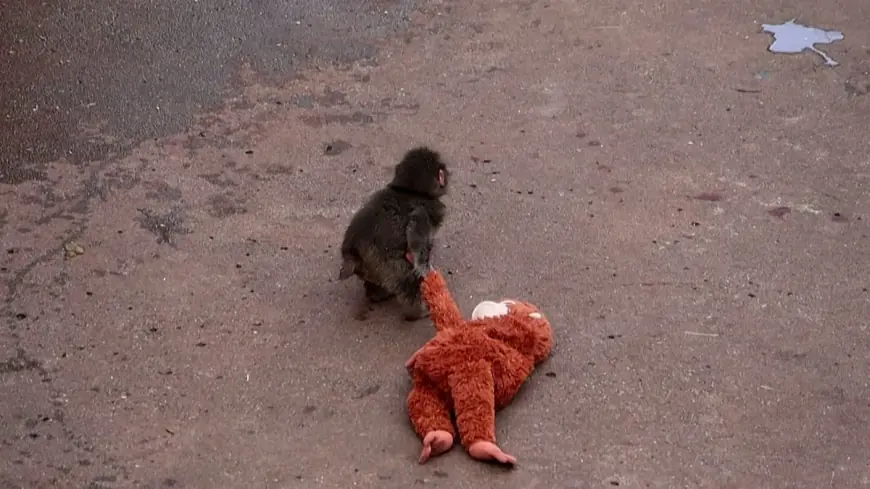
Visitors and staff are the first to feel the shift: punch monkeys footage that once broke millions of hearts online has turned into an on-site draw at Ichikawa City Zoo in Japan. Fans now flock to see Punch, a young Japanese macaque once rejected by his mother and given a stuffed orangutan as a substitute; recent clips show him moving from solitary comfort with keepers and a toy toward real interactions with other macaques.
Why local visitors and zoo teams are paying attention
Here’s the part that matters: Punch’s story has changed the immediate visitor experience and the day-to-day work of keepers. Crowds arriving to see him alter foot traffic patterns, and keepers who initially provided round‑the‑clock human company and the toy are now watching social integration unfold. The presence of fans has become part of the containment of his public profile and the zoo’s visitor rhythms.
Punch Monkeys — how the viral moment started and what followed
Punch, identified as a young Japanese macaque at Ichikawa City Zoo, became widely visible after videos showed him dragging and playing with a soft orangutan toy that zookeepers had given him as a substitute for his mother. He had been abandoned by his mother and spent the first few months struggling to bond with other monkeys in the enclosure. During that early period his primary companions were human keepers and the stuffed orangutan.
Signs of social progress inside the troop
Recent video footage signals a clear behavioral turn: Punch was given a hug by one monkey and has been seen grooming others — an action identified in the footage as a key part of macaque socialisation. Those moments mark a shift from solitary comfort-seeking to active participation in social rituals that underpin macaque friendships and hierarchy.
- Punch’s origin: rejected by his mother and described as an abandoned baby monkey that captured widespread online attention.
- Comfort object: a stuffed orangutan provided by zookeepers became a focal point in early footage.
- Early companionship: human keepers and the toy were his main social contacts during the first few months.
- Recent change: observed hugging by another monkey and instances of grooming peers, indicating social acceptance.
Expert perspective and operational detail
Matt Lovatt, director for the Trentham Monkey Forest, discussed Punch’s behaviour on a breakfast television programme and described grooming as the key route for these primates to form friendships within a group. Lovatt oversees the well-being of the Barbary macaques at a wildlife sanctuary near Stoke-on-Trent, and his commentary framed grooming as a turning point for troop integration.
What this means going forward for Punch and the zoo
Fans continuing to flock to Ichikawa City Zoo will keep public attention on Punch’s recovery and social progress. The real question now is whether the observed grooming and the hug signal lasting acceptance by the troop or a tentative stage in a longer adjustment process. Recent updates indicate that the behaviour has shifted; details may evolve as keepers monitor ongoing interactions.
It’s easy to overlook, but the switch from relying on human keepers and a toy to engaging in grooming is precisely the behavioural milestone that suggests Punch may be settling into macaque life.
If you’re wondering why this keeps coming up: the visual contrast between early solitary footage and the later social clips explains both the online surge of interest and the increase in visitors now seeing Punch in person.