











Kenneth Williams — the subversive genius whose outsiderness still reverberates a century on

Why this matters now: the centenary reframes a career built on contradiction — erudite one moment, deliberately vulgar the next — and a public persona that helped expand cultural space for queer outsiders. The life of kenneth williams is being revisited not simply as nostalgia but as a case study in how a flamboyant performer unsettled class, taste and propriety while leaving a tangible estate that continues to support animal charities.
Contextual rewind: why the 100th birthday sharpens the contradictions
Tom Allen placed Kenneth Williams alongside historical queer figures when citing the freedoms now enjoyed by queer people; the actor was also invoked in conversations alongside Oscar Wilde and Noël Coward and admired by figures ranging from Orson Welles to Judy Garland, and from Maggie Smith to Morrissey. What that list underlines is the breadth of Williams’s reach: he moved easily between highbrow and lowbrow circles, and his outsiderness was both a personal stance and a public provocation.
Kenneth Williams: persona, voice and the anatomy of comic discomfort
On stage, screen and radio his adenoidal voice was omnipresent, sliding from sandpapery cockney to ostentatious Sandringham pomp. Physically he described himself with a caustic phrase — "a dried-up prune-like poof" — but was also likened to a living cartoon: flared nostrils, twitching eyebrows, pinprick eyes and a "knife" of a nose. He said of himself that perhaps it was his duty to be a sort of mosquito, continually reminding people of their animal side. Michael Sheen, who played him in the 2006 film Kenneth Williams: Fantabulosa!, linked that danger and spontaneity to Williams’s appeal, sketching him as a trickster who pricked pomposity and turned expectations upside down.
Carry On career and defining comic moments
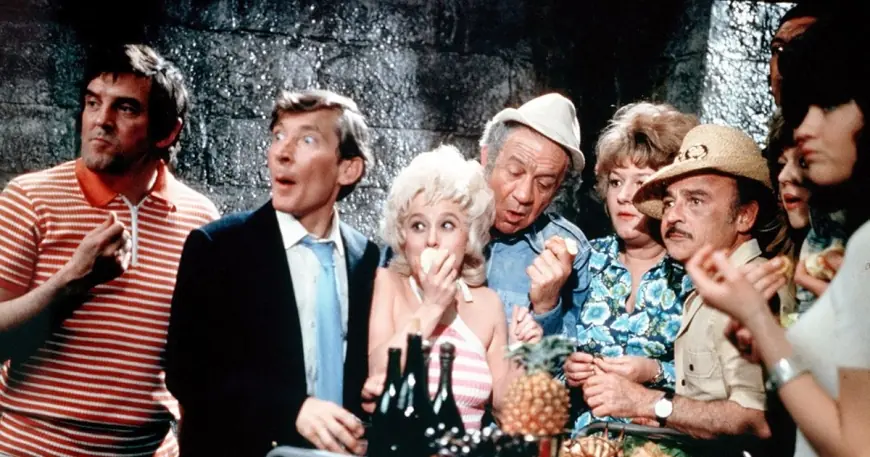
Williams is best known as a mainstay of the innuendo-rich Carry On films, appearing in 26 of them. Memorable titles in his filmography include Carry On Cleo and Carry On Camping, and Carry On Up The Khyber is listed among the classics he worked on. One famously indelible image from Carry On Camping involves Barbara Windsor’s bikini top being catapulted on to his horrified face during a morning workout. His final contribution to the series came in 1978 in the dismal Carry On Emmannuelle, in which he plays the French ambassador and is described as continually refusing sex with his — unclear in the provided context.
Final years, death, estate and continuing charity gifts
Kenneth Williams died in April 1988 at the age of 62, in what has been described as a tragic drug overdose. The coroner returned an open verdict because it could not be established whether the overdose was intentional or accidental. Medication had been prescribed for chronic health issues including stomach ulcers and back pain. Friends suggested the death was an accident and pointed to the fact that his elderly mother was still alive and living next door.
After his death he left parts of his estate to a close friend and neighbour, Paul Richardson, including a collection of diaries and letters. A Will Trust was arranged to manage annual donations from his estate, which was valued at more than £500, 000. In 2024 those charitable distributions included £46, 000 each to Guide Dogs For The Blind and Battersea Dogs Home, £34, 500 to the PDSA and £57, 500 to the RNLI.
Flat 62, a blue plaque and the diary pages that mapped a life
On 22 February 2014 Barbara Windsor unveiled a blue plaque to commemorate what would have been his 88th birthday; the plaque is mounted on the London flat he occupied during the 1960s. Kenneth resided in Flat 62 on the upper floor of Farley Court, a 1929 apartment building near Madame Tussauds, between 1963 and 1970. It was his home while he was shooting titles at Pinewood Studios. In his diary he recorded feeling elated after relocating, noting that his bedroom looked out over Regent’s Park and that he could see traffic twinkling down Marylebone Road; on another occasion he wrote of loathing the "nits" crowding outside the waxworks.
- Micro timeline: 22 February 1926 — born to working-class London parents; 1963–1970 — lived in Flat 62, Farley Court; 1978 — final Carry On Emmannuelle contribution (role: French ambassador; some detail unclear in the provided context); April 1988 — died aged 62; 22 February 2014 — blue plaque unveiled; 2024 — estate donations listed.
Here's the part that matters: the picture that emerges is of a performer who weaponized otherness as performance and who left an estate that continues to fund animal charities. The real question now is how public memory will hold the messy, subversive parts alongside the celebrated moments.
It’s easy to overlook, but Williams’s contradictions — erudition and vulgarity, theatricality and private pain — are what kept him culturally vital and keep conversations about him alive a century after his birth.
kenneth williams remains a figure whose influence and contradictions are still being sorted: admired by peers and contemporaries, lampooned and loved in equal measure, and the subject of a legacy that extends from diaries and letters to ongoing charity donations.