















Baby Monkey Punch: baby monkey punch at Ichikawa City Zoo bonds after being given stuffed orangutan

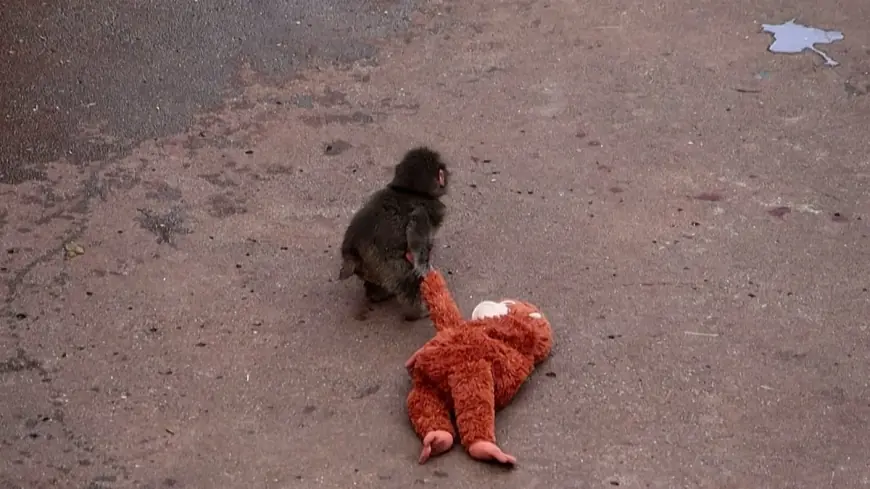
The baby monkey punch that broke millions of hearts online has begun to find comfort with other macaques after zookeepers at Ichikawa City Zoo in Japan gave him a stuffed orangutan as a substitute for his mother. Recent video shows the young Japanese macaque, named Punch, being hugged by another monkey and taking part in grooming, signs of social acceptance.
Baby Monkey Punch hugged a stuffed orangutan after being abandoned
Punch, an abandoned young Japanese macaque at Ichikawa City Zoo in Japan, went viral after videos showed him dragging around and playing with a soft orangutan toy that zookeepers provided as a stand-in for his mother. The images of the baby clinging to the stuffed orangutan captured wide attention and broke millions of hearts online.
Early months: reliance on human keepers and a toy
During the first few months of his life Punch struggled to bond with the other monkeys in his zoo's enclosure and had only the company of his human keepers and the stuffed toy to rely on. That solitary start was visible in earlier footage; the toy functioned as his main source of comfort while he remained apart from his group.
Signs of social progress inside the Ichikawa City Zoo enclosure
Recent videos show Punch turning things around: he was given a hug by one monkey and was seen grooming others, actions that indicate shifting relations within the group. Grooming is a key part of macaque socialisation, and observers have noted that those behaviours can mark the first steps toward broader acceptance among peers.
Expert comment from Trentham Monkey Forest director Matt Lovatt
Matt Lovatt, director for the UK's Trentham Monkey Forest, spoke to a breakfast programme about Punch's behaviour and described the development. "It's been great to see him starting to groom, because that's the key way these primates can start to build up friendships with the monkeys within their group, " Lovatt said. He oversees the well‑being of the Barbary macaques at a wildlife sanctuary near Stoke‑on‑Trent.
Fans flock and wider coverage framed by European media programming
Fans have flocked to the Japan zoo to see the viral baby monkey Punch, a response reflected in video headlines and broadcast segments. European media outlets feature a range of programming that includes a flagship morning TV show broadcast live from Brussels every morning at 08. 00 and also available as a newsletter and podcast; a weekly political showdown called The Ring where two political heavyweights from across the EU face off; and a Tech Talks series that explores the impact of new technologies. Content offerings also include a special series called The Food Detectives following Europe's best food experts as they join forces to crack down on fraud.
That programming often frames human and environmental stories alongside broader beats: Europe's water is under increasing pressure from pollution, droughts and floods, taking a toll on drinking water, lakes, rivers and coastlines; commissions of coverage take viewers on journeys around Europe to examine protecting ecosystems, how wastewater can be better managed, and to discover possible water solutions. Broadcasters also present the latest climate facts and meet experts on the front line of climate change who explore new strategies.
Punch's story — an abandoned baby macaque given a stuffed orangutan, then seen accepting grooming and a hug — has moved from solitary footage of a toy to images of tentative social bonds, and those developments have been picked up across broadcast and online coverage that mixes human-interest and wider environmental and political programming.