





















Capital One Arena Renovation Goes Aboveground as Exterior Work Begins

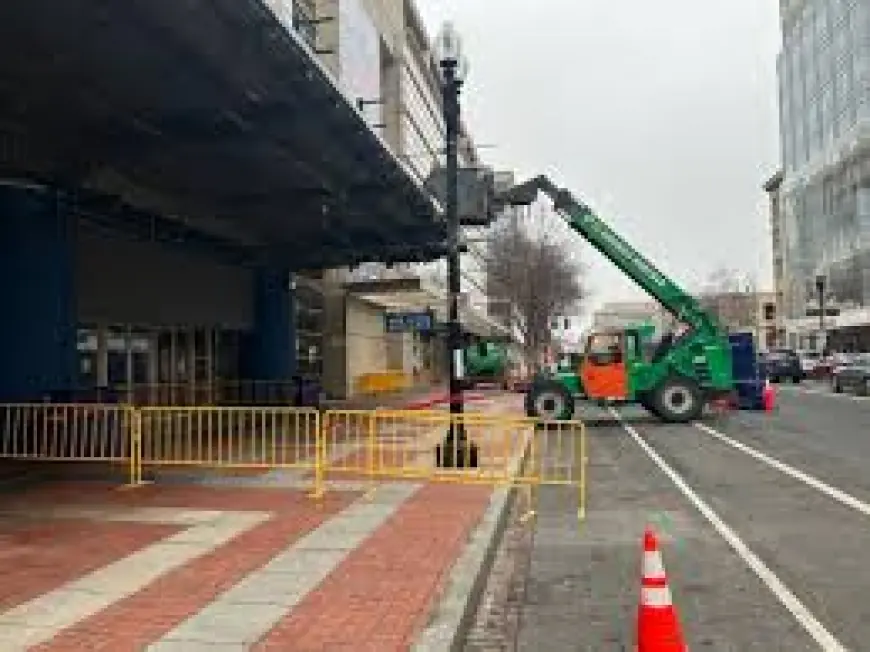
The long-planned overhaul of capital one arena has moved out from behind the scenes, with crews installing overhead protection and preparing exterior scaffolding that will reshape the building’s facade and guest flow. The visible shift matters because it triggers temporary sidewalk closures and new pedestrian routes that will affect event nights while paving the way for a reconfigured entrance and expanded fan amenities.
Development details — Capital One Arena
Work this month has included installation of overhead protection near the Gallery Place–Chinatown Metro station at 7th and F streets and preparations to erect exterior scaffolding. Contractors are removing the arena’s outer shell and taking down existing LED boards as exterior construction ramps up. Monumental Sports & Entertainment leaders say this marks the transition from primarily behind-the-scenes, event-level improvements to substantial aboveground alterations.
The renovation is part of an $800 million project scheduled for completion by 2027. The effort began nearly a year ago on internal upgrades, and exterior activity increased in late 2025. A new main entrance is slated to open in fall 2026 and will sit closer to the Metro station. Pepco is performing utility and stormwater work on the site as part of concurrent construction paths.
Context and escalation
Monumental Sports & Entertainment has guided the project’s phasing to limit disruption early on, focusing initially on event-level expansions that extended into the Gallery Place Mall and created new event spaces. Jim Van Stone, president of business operations, described the initial work as mostly invisible to guests. Jordan Silberman, the company’s president of venues, says the exterior phase is necessary to complete fan-facing elements, including widened concourses and improved vertical circulation.
The District is contributing public funds under a 2024 agreement negotiated by Mayor Muriel Bowser intended to keep the city’s professional teams playing locally. That public commitment helped push the project from internal upgrades into the more disruptive exterior construction now visible on surrounding streets.
Immediate impact
Crew activity has produced immediate changes to pedestrian patterns. Detour signs and construction equipment line streets around the arena; the sidewalk on F Street will close on event nights, with the roadway temporarily serving as the pedestrian route. Sidewalks on F, 6th and 7th streets are planned to be widened later in the project to ease crowding.
The redesign will expand concourses by an estimated 6 to 8 feet, increase the number of escalators and elevators, and add more space for fans to gather. The overhaul will also nearly double the number of concessions, create a roughly 10, 000-square-foot team store and boost restroom capacity by about 40 percent. These changes are intended to shorten lines and reduce congestion entering and exiting events.
Forward outlook
Exterior work is proceeding along two concurrent paths to enable both facade replacement and internal reconfiguration. In the coming months, patrons should expect scaffolding, overhead protection and temporary shifts in entrances and exits while crews remove the building’s shell and update exterior signage and LED installations. The new main entrance is targeted to open in fall 2026, with full project completion on track for 2027.
What makes this notable is that the visible phase directly links construction impacts—closed sidewalks, street-level walkways and detours—to measurable improvements inside the venue, including a larger retail footprint and significantly more restrooms and concessions. Monumental executives emphasize that the changes are fan-focused and timed to limit disruption during the interior-first portion of the work, while city utility upgrades continue alongside the aboveground renovations.