

















Iran news: nuclear talks tighten as U.S. deadline and unrest raise stakes

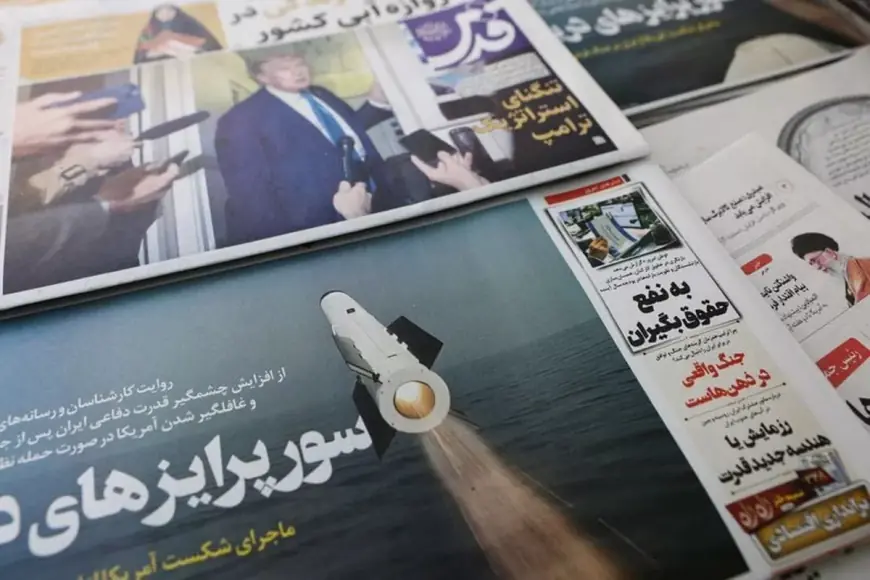
Iran’s standoff with the United States sharpened heading into the weekend, with Tehran signaling it may accept limits on uranium purity while rejecting demands that would end enrichment entirely. The diplomatic push is unfolding alongside a major U.S. military buildup in the region and renewed domestic unrest in Iran—three storylines that are now converging and increasing the risk of rapid escalation.
Nuclear talks hinge on enrichment terms
Iran’s latest position centers on how much uranium it enriches rather than whether it enriches at all. Recent negotiations have focused on Iran’s stockpile enriched to about 60%, a level far above civilian needs and much closer to weapons-grade material.
A key point in the current back-and-forth: Iran has indicated a willingness to dilute higher-enriched uranium down to 20% or lower under international oversight, while resisting proposals that would require exporting its stockpile out of the country. U.S. officials have continued to press for stricter terms, including demands framed publicly as “zero enrichment.”
What remains unclear is whether negotiators can bridge the gap between:
-
Iran’s insistence on maintaining enrichment on its own soil, and
-
the U.S. position that any remaining enrichment capacity could leave a rapid pathway back to higher levels.
U.S. military buildup adds pressure to a narrow timeline
The diplomatic track is being squeezed by a stated U.S. timeline that suggests a decision point within days, not weeks. U.S. forces have increased their regional posture with high-visibility deployments, which Iranian officials have criticized as destabilizing even as they say a deal is still achievable.
The central risk is miscalculation: heightened readiness and crowded air and sea lanes can amplify the consequences of any incident, even one that begins as a limited exchange or misunderstanding. With public messaging hardening on both sides, each new military move also becomes a signal—intended or not—about willingness to use force if talks fail.
Tehran’s message: no concessions under pressure
Iranian President Masoud Pezeshkian used a nationally broadcast speech on Saturday, February 21, 2026 (ET) to argue that Iran will not be coerced by external pressure during negotiations. Iranian officials have portrayed their position as defending national rights while remaining open to an agreement that includes verifiable limits.
Foreign Minister Abbas Araghchi has emphasized that a deal is possible but must be framed as reciprocal rather than imposed. The difference between public messaging and technical negotiating details matters here: even if diplomats are close on some mechanisms—verification steps, dilution processes, or limits on centrifuge activity—leaders still need a formula they can defend domestically.
Unrest and accountability questions resurface inside Iran
Iran is also facing renewed domestic strain, with student-led protests reported in Tehran and other cities. Demonstrations have been tied to economic hardship and broader political grievances, and they have reignited international scrutiny over arrests, casualties, and legal proceedings tied to earlier nationwide unrest.
International human rights officials have pressed for transparency on the scale of violence during recent crackdowns and have raised alarms about expedited trials and the risk of severe sentences, including death penalties in some cases. The government disputes large casualty estimates, and the true toll remains contested, fueling anger among families seeking information.
This internal pressure does not automatically translate into policy shifts on the nuclear file, but it can narrow leaders’ room to maneuver—especially if they perceive compromise as a sign of weakness.
What to watch next
The next several days are likely to bring clearer signals about whether diplomacy can hold. Three indicators stand out:
-
Verification language: whether Iran and the U.S. converge on enforceable steps for dilution, stockpile limits, and inspections.
-
Disposition of existing material: whether any compromise emerges on storing enriched uranium domestically under tighter controls versus moving it abroad.
-
Regional posture: whether additional military deployments, alerts, or exercises suggest preparations for strikes—or a continued effort to pressure talks.
For now, Iran news is being shaped by a tight triangle: nuclear terms that remain unresolved, military signaling that raises the cost of failure, and domestic unrest that complicates leaders’ political calculations. The nearer the decision window gets, the more likely it becomes that even small developments—an inspection dispute, a protest surge, or a military incident—could tilt the trajectory quickly.