
























Carlos Alcaraz's Doha Rout Sharpens Early-Season Momentum and Raises the Bar for the Tour

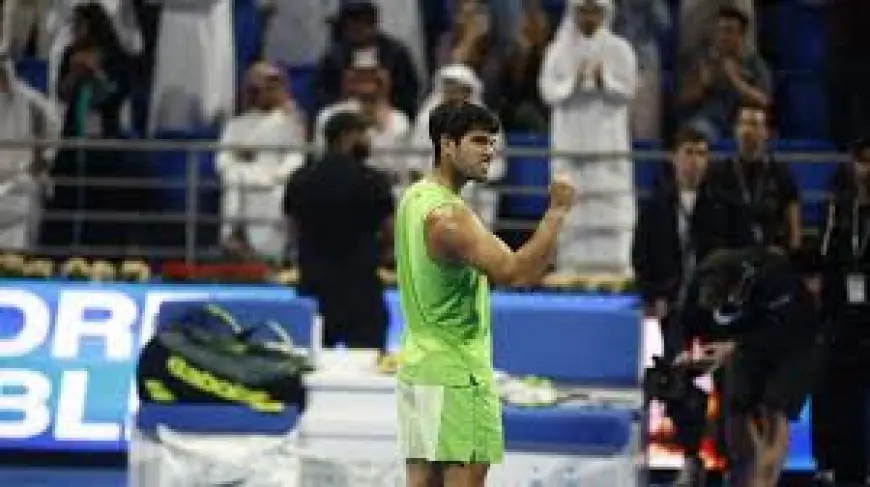
Why this matters now: carlos alcaraz's emphatic Doha victory isn't just another title — it deepens a pattern of early-season dominance and forces younger competitors and rivals to adjust their expectations. In a compact final that lasted 50 minutes, the world number one turned a high-profile matchup into a lopsided statement, extending a tour-level momentum that already includes a major crown earlier in the year.
Carlos Alcaraz and the momentum shift: immediate impact on rivals and rankings
Here’s the part that matters: the win in Doha is the second trophy of the season for the champion, reinforcing a trend toward greater consistency and match control. That dynamic reshapes competitive calculations for peers who must now account for an opponent combining finishing speed with tournament-level efficiency. Younger contenders, in particular, face a sharper benchmark — one demonstrated both by the scale of the final scoreline and by Alcaraz’s rapid turnaround across events.
What changes because of this win is subtle but practical. Tournament draws and player preparation will factor in a top seed who turns up in peak form and resolves finals quickly; that increases the premium on early-round physical readiness and tactical adaptation. For players like Arthur Fils, who returned from a serious back injury earlier in his season and had been on an upward curve, the match exposes the gap that still exists between recovery progress and top-level execution.
It’s easy to overlook, but the win also compounds a psychological edge. Opponents who saw Alcaraz close matches rapidly this season must weigh whether to alter aggression levels early or adopt containment plans that have not yet proven effective against him.
Event details and abbreviated timeline
The final was contested at the Khalifa International Complex in Doha and produced a one-sided scoreboard: 6-2, 6-1 in favor of the top seed. The match duration was 50 minutes. Earlier in the tournament, the champion reached the final after a semifinal victory that required more time and tension — a 7-6, 6-4 win over Andrey Rublev that lasted 2 hours and 3 minutes. The title in Doha follows an earlier tournament triumph this season, underscoring a fast start to the year.
- Semifinal: victory secured with a 7-6, 6-4 scoreline in 2h03.
- Final: dominant 6-2, 6-1 win, completed in 50 minutes.
- Venue: Khalifa International Complex in Doha; final scheduled time in local reporting noted the evening slot.
Who feels the immediate effect: younger players aiming to break through on the ATP tour; established rivals who must counter a player in unusually consistent form; and the coaching teams measuring how to close the small but decisive tactical gaps exposed in Doha.
The real question now is how long this stretch of dominance can be sustained across different surfaces and deeper tournament runs. Early-season trophies are meaningful, but the next signals will come from match-ups on varying court types and from how opponents adjust their game plans in response.
Writer’s aside: What’s easy to miss is how a short, emphatic final can mask tougher routes to the same destination — the contrast between a long, tight semifinal and a rapid final win tells you as much about efficiency as it does about peak form.
Short forward-looking signals that would confirm the next turn: continued title finishes in upcoming events and repeatable, dominant scorelines against a broader set of opponents would signal sustained acceleration; closer matches against top peers could indicate the window for challenge remains open.