




















Nasa Boeing Starliner designated a 'Type A' mishap after thruster failures left astronauts stranded

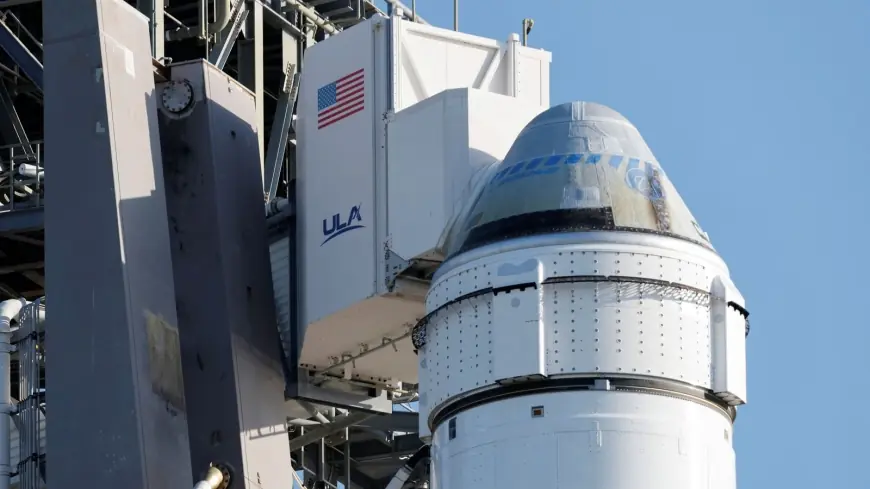
The Nasa Boeing Starliner crewed test flight has been formally classified as a "Type A" mishap, the agency announced after a 312-page investigation found hardware failures and leadership breakdowns that left two astronauts stranded in orbit for more than nine months. The designation elevates the incident to the agency's most severe category and triggers a series of corrective actions and accountability measures.
Development details — Nasa Boeing Starliner classification and findings
The agency’s 312-page report concludes that the June 2024 crewed test flight suffered critical thruster failures that left the Boeing-built capsule dangerously out of control. Pilots Butch Wilmore and Suni Williams were forced to restart propulsion systems, manually regain control and dock with the International Space Station. What had been planned as a short-duration test—variously described in documentation as an eight-to-14-day mission and as a 10-day stay—turned into a months-long ordeal: the two astronauts remained aboard the station for more than nine months before returning home in March 2025.
The "Type A" classification places the mishap on the same severity scale as the two fatal shuttle disasters of 1986 and 2003. The agency’s definition reserves this category for incidents that cause more than $2m in damage, the loss of a vehicle or its control, or deaths. Investigators identified multiple contributing problems: hardware failures, design and engineering shortcomings, and lapses in oversight and leadership at both Boeing and the agency. The report states that, while there were no injuries and control was regained before docking, the mission had the potential for a significant mishap.
Context and escalation
The investigation team traced the escalation to a combination of technical and organizational failures. Technical challenges named in the report included thruster malfunctions and other persistent system issues previously noted in development. Those hardware problems were compounded by leadership missteps and a cultural breakdown between Boeing and the space agency, which investigators say contributed to acceptance of a spacecraft that was not ready for crewed operations.
New agency leadership has been emphatic in its critique. Jared Isaacman, who assumed the agency’s top post in late 2025, described the flight as an avoidable failure rooted in poor decision-making and oversight. He has directed that the findings be accepted as final and has ordered corrective actions and leadership accountability to prevent recurrence. Another senior official, Amit Kshatriya, called the event "a really challenging event in our recent history, " underscoring the gravity of the agency’s internal assessment.
Immediate impact
The immediate human impact was concentrated on the two test pilots, Wilmore and Williams, who were effectively stranded aboard the International Space Station for over nine months. Their extended stay followed the June 2024 mission anomaly and ended only after a subsequent crewed spacecraft provided return capability in March 2025. Both pilots have since retired from the agency.
Operationally, the incident disrupted planned short-duration testing, converting an intended one- to two-week mission into a prolonged contingency. The classification as a Type A mishap carries financial and programmatic repercussions under agency rules and places the Starliner program under intensified scrutiny. Boeing has acknowledged the findings and stated it has driven substantial cultural changes and made progress on corrective technical actions since the incident.
Forward outlook
The agency has accepted the report as final and initiated corrective measures aimed at addressing the specific engineering faults and the leadership and cultural shortcomings identified. The report’s findings set a clear timeline for implementation: leadership accountability steps are already in motion and technical corrections have been mandated as part of program oversight.
What makes this notable is the combination of a technical failure that nearly led to a catastrophic outcome and an institutional critique that places responsibility on both contractor and agency oversight. The near-miss has prompted explicit remedial directives and a heightened inspection regime for crewed-flight readiness going forward, with the agency insisting that lessons from the mishap be fully incorporated before further crewed operations proceed.