

























Mass Start Speed Skating: Stolz and Manganello Headline Final Day in Milan

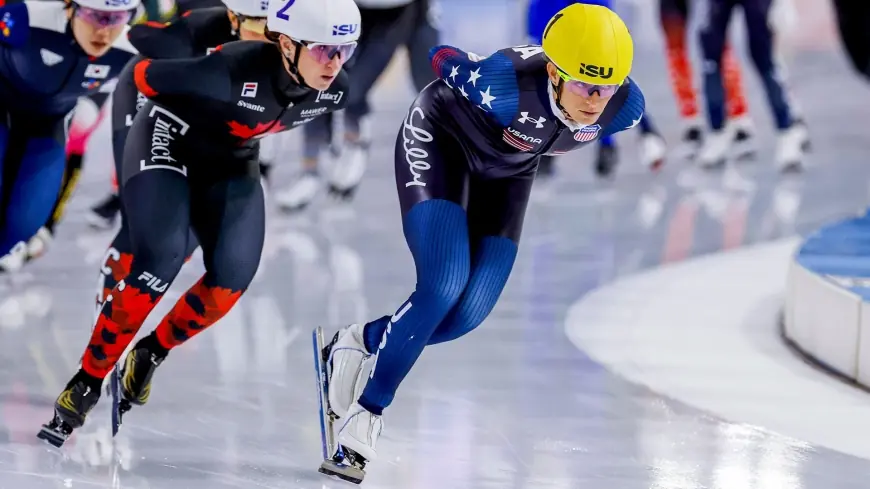
The final event of the Olympic speed skating program is the mass start, and mass start speed skating will decide the last medals as Jordan Stolz and world No. 1 Mia Manganello vie for gold. The latest session saw Stolz advance from his semifinal into the final, which is scheduled for 9: 40 a. m., making the closing day of skating a high-stakes finish for the U. S. team.
Mass Start Speed Skating — format, field and what unfolded in the semis
The mass start is raced in a pack rather than time trial format. Skaters complete 16 laps with sprint points marked every four laps, creating frequent accelerations inside a strategic 16-lap race. Fields typically range between 16 and 24 skaters per race. The Olympic bracket uses two semifinals composed of 14 or 15 skaters each, with the top eight from each semifinal advancing to the final. Some skaters can reach the final through referee decisions in exceptional circumstances.
In the most recent session, Stolz skated in the 8 a. m. semifinal and advanced to the final, which is scheduled for 9: 40 a. m. The progression of semifinals into a single final preserves both the sprint-bonus dynamics of the intermediate laps and the decisive final sprint that awards the highest points.
Medal stakes and key contenders: Stolz, Manganello and the field
For the United States, two skaters arrive with strong credentials: Jordan Stolz and Mia Manganello. Stolz, 21, has already reached the podium multiple times at these Games and carries the sprint speed that could translate into a strong mass start finish. If he captures gold in the mass start, he would become only the second American to win three events at the same Winter Games. A medal in this event would also push his Olympic total toward a rare multi-medal performance.
Manganello, at 36 and preparing to retire after nearly 25 years on the ice, arrives at the mass start as a decorated specialist. She secured her first individual World Cup gold in the mass start earlier in the season and then clinched the World Cup title in the discipline after a series of podiums. Her consistent season-long performance positions her as a leading favorite in the women’s mass start competition.
Beyond the U. S. pair, the field includes established mass start names: the reigning Olympic champion, a world No. 2, and a former long-distance Olympic medalist who became the oldest Olympic speed skating medalist earlier in the Games. Several World Cup race winners and multi-medalists are also present, ensuring a deep, international contest where race craft and timing on intermediate laps will matter as much as raw speed.
Race dynamics, strategy and what to watch in the final
Mass start speed skating rewards a blend of endurance, sprint speed and tactical nous. Intermediate sprints at laps 4, 8 and 12 create mini-competitions inside the race and yield points that affect ranking beyond the top three finishers. The final sprint awards substantially larger points, making placement at the finish the primary determinant of medals, while intermediate points can reorder standings just outside the podium places.
Expect a cautious opening as the pack gauges position, then surging intensity on the intermediate laps. Skaters with experience in short track or prior mass start success may time their efforts to exploit the bell-lap dash. Given the mix of sprint champions and long-distance specialists, the final could come down to a late sprint finish or a well-timed breakaway that survives the pack chase.
Uncertainties remain in how national strategies will unfold and how individual skaters will adapt mid-race. Recent results and World Cup form point to several medal contenders on both the men’s and women’s sides, but the mass start’s chaotic nature means the final podium will reward whoever navigates laps, sprints and positioning best on the day.