
























Men's Mass Start Speed Skating: Stolz Seeks Third Gold in men's mass start speed skating

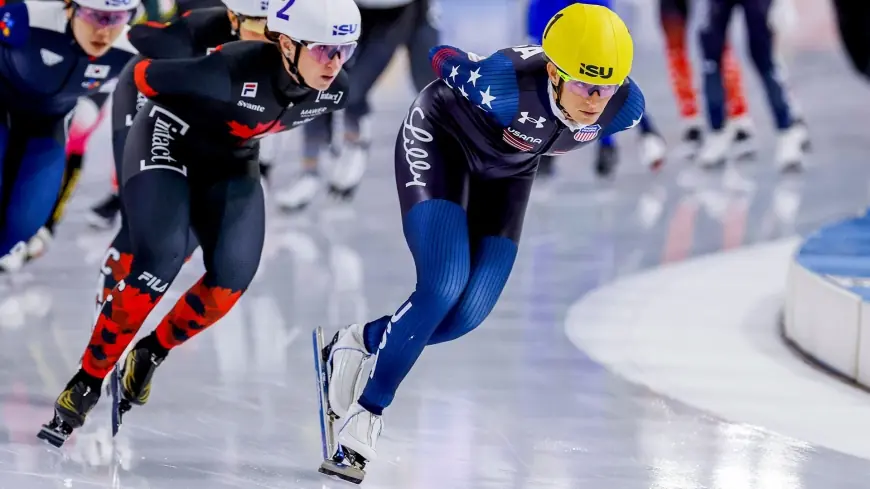
The final speed skating event at these Olympics closes on Saturday with the men's mass start, and Jordan Stolz is aiming for a third gold while contending with the strain of multiple races that has already produced mixed emotions and a silver. The men's mass start speed skating event will decide the last podium places of the program and pits sprint speed against pack tactics.
men's mass start speed skating
The mass start is a pack race that more closely resembles short track than traditional long-track events. Fields typically range from 16 to 24 skaters racing 16 laps, which are divided into four intervals with a sprint every four laps. The Olympic format uses two semifinals of 14 or 15 skaters each; the top eight from each semifinal advance to the final.
Men's Mass Start Speed Skating
Jordan Stolz arrives in the mass start after an Olympic run that already includes golds in the 500m and 1, 000m and a silver in the 1, 500m. He set Olympic records in each of his prior two races at these Games, and his recent emotions on the podium highlighted how demanding multiple high-intensity efforts can be over the course of a single Olympics.
Stolz added the mass start to his program before the season and showed rapid improvement: one week after placing 15th out of 24 at the World Cup opener, he took bronze in the event, and by World Cup No. 4 he reached gold. At U. S. Olympic Trials in January he produced a pair of strong results, taking 2nd and 1st across two races that weekend. Teammate Ethan Cepuran, who anchored the U. S. men's team pursuit to silver on Feb. 17, will join Stolz in the men's competition.
If Stolz converts his sprint speed and prior Olympic form into pack success on Saturday, he would become only the second American to win three events in any sport at the same Winter Games; the first swept five men's speedskating events in 1980. If his accumulated fatigue from multiple races remains a factor, the mass start’s pack dynamics could blunt the raw sprint advantage.
Field and likely challengers
The start list includes seasoned mass-start specialists and distance skaters who can survive pack racing. Mia Manganello, world No. 1 in the event, is also contesting the mass start and is preparing to retire; at 36 she won her first individual World Cup gold in the mass start at the season opener in November, followed by one silver and two bronzes across the next four races to clinch the World Cup title by a single point.
Jorrit Bergsma, 40, looms as a long-distance threat; he entered the Olympics as the world No. 1 in the mass start after winning two World Cup races earlier in the season and recently became the oldest Olympic speed skating medalist. Other contenders named for the event include the reigning Olympic champion in the mass start, the world No. 2 in the discipline, and the 10, 000m gold medalist, alongside Canadians who have shown podium form in distance events this Games.
Key narrative indicators heading into the final: Stolz’s sequence of podiums and Olympic records point to elite finishing speed; mass-start World Cup form and season titles from specialists point to strong packcraft and tactical nous. If the race breaks into late sprints that favor short-burst power, Stolz’s sprint pedigree gives him a clear path. If the final stays controlled by long-distance pacing and timed attacks, specialists who have led the World Cup rankings may have the advantage.
Key takeaways
- Final event of the Olympic speed skating program is the men's mass start on Saturday.
- Jordan Stolz seeks a third medal after two golds and a silver; mass start brings different tactical demands.
- Contenders include world-ranked mass-start specialists and experienced distance skaters; veteran experience and World Cup form will matter.