

























Nasa Artemis Rocket Launch Targets March 6 as Crew Enters Quarantine After Successful Fueling Test

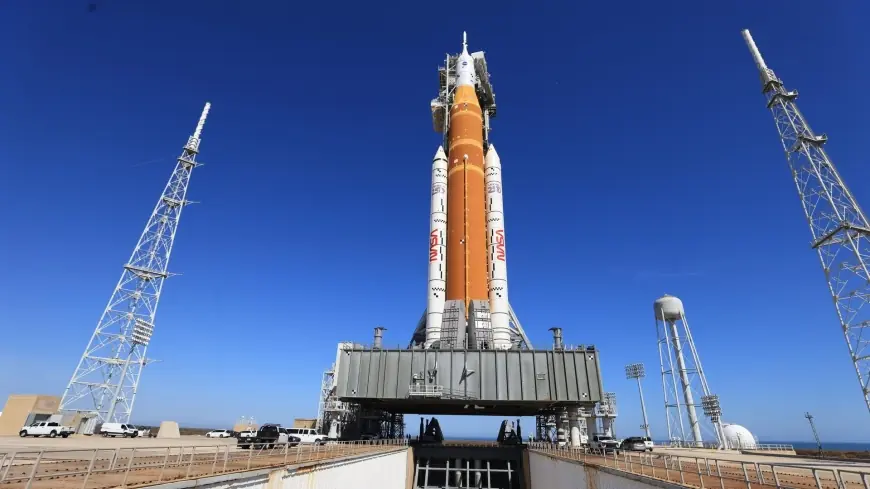
NASA is targeting no earlier than Friday, March 6, for the nasa artemis rocket launch of Artemis II, pending completion of required work at the launch pad, analysis of test data, and the outcome of a Flight Readiness Review. The four astronauts set to fly around the Moon entered quarantine Friday evening in Houston as teams move into final preparations.
Nasa Artemis Rocket Launch — Development details
Mission managers set March 6 as the earliest launch opportunity after teams completed a second wet dress rehearsal on Feb. 19 and moved into post-test operations. Propellant draining operations for the rehearsal are complete and technicians have begun final preparations at the launch pad. Managers briefed media during a news conference earlier Friday on the status and the path forward.
The crew entered quarantine at approximately 5 p. m. Central Standard Time on Friday in Houston. The four astronauts — Reid Wiseman, Victor Glover, Christina Koch and Jeremy Hansen — will limit exposure to others during the quarantine period, which is typically about 14 days before launch, to help ensure they remain in good health for the mission. The crew is scheduled to fly to the Kennedy launch site roughly five days before liftoff.
Context and pressure points
The march toward this launch opportunity followed a second wet dress rehearsal that was conducted after an earlier attempt ended prematurely because of a hydrogen fuel leak at the pad. Teams identified issues with seals and filters during the first rehearsal and carried out fixes that were then checked during subsequent fueling operations. The successful second rehearsal demonstrated propellant loading, countdown procedures and other critical ground operations that feed directly into the Flight Readiness Review now scheduled to take place in the coming days.
What makes this notable is that the recent practice run cleared multiple operational boxes at the pad and enabled managers to set an earliest launch date. The timing matters because the window, crew quarantine, pad work and the review process must align precisely for a crewed shakedown flight of this complexity.
Immediate impact
The immediate effects are operational and personnel-focused. The crew’s quarantine narrows their exposure risk and fixes a timeline for their movement to the launch site. Technicians and pad teams have shifted from rehearsal operations to final preparations and system checks at the pad. Mission leadership will use the test data from the wet dress rehearsal to guide the Flight Readiness Review and to determine any remaining work that must be finished before the launch attempt.
For flight controllers, engineers and ground crews, the rehearsal results reduce the set of unknowns they must resolve in the run-up to the launch window. For the astronauts, the quarantine begins the final phase of preflight routines that culminate in the crew’s transfer to the launch site several days before liftoff.
Forward outlook
The immediate next milestone is the Flight Readiness Review in the coming days, which will assess completed pad work, the test data from the wet dress rehearsal, and whether the program can proceed to the targeted launch date. If managers clear the program, the schedule calls for the crew to travel to the launch site about five days before the attempt, continuing the standard sequence of final spacecraft and ground checks.
Confirmed items on the near-term calendar therefore include completion of outstanding pad tasks, closeout of post-test action items, and the Flight Readiness Review itself. The matter remains under review until that formal assessment is complete and managers announce their decision on proceeding.
The broader implication is that a successful transition from rehearsal to launch preparations restores momentum for this crewed mission, while the review process will be the immediate gatekeeper for whether the March 6 target holds. Either way, teams have moved from troubleshooting to final preparations, and the coming days will determine whether the program advances on the current schedule.