























MacKinnon's Late Power-Play One-Timer Sends Canada to Olympic Hockey Gold Medal Game

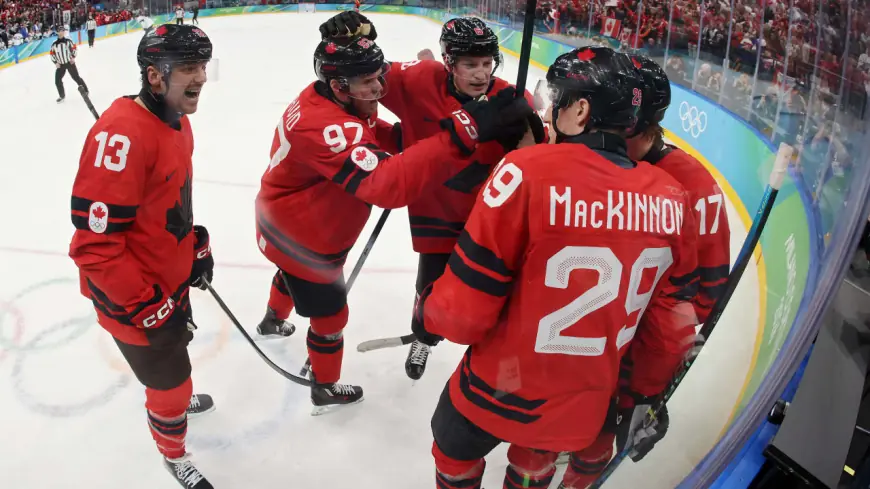
In a dramatic semifinal at the Olympic Winter Games Milano Cortina 2026, Nathan MacKinnon scored a power-play one-timer late in regulation to lift Canada past Finland 3-2, punching the squad into the Olympic Hockey gold medal game. The goal capped a tense, high-skill sequence that illustrated why Canada leaned on its star-laden unit when the moment demanded it.
Olympic Hockey: How the late goal unfolded
With 2: 35 remaining in the third period, coach Jon Cooper sent Nathan MacKinnon, Connor McDavid, Macklin Celebrini, Sam Reinhart and Cale Makar onto the ice to start a power play. That grouping combined considerable offensive firepower — noted in the game as including three of the top four scorers in the NHL this season, a defenseman who has had the most points in the League since 2018-19, and a forward tied for second in goals since 2023-24 — and it produced sustained pressure.
The advantage featured a flurry of looks: an early chance for Reinhart eight seconds into the man-advantage that was stopped by Finland’s goalie, a one-timer attempt from Makar at the point, MacKinnon’s own one-timer from the left circle, a Celebrini one-timer created by McDavid, and another McDavid one-timer set up by Makar. That sequence amounted to 1: 58 of elite-level puck movement and scoring attempts, followed by two minutes and 10 seconds of mounting anxiety.
MacKinnon was ultimately rewarded for a wall battle and positioned himself for a decisive shot. He scored with two seconds remaining on the power play, firing a one-timer from the left face-off circle with 36 seconds left in regulation. The goal sealed a 3-2 victory for Canada at Santagiulia Arena and sent the team into the gold medal game on Sunday.
Power play strategy and pivotal moments
The power play’s success in the semifinal was not a single action but the result of sustained puck movement, physical battles along the boards, and creative passing. That creativity nearly unraveled when a Finland forward got a stick on a pass across the middle, redirecting the puck into the corner. Had that interception turned into a clear, it likely would have ended the power play; instead, the puck stayed alive and Canada continued to press.
Key moments included multiple one-timer attempts from both the point and the circles, rapid puck circulation that forced the defending team to rotate, and individual battles that created second-chance opportunities. One player summarized the finish as a collective effort, calling the game-winning strike a five-man accomplishment.
Implications for Canada heading into the gold medal game
The win gives Canada momentum built on a special-teams performance in a do-or-die environment. The lineup deployed late in the semifinal represents a concentration of top offensive talent and playmaking ability, and the outcome reinforced the decision to rely on that package when odds and timing converged.
Canada will enter the gold medal game on Sunday having survived a tense semifinal where its power play produced the decisive moment. The teams and exact matchup for the final were set by that 3-2 result, leaving little doubt that special teams and late-game execution will be focal points in the championship contest.
Recent updates indicate the details above are final for the semifinal; further developments about lineup decisions or game-day adjustments for the gold medal match may evolve as the tournament continues.