




















Punch Monkey: Abandoned Macaque Near Tokyo Finds Comfort in Stuffed Toy and Wins Public Support

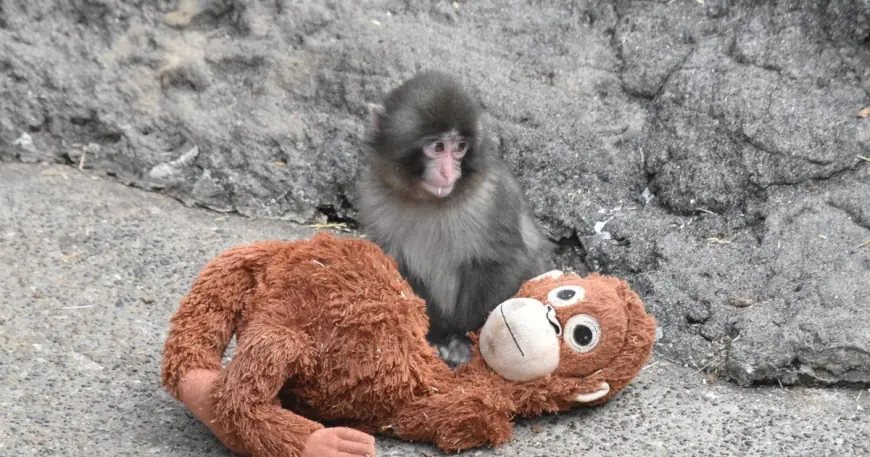
A six-month-old Japanese macaque nicknamed Punch has become a focal point of public attention after zookeepers said the abandoned infant developed a strong attachment to a stuffed orangutan used as a surrogate; online engagement with the story, labeled punch monkey on social feeds, has been substantial. The animal’s path from hand-rearing to reintroduction highlights practical challenges in zoo care and the emotional response such cases generate.
Punch Monkey — What happened and what’s new
The young macaque, named Punch, was born weighing 500 grams on July 26, 2025. His mother did not care for him after birth, and zookeepers began hand feeding him the next day. Two keepers involved in his care are identified as Kosuke Shikano, age 24, and Shumpei Miyakoshi, age 34.
Rather than isolate Punch entirely, the care team raised him near the scent and sounds of the rest of the monkey troop to support later reintegration. Because newborn macaques typically cling to a mother’s fur for comfort and to build muscle, staff experimented with substitutes—rolled-up towels and several stuffed toys—to replicate that comfort. Punch selected an orangutan stuffed toy and used it as a surrogate, often clutching and snuggling with it at night.
The team gradually increased Punch’s time on the troop’s “monkey mountain” and fully reintroduced him on Jan. 19. In the early days after reintroduction the troop reacted warily; Punch sometimes appeared intimidated when trying to approach other monkeys and continued to cling to the stuffed toy. A visitor captured a photo and video of Punch a few days after the reintroduction, and when the zoo’s own account formally introduced Punch on Feb. 5 the post was widely reshared, exceeding 8, 000 reposts from that account’s initial introduction. A hashtag translated as “#HangInTherePunch” was created, and a social media analysis tool recorded roughly 37, 000 posts and reposts using that tag between Feb. 5 and Feb. 13. Many online comments expressed emotional support and sympathy for Punch.
Behind the headline
The case underlines two practical priorities for caretakers: ensuring a neonate’s immediate survival when maternal care is absent, and preparing that neonate for eventual social life with conspecifics. The keepers’ choice to raise Punch close to the troop’s sensory environment reflects a deliberate effort to balance intensive human care with long-term reintegration goals. The stuffed orangutan served as a tactile and visual stand-in for maternal contact when natural nursing and clinging were not available.
Stakeholders include the zookeeping team directly managing Punch’s daily care, the broader monkey troop whose social dynamics will determine his acceptance, and the visiting public whose attention has amplified the story. Public engagement can create both supportive pressure to prioritize Punch’s welfare and scrutiny over how reintegration proceeds.
What we still don’t know
- Whether Punch will achieve steady, lasting acceptance by the monkey troop after the initial reintroduction.
- Longer-term behavioral and health outcomes linked to early hand rearing and reliance on a stuffed surrogate.
- How the zoo plans to manage Punch’s social needs if the troop continues to be wary.
- Whether the level of public attention will affect the zoo’s care decisions or resource allocation.
What happens next
- Successful social integration: if observers note increasing grooming, play and shared sleeping with other troop members, staff may gradually reduce human intervention and the stuffed surrogate.
- Partial acceptance with ongoing support: if Punch remains timid but interacts intermittently, zookeepers may continue monitored contact and use behavioral management techniques to foster bonds.
- Continued dependence on human care: if intimidation by other monkeys persists and clutching of the stuffed toy continues, staff could maintain a higher level of human-assisted care for a longer period.
- Public-interest-driven outcomes: sustained online attention could prompt additional public outreach or fundraising around troop care; conversely, attention could wane and leave routine management to the zoo team.
Why it matters
Punch’s case illustrates immediate, tangible issues in captive-animal welfare—how to substitute for maternal contact without compromising later social life. For zookeepers, the balance between ensuring a neonate’s survival and promoting eventual integration requires incremental steps and constant observation. For the public, the story has become a focal point for empathy and interest in animal care practices, while creating a spotlight that may influence both transparency and operational decisions. Near-term, the key outcomes to monitor are observable social behaviors within the troop and any adjustments in care routines that reflect the troop’s response.