


















Mens Curling Final: Four men, one aim — to end a 102-year wait for Olympic gold after dramatic semi-final win

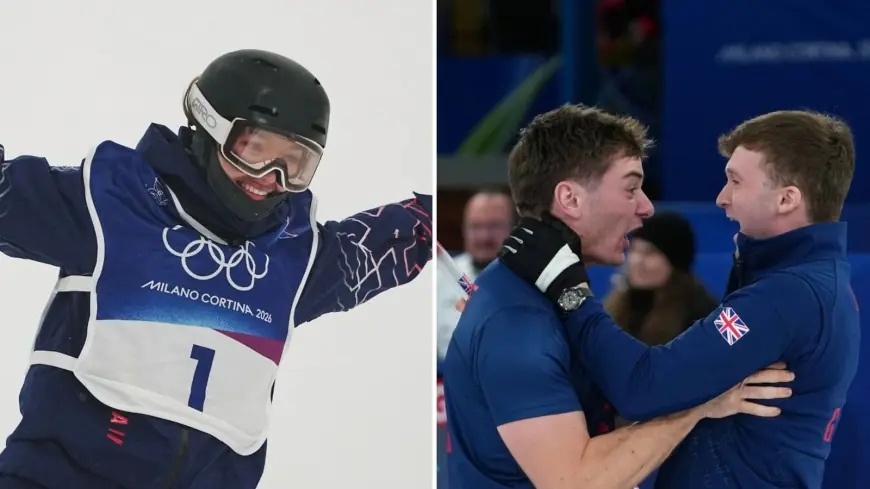
The mens curling final sees Team GB's quartet aiming to convert a previous silver into the country's first men's Olympic gold in more than a century. Their 8-5 semi-final victory over Switzerland set up a meeting with Canada on Saturday at 1: 05 p. m. ET, with a gold medal on the line.
What happened and what’s new — Mens Curling Final
Team GB reached the mens curling final after an 8-5 semi-final win over an unbeaten Swiss side in northern Italy. The British squad had earlier scraped through the round-robin phase, leaving qualification momentarily out of their hands, but delivered a decisive performance in the knockout match.
Key confirmed facts: the quartet that will contest the final are Bruce Mouat, Grant Hardie, Hammy McMillan and Bobby Lammie. The team upgraded a previous Olympic silver medal as their declared objective and have since built a record that includes two world championship titles, multiple European crowns and 12 Grand Slam victories. Their semi-final drew peak viewership of 3. 4 million people and featured a pivotal seventh-end shot that shifted momentum in their favour.
Behind the headline
What led here: the four players formed a unit almost nine years ago and insisted on joining their national elite programme together rather than individually. That collective decision established continuity and allowed the squad to specialise roles: the skip leads strategy and shot-making, the vice-skip calls supporting strategy and throws third stones, with lead and second focusing on opening play and sweeping dynamics.
Incentives and constraints: the team is pursuing a long-stated goal of Olympic gold and seeks to convert a Beijing silver into a historic first British men's curling gold since 1924. Their campaign carries momentum from multiple recent major titles, but their earlier round-robin struggles illustrate that form can fluctuate under tournament pressure. Facing Canada in the final presents both a familiar rivalry and a strategic challenge, amid contemporaneous disputes that have increased scrutiny on umpiring in the sport (noted as allegations that have prompted higher enforcement attention).
Stakeholders: the quartet gains national attention and the potential legacy of a rare Olympic title; teammates and alternates remain part of preparation and support roles; opponents stand to protect established records and reputations; tournament officials and governing bodies hold leverage through rules and officiating decisions.
What we still don’t know
- Exact lineups and whether the same four players will start the final or if an alternate will be used.
- How recent round-robin form will translate into final-match execution against Canada.
- Whether increased umpiring and the contemporaneous allegations will affect conduct or decisions in the final (unconfirmed).
- Detailed game plans each team will employ for specific ends and ice conditions.
What happens next
- Gold-medal conversion: Team GB wins the final and secures the first British men's curling Olympic gold since 1924 — trigger: a superior performance across key ends, capitalising on strategic opportunities.
- Silver repeat: Team GB reaches the final but falls short, upgrading nothing from the last Olympics but confirming continuity at the top level — trigger: narrow margins or a late swing in scoring by Canada.
- Officiating focus: heightened umpiring or disputes around stone interactions influence the match tempo or outcomes — trigger: any contentious plays that draw formal review or extended officiating involvement.
- Legacy consolidation: irrespective of outcome, the quartet’s run reinforces their status among the sport’s top teams, sustaining momentum for future world championships and Grand Slams — trigger: continued title-level performances following the Games.
Why it matters
Near-term, the mens curling final is a national sporting moment: victory would end a 102-year gold drought and elevate four athletes into a unique place in the nation's Winter Olympic history. For the sport itself, the match is both a showcase of elite shot-making and an operational test for officiating under increased scrutiny. Fans and national programmes will watch for tactical evolution in sweeping, stone placement and late-end strategy; results will influence selection debates, funding priorities and public interest going forward.
At stake is more than a medal: the outcome will shape narratives about team-building choices made almost a decade ago, validate strategic investments in elite development, and determine whether a dominant recent run of world and Grand Slam titles culminates in the Olympic gold the quartet set out to win.