























USA Women’s Hockey Wins Olympic Gold vs Canada as Megan Keller Seals 2–1 Overtime Thriller

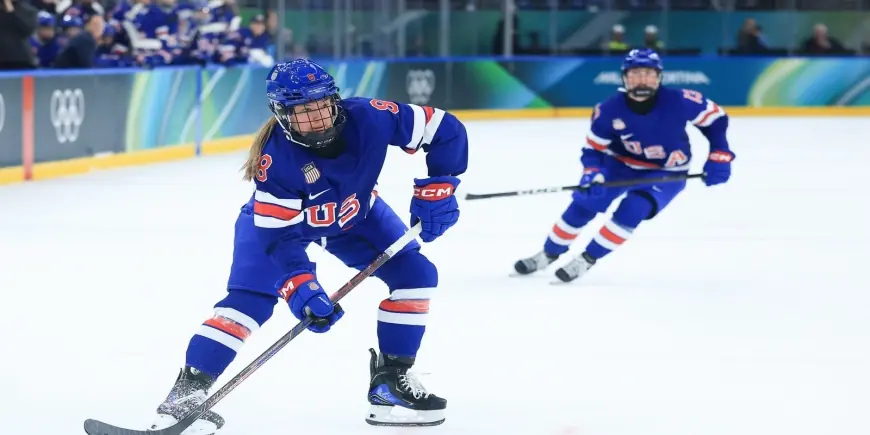
Team USA women’s hockey is back on top of the Olympic podium after a dramatic 2–1 overtime win over Canada on Thursday, February 19, 2026, Eastern Time. The gold medal game swung on two late moments that instantly became tournament lore: captain Hilary Knight’s tying deflection with 2:04 left in regulation, then defense leader Megan Keller’s overtime winner 4:07 into the extra session.
For a rivalry that has defined women’s Olympic hockey for decades, the latest chapter landed with maximum tension and minimum margin, and it arrived after a tournament in which the United States looked nearly untouchable until the final minutes.
What happened in the USA vs Canada women’s hockey gold medal game
Canada carried a 1–0 lead into the final stretch of the third period, putting the United States in its first true scoreboard crisis of the tournament. With the goalie pulled and the net-front battle intensifying, Knight redirected a long shot to level the game at 1–1, forcing overtime.
In the 3-on-3 extra period, Keller ended it on a backhand finish 4:07 in, sparking a celebration that capped a run in which the Americans had piled up lopsided wins but still needed one last comeback to grab gold.
This result gives the United States its third Olympic gold medal in women’s hockey and its first since 2018, while Canada’s recent Olympic edge from 2022 now flips into a fresh wave of “what if” questions about a game they controlled for long stretches.
Behind the headline: why this gold mattered so much for Team USA
This was not just another USA vs Canada final. It was a pressure test for a U.S. roster built to overwhelm opponents with depth and pace, and for a coaching staff that had not faced much adversity during the tournament. Before the final, Team USA had outscored opponents 31–1, producing at least five goals in every game. That dominance can be a double-edged sword: it builds confidence, but it can also leave a team unpracticed in desperation hockey.
Canada, meanwhile, entered with a clear incentive: disrupt the rhythm, grind down space, and drag the game into a low-event contest where one bounce could decide everything. For long periods, that plan worked.
The stakeholders were obvious and intense. For the U.S., Knight was skating in what she has framed as her last Olympics, with a legacy already secure but still missing the storybook ending. For Keller, a defender often praised for two-way control more than headline goals, this was a chance to define a tournament with one swing. For Canada, the rivalry itself is a national measuring stick, and a late lead in a final is the kind that can haunt a program for years if it slips.
Team USA women’s hockey roster, coach, and the core names fans searched
The U.S. was led by head coach John Wroblewski, with Knight as captain and Keller as an alternate captain. Key names that drew heavy search interest throughout the tournament included goaltender Aerin Frankel, forward Taylor Heise, and defender Cayla Barnes.
Team USA’s roster balance also shaped how it won. The Americans did not rely on one scoring line; they rolled waves. That depth matters most against Canada, where shifts are shorter, mistakes are punished instantly, and special teams and net-front details often decide everything.
USA women’s hockey scores and results that set up the final
The United States’ path to gold was a statement from the start, including:
-
Feb 5: USA 5–1 Czechia
-
Feb 7: USA 5–0 Finland
-
Feb 9: USA 5–0 Switzerland
-
Feb 10: USA 5–0 Canada
-
Feb 13: Quarterfinal, USA 6–0 Italy
-
Feb 16: Semifinal, USA 5–0 Sweden
-
Feb 19: Final, USA 2–1 Canada in overtime
That earlier 5–0 win over Canada is why this final felt so jarring for fans watching the U.S. struggle to generate clean looks for much of regulation. It also explains why the late equalizer mattered beyond the scoreline: it reasserted identity, proving the Americans could win ugly, not just win big.
What we still don’t know
Even with the confetti down, there are missing pieces that will shape how this tournament is remembered:
-
How the coaching staffs will describe the tactical adjustments that turned the third period into a U.S. siege
-
Whether Canada views the loss as a one-off late breakdown or a deeper depth issue exposed across the event
-
What Knight’s next steps are after her final Olympics, and how Team USA manages the leadership transition
What happens next in Olympic hockey, including the men’s tournament
Women’s hockey is finished, but Olympic hockey is not. The men’s tournament heads into semifinals on Friday, February 20, 2026, Eastern Time, with Canada vs Finland at 10:40 a.m. ET and USA vs Slovakia at 3:10 p.m. ET. The men’s gold medal game is set for Sunday, February 22, 2026, ET.
Why it matters
This gold medal reinforces two realities at once: the United States has built a women’s program deep enough to dominate full tournaments, and Canada remains close enough that a single late deflection can rewrite everything. The rivalry is not cooling off; it is tightening. And with a new generation rising around the veteran stars, the next Olympic cycle starts the moment the celebrations end.