
















Peaky Blinders Movie: First Trailer and Calke Abbey Shoot Reveal Tommy Shelby’s Wartime Return

The peaky blinders movie has unveiled a first full trailer and fresh production details that give the clearest view yet of Tommy Shelby’s return to Birmingham during World War Two. The footage and location disclosures matter because they confirm new cast dynamics, a wartime setting and concrete release windows for the film.
Peaky Blinders Movie: What happened and what’s new
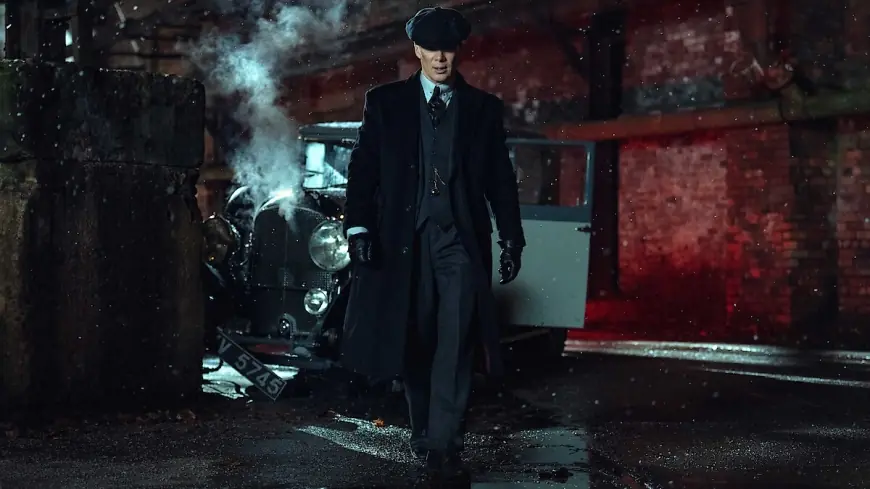
The first full trailer for the film has been released, showing Cillian Murphy back as an older, greying Tommy Shelby. The narrative shown in the trailer places Shelby in Birmingham in 1940, returning from a period of self-imposed exile to confront a reckoning portrayed as both personal and patriotic, with the future of his family and the country described as being at stake in the project’s press notes.
New cast members join the returning ensemble: Barry Keoghan appears as Tommy Shelby’s son and current gang leader, identified in the trailer as Duke Shelby; Rebecca Ferguson is seen urging Tommy to face his demons; Tim Roth appears in an official-looking role that involves an approach to Duke Shelby about betrayal; and Stephen Graham and Sophie Rundle are back in familiar parts. The trailer also shows an argument that Tommy abandoned his son and his kingdom, and depicts the son running the gang in a way that echoes earlier years.
Production details released alongside location disclosures name a country house used as a key setting. Calke Abbey in Derbyshire was chosen for its aged interiors and exterior character, which required minimal alteration to represent a period in the 20th century when country houses were in rapid decline. Filming used multiple rooms including passageways, a kitchen, a schoolroom and a night nursery, while a stable yard and riding school were dressed with vintage cars.
Logistics at the house required extensive conservation work: more than 1, 300 historic objects were carefully packed, moved and reinstated in a process that took over 950 hours. A staged sequence at the site includes an image of Tommy Shelby emerging from thick mist with a slow, staggering stride.
The film is scheduled to open in cinemas from 6 March and to launch on a streaming service on 20 March.
Behind the headline: context, incentives and stakeholders
The project is presented as a direct continuation of the television saga’s central conflicts, shifting the timeline into the era of World War Two and placing Shelby’s legacy and family leadership at the heart of the drama. Bringing in younger and high-profile actors for key roles — notably the actor playing Tommy’s son — recalibrates intergenerational stakes within the story and creates new dramatic friction that the trailer foregrounds.
Key stakeholders include the lead actor reprising his role, the newly introduced principal cast members, the production team that selected heritage locations, and the custodians of the country house whose collections required significant protective work. The location host stands to gain heightened public interest and visibility from the film’s screen use, while the production benefits from an authentic period environment that minimizes set construction.
Incentives for the filmmakers are clear: the wartime setting and familial confrontation expand the narrative scale, and high-profile casting choices raise the film’s market appeal ahead of its staggered theatrical and streaming releases. Conservation teams faced tight constraints balancing preservation with on-set transformation, requiring detailed handling of historic objects and careful staging of scenes.
What we still don’t know, what happens next and why it matters
- Missing pieces / open questions
- Full plot specifics beyond the trailer’s broad framing remain undisclosed.
- The exact nature and motivations of the English officer character who invites betrayal are not fully explained in the trailer.
- The long-term distribution and exhibition strategy beyond the stated dates is not detailed here.
- Audience or critical reaction to the trailer and early location announcements is not provided.
- What happens next — plausible scenarios and triggers
- Wide theatrical release followed by streaming window: the film opens on the stated cinema date, then reaches the streaming platform on the later date, triggering mainstream audience attention and box-office tracking.
- Critical and fan reaction to the trailer shapes promotional emphasis: strong positive response could accelerate marketing push around the new cast dynamics; muted reaction could shift messaging to heritage locations and production craft.
- Heritage engagement drives visitor interest: the country house’s role on screen could lead to increased visits and special programming tied to the film’s release.
- Further cast or plot announcements broaden coverage: additional reveals about character arcs or production details could alter public expectations ahead of release.
- Why it matters
- Near-term: the trailer and location work convert narrative promises into tangible images that shape public expectations for the film’s tone and scope.
- For audiences: the wartime setting and intergenerational conflict reposition the story’s stakes and may attract viewers beyond the show’s existing fan base.
- For heritage sites: the production’s heavy handling of historic objects underscores the operational impact of major film shoots on custodial teams and collections management.
What to watch next: further promotional material, scene or cast confirmations, and early reactions as the film approaches its stated release dates.