























Ami Nakai Stuns in jazda indywidualna kobiet z programem dowolnym na zimowych igrzyskach olimpijskich 2026 with Historic Triple Axel

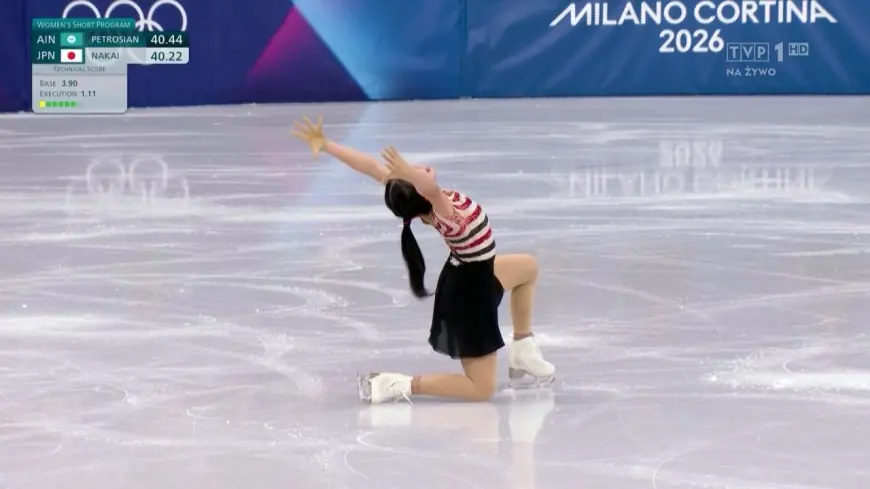
In a seismic moment for the Olympic women's event, 17-year-old Ami Nakai produced a crowd-stopping short program on Tuesday (ET), landing the first triple Axel ever seen in women's Olympic competition and taking the lead heading into Thursday's free skate. Her season-best 78. 71 displaced established contenders and set the stage for a dramatic finale.
Nakai's short program rewrites expectations
Nakai's energetic, assured performance delivered two headline developments: a cleanly rotated triple Axel and a season-best total that put her in front after the short program. The 17-year-old executed the triple Axel in full competition for the first time on the Olympic stage and left the arena buzzing. She posted a score of 78. 71, the best she has produced this season, and called her mindset a key factor: "It was my first Olympics, I had nothing to lose, " she said after skating.
The impact of Nakai's ride went beyond numbers. Her breakthrough run not only introduced a new technical landmark for the Games but also reshuffled the podium picture. Her short-program lead now forces more experienced rivals to respond under pressure in the free skate.
Title favourites keep pressure on; free skate set for Thursday (ET)
Despite Nakai's surprise, the pack of medal contenders remains formidable. Three-time world champion Kaori Sakamoto used her experience to deliver a polished short program and sits second with 77. 23 points. Sakamoto emphasized control and familiarity in her performance, noting that she settled into the music and grew more confident as her routine progressed.
Also in the hunt is Alysa Liu, the reigning world champion, who completed a clean short program to take third with 76. 59. Liu—back on the senior circuit after a brief retirement—skated with evident assurance and downplayed podium pressure, saying simply that being present and performing mattered most to her.
Other developments from the short program included an advancing skate from a Polish soloist, who earned a spot in the final phase after a solid short performance, ensuring a broader field for Thursday's medal-deciding free skate. The free skate will determine the Olympic medals and now carries extra dramatic weight after Nakai's technical breakthrough.
Momentum, inspiration and what to watch on Thursday (ET)
Nakai acknowledged that she drew energy from recent Japanese success in pairs competition, specifically the comeback victory by a Japanese pair that fought from a mid-pack short program to secure gold earlier in the week. That example underscored a wider theme at these Games: standings after the short program do not guarantee final outcomes, and momentum can swing decisively across the two segments.
For Thursday (ET), the storylines to monitor include whether Nakai can translate her technical daring and Olympic debut momentum into a composed free skate under intensified expectation; whether Sakamoto will leverage her experience to mount a late surge in her final Olympic appearance; and whether Liu's poise will be enough to close the gap and challenge for a medal. Judges will weigh technical content and program components as skaters attempt riskier jumping passes and complex choreography in pursuit of podium places.
The short program in Milan delivered an unexpected landmark in women's figure skating and tightened the race ahead of the free skate. With history made and several top contenders within striking distance, Thursday's free skate (ET) promises to be a decisive, high-stakes conclusion to the women's event.