

























Ski mountaineering Makes Olympic Debut in Bormio, Testing Strength and Speed

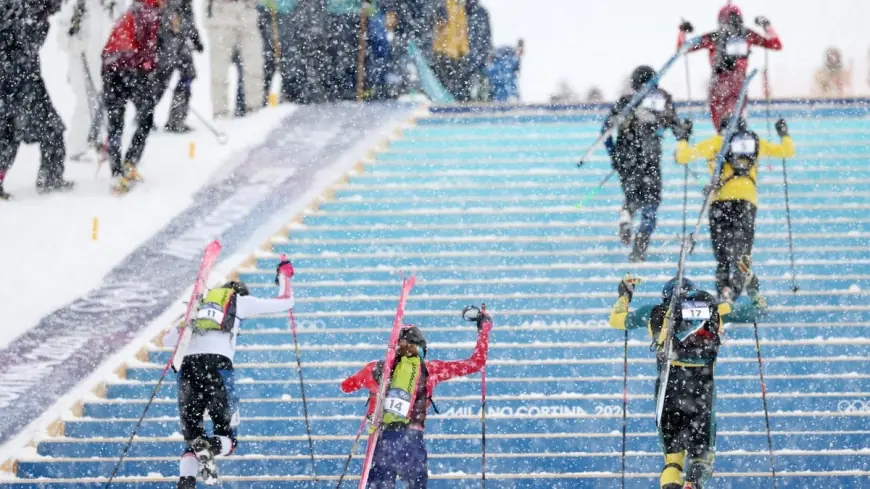
In the steep valleys above Bormio, Italy, ski mountaineering — a demanding blend of uphill climbing on skis and on foot followed by technical descents — opened at the Winter Games on Thursday, Feb. 19, 2026 (ET). The new Olympic discipline put athletes through a rapid-fire mix of power, transitions and downhill skill as the sport took its first place on the world’s biggest winter stage.
What the Olympic format looks like
The Olympic program offered short, intense sprints and a mixed relay meant to showcase the sport’s variety. Sprint heats send racers up a course using skins on their skis, through a transition where they remove skis and continue on foot, then back into skis for a final ascent of roughly 230 feet before a steep downhill sprint. Each sprint lasts about three minutes, a compact test of explosive fitness and technical efficiency.
The mixed relay is longer and tactical: the female athlete completes two ascents — reaching roughly 400 to 500 feet — and two descents before the male teammate repeats the sequence. Teams then swap once more. The whole race runs about 30 minutes and rewards not only fitness but smooth transitions, equipment handling and split-second decision making.
Transitions are the obvious drama points. Competitors use adhesive skins on ski bases to climb; they must peel those skins off, shoulder their skis for foot segments, and then reattach skis and skins under pressure. Races are often decided by razor-thin differences in how quickly and cleanly athletes execute those changes.
American presence and standout athletes
The United States fielded a small team but made an outsized impression. Cameron Smith, the nation’s most decorated ski mountaineer, and teammate Anna Gibson were among the athletes advancing through the early rounds. Both advanced into finals in part as lucky losers — gaining progression through fast times despite not automatically qualifying by place — demonstrating the fine margins at work in sprint heats.
Smith, who has been instrumental in growing the sport domestically, described the event in straightforward terms: “You have to be powerful, explosive, fast, and also be able to repeat these climbs over and over again. ” Gibson, still relatively new to the discipline, compared the intensity of skimo racing to track events, noting the sport’s dynamic and tactical nature.
Longtime competitors who helped build the pathway to the Olympics are credited with seeding youth programs and clubs that expanded the sport’s footprint, particularly in the mountain west. These development efforts, along with strong European traditions, bolstered the sport’s case for Olympic inclusion and could influence its future on the program.
Roots, gear and the sport’s prospects
Ski mountaineering traces back to centuries of mountain life when skis were necessary for trade, travel and warfare. Modern skimo borrows that heritage but pairs it with contemporary materials: skins made of synthetic fibers or mohair for uphill traction, ultralight skis and specialized bindings that speed transitions. Waxing remains crucial for uphill glide and downhill control, just as in other ski sports.
Organizers note this is the first new winter sport to join the Olympic program since snowboarding’s entry in 1998. The sport’s popularity in Alpine countries and its historic roots in mountain cultures underpin hopes it will remain in future Games; international federations are already exploring bids for inclusion at upcoming Olympic sites. Whether ski mountaineering returns to the Olympic schedule will depend on host-nation interest and how the sport resonates with global audiences.
For viewers discovering ski mountaineering for the first time, the best moments are the transitions and the downhill finishes: compact, dramatic, and often decided by a single fumbled skin or a perfectly timed shoulder carry. At the Winter Games in Bormio, a centuries-old mountain practice met modern athletic spectacle — and for many fans, the new event delivered an unforgettable introduction to a sport built on endurance, technique and alpine grit.