











![Amber Glenn Withdraws From [Event] Citing Injury, Will Miss Upcoming Season — Update](https://www.filmogaz.com/uploads/images/202602/image_430x256_6994eca04b7cd.webp)



PSG rallies past Monaco 3–2 in Champions League thriller after early two-goal hole

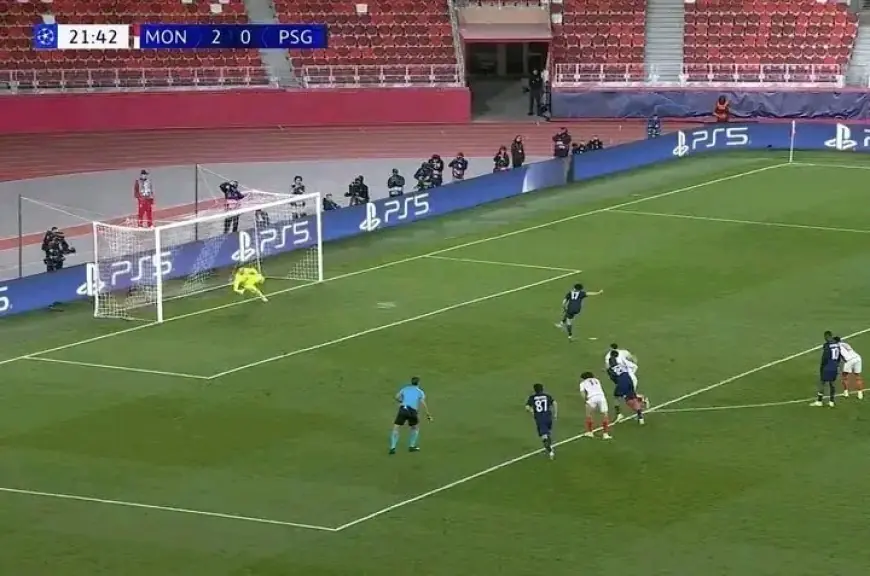
Paris Saint-Germain overturned a 0–2 deficit to beat Monaco 3–2 on Tuesday, February 17, 2026 (ET), swinging momentum in an all-French Champions League knockout tie and rescuing a night that looked headed for disaster after 18 minutes. The comeback, powered by Achraf Hakimi and a two-goal burst from substitute Désiré Doué, leaves Monaco with regrets after a red card and a second-half collapse.
A wild opening puts PSG on the ropes
Monaco stunned PSG early, racing to a two-goal lead inside the first 20 minutes and turning the Stade Louis II into a pressure cooker. PSG dominated the ball but looked open whenever Monaco broke forward, and the home side punished those spaces quickly.
The early advantage also shaped Monaco’s approach: defend deeper, spring counters, and try to force PSG into riskier passes through crowded central areas. For a while, it worked—PSG had territory and possession, but Monaco had the scoreboard and the sharper moments.
PSG’s response starts with Hakimi
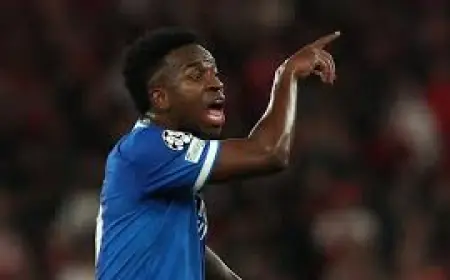
PSG’s first foothold came through Hakimi, whose goal cut the deficit and changed the emotional temperature of the match. It wasn’t just the finish; it was the signal that PSG could translate control into chances, and that Monaco’s lead didn’t guarantee safety.
From there, PSG’s pressure grew more sustained. The visitors pinned Monaco back, forced hurried clearances, and began to win second balls higher up the pitch. Monaco still had counterattacking threats, but the game started to tilt toward PSG’s rhythm rather than Monaco’s.
Doué changes the game off the bench
With the match sliding away, PSG’s best moment came from the bench. Doué entered and immediately injected direct running and better timing between Monaco’s lines. He scored twice—first to level the match, then to deliver the winner with a late, decisive finish from close range.
Doué’s impact also exposed Monaco’s fatigue and spacing. As PSG circulated the ball and switched play, Monaco’s defensive line became harder to coordinate, and gaps opened at the exact moments PSG needed them.
The red card that reshaped the final stretch
Monaco’s task became significantly harder after Aleksandr Golovin was sent off, leaving the home side down to 10 men in the decisive phase. The dismissal forced Monaco into survival mode just as PSG had found a higher gear, and it reduced Monaco’s ability to threaten PSG in transition.
Down a player, Monaco’s defensive shape narrowed and dropped, protecting the center but conceding wide areas and repeated waves of possession. PSG, already controlling the ball, now had even more time to probe—an advantage they converted into the winner.
What the result means for PSG and Monaco
For PSG, the comeback is a statement about resilience and depth. Falling behind 0–2 in a European knockout setting is usually fatal, but PSG’s ability to keep creating chances—and to find match-winning output from a substitute—will reinforce belief inside the squad.
For Monaco, the loss is a painful reminder of how thin the margins are at this level. The early burst should have placed them in control of the tie. Instead, the combination of game management issues, a costly dismissal, and PSG’s second-half pressure flipped the script.
Key takeaways
-
PSG erased a 0–2 deficit to win 3–2 away from home.
-
Doué’s two goals off the bench were the turning point.
-
Monaco’s red card made closing the match significantly harder.
-
The tie now pivots to the return meeting, with PSG holding the momentum.
What to watch next
The immediate focus shifts to how Monaco responds in the next leg: whether they can recreate the same early aggression while tightening their defensive discipline, and whether they can keep their composure under PSG’s sustained pressure. PSG, meanwhile, will look to build on the second-half control they found—especially the ability to convert dominance into clear chances rather than sterile possession.
If this first meeting is any indication, the matchup isn’t short on goals, swings, or drama. The next chapter will likely hinge on Monaco’s ability to avoid the kind of turning-point moment—a red card, a soft phase after scoring, a lapse in spacing—that PSG punished so ruthlessly on Tuesday afternoon in ET.