

























Questions Swirl Around Russian Figure Skater Adeliia Petrosian in Her Olympic Debut

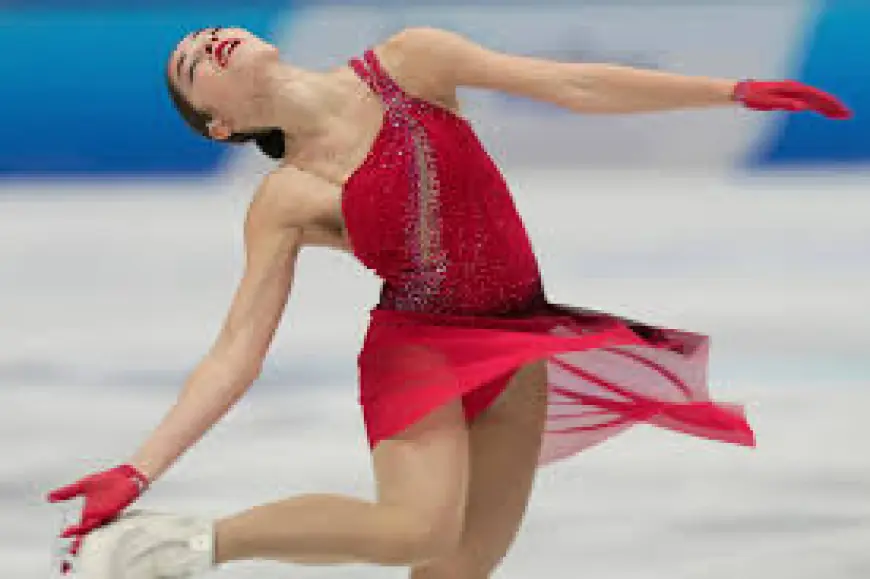
Adeliia Petrosian, an 18-year-old with a résumé that includes quadruple jumps and three national titles, stepped onto the official training ice in Milan on Monday, Feb. 16, 2026 (ET), drawing intense attention. She enters the Winter Games as a medal contender but also as an athlete whose connections to coaches and teammates at the center of a previous doping scandal have provoked scrutiny.
Practice, poise and a tightly watched arrival
Dressed in black with her hair pulled into a bun, Petrosian skated for the first time at the Olympic practice rink one day before the short program began on Tuesday, Feb. 17, 2026 (ET). Cameras followed as she executed jump after jump, including elements that have marked her as a technical standout. After the session she hurried past the mixed zone and, speaking in Russian, offered a brief line to waiting reporters: "Mood is excellent!"
For many in the international skating community, the moment was less about the greeting and more about the unknown. Petrosian has had very limited exposure outside her home country since 2022, when athletes from her nation were largely barred from global competition. Her only senior-level event beyond national borders in the past four seasons was a September qualifying competition that secured her spot in Milan, and for much of the field she remains an unknown quantity.
A promising résumé shadowed by a scandal in the program
Petrosian arrives with notable credentials: three straight national championships, regular practice of quadruple jumps and the kind of technical repertoire that could challenge the field. She trains with the same coaching team and choreographer connected to multiple recent Olympic champions. That shared environment brings with it the legacy of a high-profile doping case from the previous Winter Games, in which a teenage teammate tested positive for a banned heart medication.
There is no record of Petrosian testing positive for any banned substance, and she has not been implicated in that case. Still, the findings of an arbitration panel highlighted an intensive medical program administered to the earlier skater, documenting dozens of medications and supplements given over a two-year period beginning in early adolescence. Those revelations helped spur changes to athlete protections and led the sport to raise the minimum age for senior competition from 15 to 17.
The association between Petrosian and the people at the center of that controversy has heightened attention and unease. Some officials outside the rink have said they are uncomfortable with the optics. Inside the rink, coaches and choreographers who have produced Olympic champions remain influential, and much of the spotlight will fall on whether Petrosian can translate her training-room form into clean, competitive programs under Olympic pressure.
Medal chances in a reshaped field and lingering questions
With her country absent as a formal team, Petrosian competes as an individual neutral athlete, one of a handful of skaters from her nation allowed to take part without flag or anthem. That isolation means she could be the only skater from her training system on the podium if she reaches the top three — the first time that has been possible since the nation began its recent dominance of the women's event.
Her program includes some of the most demanding content in the competition — a triple Axel and attempts at a quadruple loop among them. If she lands those elements cleanly, she will immediately become a prime medal favorite. But fitness, readiness and the psychological weight of both expectation and scrutiny remain open questions. Few observers have seen her skate in person, and those who follow the sport say both she and her rivals bring uncertainty into the competition.
As the short program unfolds on Tuesday and the free skate follows, attention will be split between what happens on the ice and what Petrosian represents off it: a technically gifted teenager attempting to claim Olympic success while carrying the complicated legacy of a program that transformed women's figure skating — for better and, critics argue, for worse.