
























Pam Bondi’s Combative Hearing Sparks Questions About Oversight

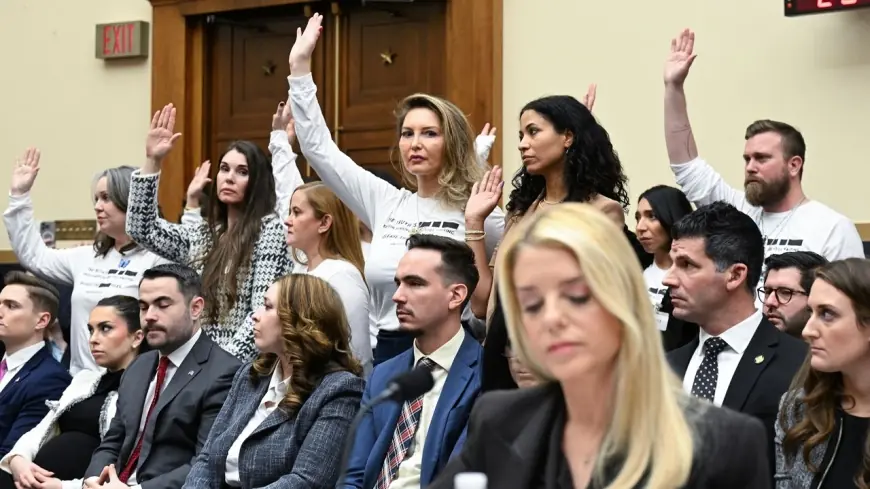
At a marathon, four-and-a-half-hour congressional hearing on Wednesday (ET), Pam Bondi engaged in sustained, sometimes personal clashes with lawmakers from both parties. Her confrontational style—marked by deflection, pointed insults and prepared attacks—left members struggling to extract facts and raised fresh questions about how executive branch officials handle oversight.
A hearing that turned personal
The session repeatedly veered from policy to provocation. Bondi pushed back with terse rebukes and barbed remarks aimed at committee members. She told Jamie Raskin, “You don’t tell me anything, you washed-up loser lawyer. Not even a lawyer, ” and instructed Hank Johnson that his “time is up. ” When pressed for details on domestic public-safety designations, Bondi snapped at Mary Gay Scanlon, saying, “You don’t get anything regarding public safety, nothing. ”
Her exchanges extended beyond the dais. Bondi arrived with a tabbed binder that lawmakers characterized as an opposition file—a “burn book, ” one member called it—and flipped to entries tying individual committee members to criminal cases in their districts. She frequently replied to questions with what-aboutism, countering inquiries by asking whether similar scrutiny had been applied to predecessors, then shifting to prepared critiques of questioners’ records.
The attorney’s confrontations did not spare members of her own party. When Representative Thomas Massie pressed for the release of certain files, Bondi dismissed him as a “failed politician” suffering from “Trump Derangement Syndrome, ” then accused him of hypocrisy for opposing an AI-related bill he had opposed on civil-liberties grounds. At other points she showered the president with praise, even as observers note tensions in her relationship with the White House.
What the hearing means for oversight
Lawmakers left the hearing frustrated at their inability to obtain clear answers or documents. The strategy of deflection, personal rebuttal and refusal to engage on the merits turned a routine oversight session into a spectacle that some members said made serious inquiry difficult.
Critics argue that when executive branch officials lean on rhetorical tactics and prepackaged political counters instead of substantive engagement, oversight loses its force. The repeated reliance on what-aboutism and personal attacks hindered committee efforts to trace policy decisions and identify accountability gaps. Even when a question was narrowly drawn, the responses often returned to past grievances or sharp retorts rather than facts.
The hearing also magnified the partisan stakes of oversight in the current era. Rather than serving as a forum for mutual fact-finding, the exchange felt calibrated for theatrical effect: lines of attack were ready, and theater often displaced deliberation. That dynamic risks reinforcing public cynicism about the usefulness of congressional oversight, especially when neither side appears willing to cede ground on protocol or tone.
Aftermath and the road ahead
For now, the hearing is likely to intensify scrutiny of both the official’s conduct and the committee’s tools for compelling information. Lawmakers may pursue subpoenas or other enforcement mechanisms if document requests remain unanswered. At the same time, the spectacle raises questions about whether hearings will become more about scoring political points than producing durable policy or accountability outcomes.
Whatever follows, the hearing underscored the gulf between the expectations of congressional oversight and the realities of partisan, personality-driven exchanges. The immediate challenge for lawmakers is to convert the spectacle into tangible results—documents, sworn testimony and enforceable remedies—before public frustration further erodes oversight’s effectiveness.