

























Lunar New Year 2026: Year of the Fire Horse ushers a blend of ritual, tech and politics

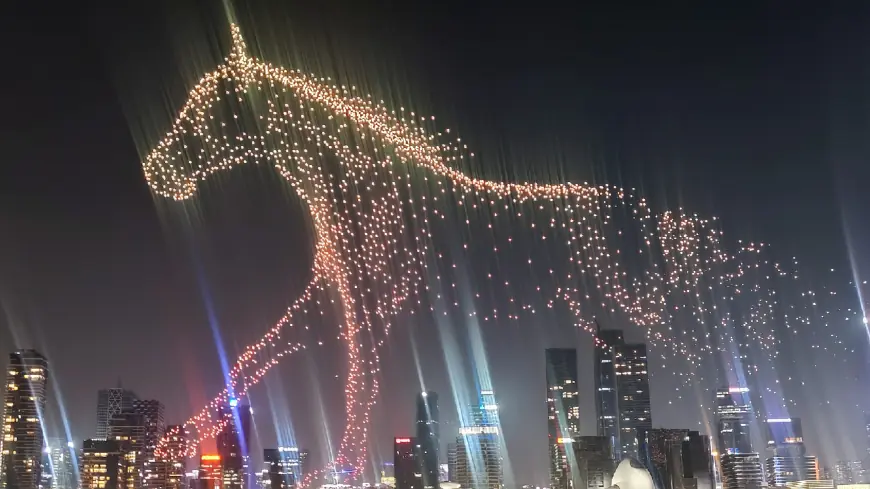
The Year of the Fire Horse is being welcomed across Asia with a mix of ancient ritual and high-tech spectacle. The 15-day Lunar New Year festival, held between Jan. 21 and Feb. 20, 2026 ET, has seen bamboo-horse dancing and dragon processions occur alongside massive drone formations and a flurry of new artificial-intelligence product rollouts. At the same time, cultural shifts and a tightened online content climate have shaped how communities celebrate.
Tradition reframed: dance, food and simplified rituals
Longstanding customs remain central to the holiday. In parts of Southeast Asia, yusheng — a raw fish salad that must be tossed together with chopsticks — is a staple of reunion meals, while in South Korea tins of luncheon meat continue to be exchanged as New Year gifts. Yet many families are streamlining observances. In the South Korean capital, a rising number of households are skipping elaborate ancestor tables; recent polling shows more than 60% plan not to set up the traditional charye altars this year.
In east China’s countryside, heritage performances have enjoyed a revival with modern flourishes. Hundreds of performers in Chun'an County staged large-scale bamboo-horse dances, a folkloric form dating back to the Southern Song Dynasty, with organizers noting the art has evolved from small village groups into county-wide spectacles that now draw all ages. One local cultural leader emphasized the need to preserve technique while blending street dance and new choreography to attract young participants.
High-tech pageantry and viral culture
Urban centers answered tradition with technological bravado. In a major southern city, thousands of drones choreographed an aerial “ten thousand horses galloping” sequence that filled the night sky with flowing manes, hoof prints and the Chinese character for "horse. " Organizers highlighted upgrades in algorithms and centimeter-level precision that allowed the fleet to maintain tight formations and dynamic 3D effects. The show drew hundreds of thousands of viewers on site.
At the same time, a small plush toy made in error became a cultural phenomenon. A horse soft toy with an upside-down smile — its expressive, glum face the result of a mistaken stitch — sold out fast after images circulated online. The shop owner said customers identified with the toy’s downcast look, joking that it captures daytime workplace fatigue while a smiling version represents life after hours. The plush’s runaway popularity underscored how light, relatable moments can cut through larger festive narratives.
Commerce, AI rollouts and diplomatic greetings
The holiday has also doubled as a commercial and tech showcase. Major e-commerce promotions ran during the lead-up to the New Year, and a recent coupon campaign generated more than 120 million orders in six days. China’s tech sector timed several high-profile AI announcements to the festival period: a next-generation model from a prominent firm was preparing to debut, a widely used chatbot received upgrades, and a video-generation model capable of cinematic clips from minimal prompts was introduced. One platform promoted a new model aimed at agentic commerce — using AI to drive more autonomous online shopping experiences.
Beyond commerce and culture, the New Year brought diplomatic outreach. Leaders and international organization chiefs sent messages of goodwill and cooperation to mark the calendar turn, underlining the festival’s ongoing role as a moment for state-to-state engagement and soft diplomacy.
As the 15-day festival moves toward its Lantern Festival close, the 2026 celebrations illustrate a region negotiating modern pressures and digital opportunities while keeping centuries-old customs alive. From family tables to public squares and the skies above, the Fire Horse year has been a vivid reminder that tradition can be both resilient and adaptable.