




















Ric Flair Retirement Talk Reignites After “One More Match” Buzz, While Legal Fight Over Celebrity Licensing Escalates

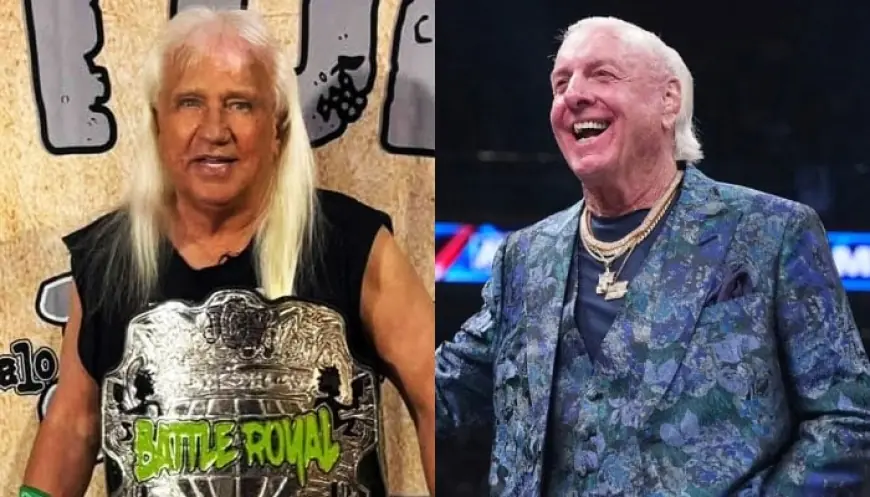
Ric Flair is back at the center of wrestling’s most familiar debate: is he really done for good? In recent days, the 76-year-old Hall of Famer has fueled fresh speculation about a possible return tied to another “last match” pitch, only for the idea to be publicly cooled by the very opponent fans immediately latched onto—veteran tag-team legend Ricky Morton.
At the same time, Flair’s name is also circulating far from the ring, as a high-stakes civil lawsuit connected to celebrity licensing and a cannabis-brand venture moves through the courts. Together, the two storylines highlight the modern reality for legacy stars: retirement is as much about public expectation and brand management as it is about physical ability.
What happened: “Last match” talk rises, then gets shut down
The latest flare-up began after Flair discussed being approached about another “last match” concept during a virtual fan signing. The pitch included Morton as a possible opponent—an angle that immediately caught fire online because both men are revered for longevity and old-school credibility.
But the momentum didn’t last. Morton responded publicly, indicating he wasn’t interested in turning a past milestone into a repeat. Flair, for his part, emphasized that he considers himself retired, reinforcing that he is not actively planning a return despite the renewed chatter.
The episode reads like a classic wrestling feedback loop: a single comment creates a tidal wave of fantasy booking, and the performers then have to decide whether to ride the wave for attention or kill it to protect the finality of prior career decisions.
Behind the headline: incentives, stakeholders, and why “retired” rarely stays final
Context matters. Flair’s 2022 farewell bout was marketed as a definitive last chapter, and his health history has made the idea of another match especially sensitive. Even if a new match never materializes, the mere discussion delivers something valuable in today’s attention economy: visibility.
The incentives are straightforward:
-
Promoters benefit from the scarcity effect of a legend’s “final” appearance, then benefit again when “final” becomes “final again.”
-
Flair benefits from staying relevant without having to commit to a full comeback cycle.
-
Fellow veterans like Morton carry reputational risk if fans perceive them as enabling something unsafe or purely cash-driven.
-
Fans are the emotional engine of the cycle, rewarding even vague hints with massive engagement.
There’s also a modern twist: many “return” rumors now start in informal settings—signings, podcasts, quick remarks—rather than formal announcements. That blurs the line between an offhand comment and a business signal.
The other Ric Flair headline: a court fight over celebrity licensing
Away from wrestling storylines, Flair is also tied to a legal dispute involving a celebrity licensing venture. The lawsuit seeks major damages and alleges serious misconduct by former business partners, including claims of financial wrongdoing connected to a branding effort.
In the latest procedural development, the defendants received additional time to respond in court. That kind of extension is common, but it matters because it stretches the timeline and keeps the dispute alive in public view. It also raises the odds that the next major milestone becomes a motion-heavy phase—arguments over what evidence must be produced, what claims survive, and whether the case moves toward settlement talks or a prolonged fight.
What we still don’t know
Several key questions remain open, and they will shape how this story evolves:
-
Whether any promoter is actively pursuing a sanctioned Flair match, or if the “pitch” was exploratory noise
-
Whether Flair’s camp will draw a hard line that closes the door permanently, or keep the ambiguity as a strategic posture
-
How the licensing lawsuit develops once responses are filed and the case moves into deeper procedural steps
-
Whether any additional business partners or entities become central as filings and evidence disputes expand
Second-order effects: why this matters beyond one legend
Flair’s situation is a case study in how modern legacy fame works. Every retirement reversal—real or rumored—nudges the industry toward a higher-risk standard, where older performers feel pressure to “top” their own endings. It also complicates how fans evaluate authenticity: a heartfelt farewell can start to feel transactional if it’s repeatedly revisited.
On the business side, the lawsuit highlights a recurring hazard for celebrities in licensing deals: the brand value is enormous, but the control over operations and finances often sits elsewhere. When disputes surface, the celebrity name becomes both the asset and the headline.
What happens next: realistic scenarios and triggers
-
The match buzz fades quickly. Trigger: no promoter steps forward with concrete terms and medical clearance messaging.
-
A “non-wrestling” appearance replaces the match idea. Trigger: an event offers Flair a spotlight segment without physical risk.
-
The lawsuit accelerates into a more public phase. Trigger: new filings, motions to dismiss, or discovery fights that reveal sharper claims and defenses.
-
A settlement track emerges. Trigger: mediation signals, narrowed claims, or business pressures that make a negotiated exit attractive.
-
Another retirement rumor cycle begins. Trigger: a new offhand comment, anniversary event, or cameo that fans interpret as a comeback hint.
For now, the clearest takeaway is this: Ric Flair remains a cultural force powerful enough to move headlines with a sentence—and that power comes with a constant tug-of-war between legacy, safety, and the business incentives that never truly retire.