




















JFK Jr. and Carolyn Bessette Kennedy Love Story Returns to the Spotlight in New Limited Series, With Sarah Pidgeon and Paul Anthony Kelly Leading the Cast

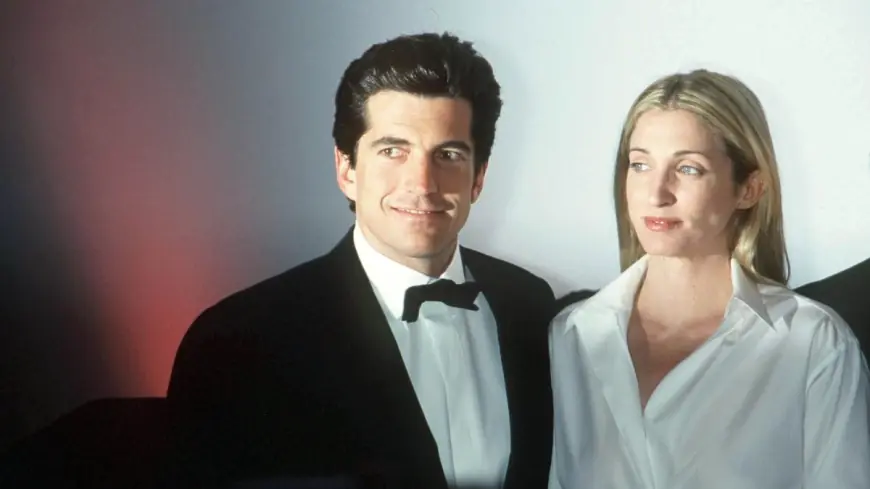
A new limited series centered on John F. Kennedy Jr. and Carolyn Bessette Kennedy premiered on February 12, 2026 ET, reopening a public fascination that never fully faded: how a relationship that looked like a modern American fairy tale became a pressure cooker under relentless attention, and ended in tragedy. The project frames their romance as a “love story,” but its real subject is the collision between celebrity, family legacy, and the costs of being watched.
The headline hook is simple, and powerful: JFK Jr. and Carolyn Bessette Kennedy, dramatized for a new generation. The harder question is what a retelling can add beyond the well-known ending.
Love Story: what the series covers, and why it’s landing now
The series tracks the whirlwind arc from meeting and courtship to marriage in 1996, then the tightening vise of scrutiny that shaped how they moved, worked, and fought. The story ultimately points toward the fatal plane crash on July 16, 1999 ET, when Kennedy Jr., Carolyn, and her sister Lauren Bessette died.
Releasing this kind of story in early 2026 is not an accident. Biographical drama has become a reliable way to blend prestige with mass attention, especially when the subject already lives in the public imagination through photographs, tabloid memory, and nostalgia. The Kennedy name adds instant recognition. Carolyn Bessette Kennedy adds a separate, enduring intrigue: style, mystery, and the sense of a life that was never fully knowable from the outside.
Love Story cast: who plays JFK Jr., Carolyn, and the Kennedys
The two central roles are played by Paul Anthony Kelly as John F. Kennedy Jr. and Sarah Pidgeon as Carolyn Bessette. The supporting cast leans into the gravitational pull of the wider Kennedy orbit and the fashion-world backdrop:
-
Naomi Watts portrays Jacqueline Kennedy, placing the mother-son relationship and the family’s public history in the foreground.
-
Grace Gummer plays Caroline Kennedy, a key presence because the story is not only about a couple, but about a family brand with strict expectations and constant attention.
-
Alessandro Nivola plays Calvin Klein, a reminder that Carolyn’s identity was also professional, tied to a high-visibility industry where image is currency.
This casting choice signals the series’ intent: it’s not just romance, it’s systems of power around romance.
JFK Jr., Carolyn Bessette, and the real pressures behind the headline
“Love story” is the marketing label. The real engine is incentives.
For JFK Jr., the incentives were contradictory: build an independent life while carrying a name that made independence almost impossible. For Carolyn, the incentive was privacy, which clashed with a media environment that treated her as a visual symbol first and a person second. For everyone around them, the incentives were reputational: protect the family, protect careers, protect the narrative.
That clash helps explain why retellings keep returning. The couple’s relationship became a stage where the public projected fantasies about class, glamour, and destiny. In reality, the stakes were mundane and brutal: where you can go without being photographed, how you argue when your front step is a set, and how quickly public interest turns into harassment.
The story also intersects with JFK Jr.’s earlier dating life, including a high-profile relationship with actor Daryl Hannah. That history matters because it shows how long the “most eligible bachelor” storyline followed him, and how hard it was for any partner to escape the role the public wrote for them.
What we still don’t know, and what viewers should be cautious about
Even the best dramatization faces a core limitation: private conversations, motivations, and moment-to-moment dynamics are often unknowable. That gap creates the temptation to fill in blanks with scenes that feel emotionally true but may not be factually verifiable.
Key missing pieces viewers will watch for as episodes roll out:
-
How the series handles rumors versus documented events
-
How it depicts Carolyn’s inner life beyond aesthetics and headlines
-
Whether family dynamics are shown as nuanced relationships or simplified archetypes
-
How it frames the final months leading to July 1999 without turning tragedy into a plot device
What happens next: release cadence and realistic scenarios for how the story evolves in public
The premiere arrived as a three-episode drop on February 12, 2026 ET, followed by weekly Thursday releases at 9 p.m. ET, with a nine-episode run scheduled to end March 26, 2026 ET.
Over the next few weeks, expect these scenarios:
-
Audience debate splits between “romance” and “cautionary tale,” depending on how the show balances tenderness with pressure.
-
Carolyn Bessette Kennedy’s image re-enters fashion discourse, with renewed attention on how the public consumed her style as shorthand for her identity.
-
Caroline Kennedy’s portrayal becomes a focal point, since it touches an ongoing family legacy rather than a closed historical chapter.
-
Viewers push for clearer fact-versus-fiction boundaries, especially around sensitive scenes that imply motives or blame.
-
The cast becomes part of the story, with performance praise or backlash shaping how the series is discussed week to week.
Why it matters now is less about re-litigating the past and more about what the past reveals: the machinery of fame still works the same way, only faster. This retelling succeeds or fails on whether it treats JFK Jr. and Carolyn Bessette Kennedy as full people inside an inescapable spotlight, not as icons arranged for a tragic ending.