



















Olympic Hockey: U.S. Women’s Hockey Rolls Past Sweden, 5–0, to Reach the Women’s Hockey Olympics Gold Medal Game

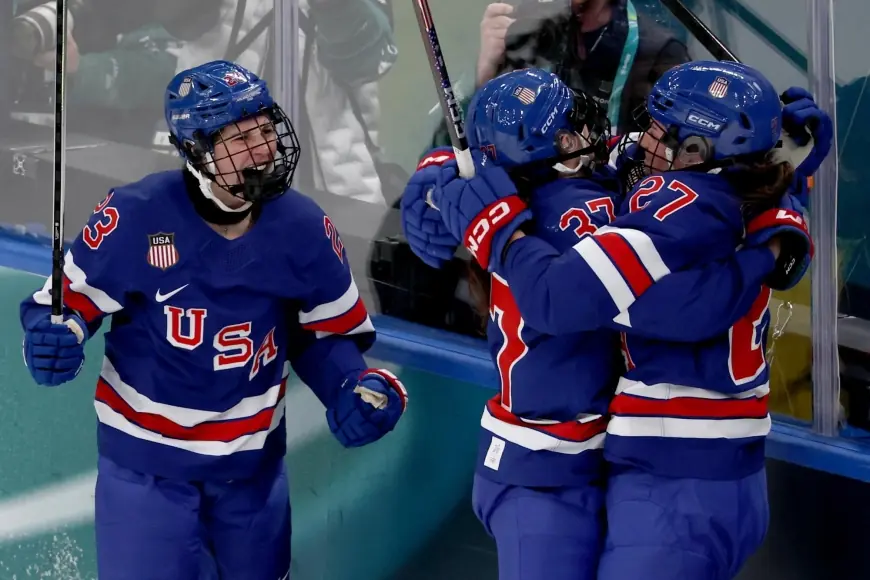
The U.S. women’s hockey team is one win from Olympic gold after a 5–0 semifinal victory over Sweden on Monday, February 16, 2026. The result keeps the Americans unbeaten in women’s Olympic hockey and adds another emphatic chapter to a tournament run defined by pace, depth scoring, and relentless defending.
The gold medal game is scheduled for Thursday, February 19, 2026 at 1:10 p.m. ET. The opponent will be decided by the other semifinal, leaving the U.S. waiting while carrying serious momentum into the final.
Women’s Hockey Olympics Semifinal: USA vs Sweden Hockey, What Happened
The game began with Sweden trying to slow the pace through structured breakouts and conservative gaps, aiming to force the U.S. into perimeter shots and chip-and-chase hockey. That plan held for stretches, but it cracked once the Americans opened the scoring and turned the matchup into a skating contest.
The U.S. led 1–0 after the first period, then detonated the game in the second with four goals to put the outcome out of reach. Taylor Heise’s finish in the middle frame was a turning point, not only for the scoreboard but for the way it forced Sweden to take risks that the Americans punished on the counter and in sustained zone time.
Kendall Coyne Schofield’s speed showed up in the way she backed defenders off the blue line and helped create space for second-wave attacks. On the back end, Megan Keller’s steady puck movement and defensive reads helped keep Sweden’s chances limited and predictable. In net, the U.S. turned away every Swedish push to complete the shutout.
USA Women’s Hockey Scores: A Tournament Trend, Not a One-Off
This semifinal looked like an extension of what the U.S. has done throughout the women’s hockey Olympics so far: compress the ice, win races to loose pucks, and turn possession into layers of chances. The eye test and the numbers are telling the same story. The Americans have scored in bunches, used a wide distribution of goal scorers, and conceded almost nothing at even strength.
That balance matters because Olympic tournaments are short. One cold line, one off night in net, one unlucky bounce can end a medal bid. The U.S. has insulated itself from that variance by getting contributions across the lineup and by defending in a way that keeps goaltending outcomes stable rather than heroic.
Behind the Headline: Why This U.S. Women’s Hockey Team Looks Built for February Pressure
Context matters here. Women’s Olympic hockey has long been shaped by a small group of contenders, and the margins at the top are usually thin. The U.S. is trying to tilt those margins by playing a modern tournament style: fast retrievals, quick exits, aggressive support on the forecheck, and a willingness to attack off the rush without sacrificing defensive structure.
The incentives are clear. Veterans want a defining medal moment, while younger stars want to lock in long-term roles as the program cycles forward. For leaders like Coyne Schofield, the urgency is also about setting the standard shift-to-shift. For prime-age standouts like Heise, it is about translating star skill into the hardest minutes against the best opponents. For defenders like Keller, it is about controlling the game when goals are scarce and nerves are loud.
Stakeholders extend beyond the roster. Coaches are staking their systems on the biggest stage. Program leadership is defending a pipeline that has to keep producing against global investment. And rivals are watching closely, because a tournament where the U.S. is both scoring freely and giving up almost nothing changes how opponents must game-plan.
What We Still Don’t Know: The Missing Pieces Before the Gold Medal Game
Even after a 5–0 semifinal, key unknowns remain:
-
Who the U.S. will face on Thursday, and what style that opponent will bring
-
Whether the final will be open and track-meet fast, or tight and special-teams heavy
-
How quickly the U.S. can reset emotionally after a lopsided win, since finals often start tense and cautious
-
Whether any lineup tweaks emerge from bumps, fatigue, or matchup preferences as the staff tries to optimize for one last game
What Happens Next: Realistic Scenarios and Triggers in Olympic Hockey
Here are the most plausible paths into Thursday, with the triggers that matter:
-
A high-tempo final: If the opponent trades rush chances, the U.S. will lean into speed and depth to wear teams down by the second period.
-
A trench-war final: If the opponent clogs the middle and slows entries, the U.S. will need disciplined shot selection, net-front layers, and patience.
-
A special-teams swing: If early penalties stack up, the game could hinge on power-play execution and avoiding momentum-killing mistakes.
-
A one-goal goalie duel: If scoring dries up, puck management at both blue lines and rebound control become the difference-makers.
-
A fast start decides it: If the U.S. scores first, it can force opponents out of their comfort zone and into riskier hockey.
Why It Matters for Olympic Hockey and USA Hockey Olympics Ambitions
This run is not just about one semifinal scoreline. It is a statement about how the U.S. women’s program wants to win now: with speed, pressure, and defensive certainty that travels from game to game. If the Americans lift gold on Thursday, it will validate a formula that is increasingly becoming the blueprint for international women’s hockey success. If they fall short, the semifinal will still be remembered as evidence that the U.S. standard is high enough to reach the final, but that the last step demands perfection.