



















Matt Weston and Tabitha Stoecker clinch mixed team skeleton gold as Britain makes Winter Olympics history

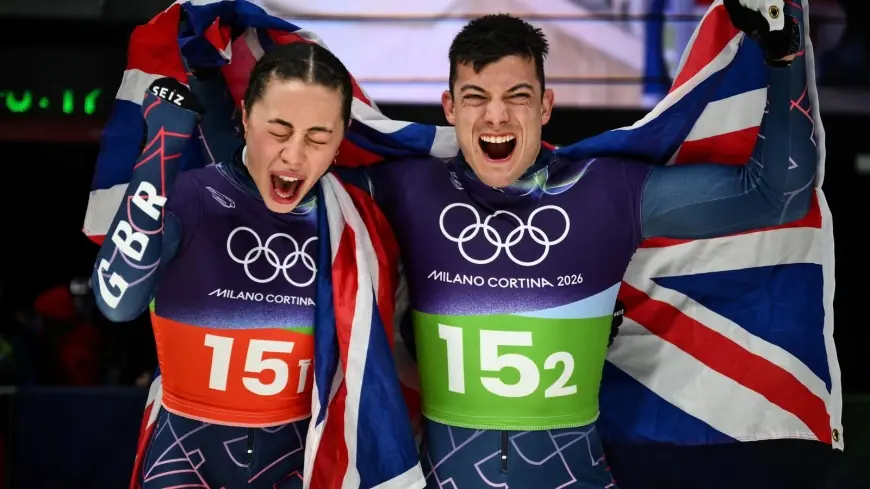
Matt Weston and Tabitha Stoecker sealed a dramatic mixed team skeleton victory on Sunday (ET), ensuring Great Britain a landmark third gold at these Winter Olympics. Weston added a second Olympic title to the individual gold he won two days earlier (Friday ET), becoming the first Briton to win two Winter Olympic gold medals.
Weston's decisive run delivers a second gold
Stoecker, 25, set a strong opening leg with a time of 1: 00. 77, leaving Weston with work to do as the final slider and the last pair on the track. Weston, 28, produced a composed, near-flawless run of 58. 59 seconds to secure the mixed-team triumph with a combined time of 1: 59. 36. His performance under pressure reinforced why he is viewed as the sport's pre-eminent competitor and capped a remarkable week that began with his individual victory on Friday (ET).
“The individual event is amazing but doing it as a team when we're normally an individual sport is amazing, ” Weston said after the race. “To have my team-mate by my side as Olympic champions, two-time for me which is crazy. I'm looking forward to the celebrations!” Stoecker added that she was in shock when Weston crossed the line and they found themselves in the lead, praising the pair effort that produced the title.
Tiny margins, tense starts and deep British depth
The mixed-team format, making its debut at these Games, pairs sliders in quick succession with a start-light system that demands precision. Competitors must time their push perfectly after five red lights go out; jumping the gun brings heavy penalties or disqualification. That pressure produced some cautious opening pushes, and penalties in other heats reshaped the leaderboard.
A one-second penalty for an early start in the Austrian team opened up opportunities for contenders, but the British pair still had to deliver to claim gold. Two German teams pushed Britain hard: Christopher Grotheer and Jacqueline Pfeifer took silver, while Axel Jungk and Susanne Kreher claimed bronze. A second British pairing, Marcus Wyatt and Freya Tarbit, missed the podium by a heart-breaking 0. 01 seconds, underscoring how small differentials decided medals in Cortina.
Legacy and momentum for British skeleton
Weston's double gold elevates him to the most decorated British athlete in Winter Olympic history and marks a milestone for the national programme. The mixed-team success, combined with an earlier snowboard mixed-team gold earlier in the day, produced a historic moment: Britain claimed two Winter Olympic golds on the same day for the first time and its best-ever single-Games gold haul.
The victory also carried wider resonance for the sport back home. Weston's rise — from a 2017 switch into skeleton after earlier experience in rugby and taekwondo to a World Cup debut in 2020 — has been framed as part of an effective talent-identification pipeline. His triumphs have generated a surge of interest in the sport, while the result in Cortina demonstrates both the depth of British sliders and the payoff from targeted investment in coaching and athlete development. Teammates, former champions and the wider camp watched as a moment that once seemed improbable unfolded on the ice: individual excellence converted into team gold and a fresh chapter in Britain's skeleton story.