












Matt Weston and Tabitha Stoecker secure historic mixed team skeleton gold in Cortina

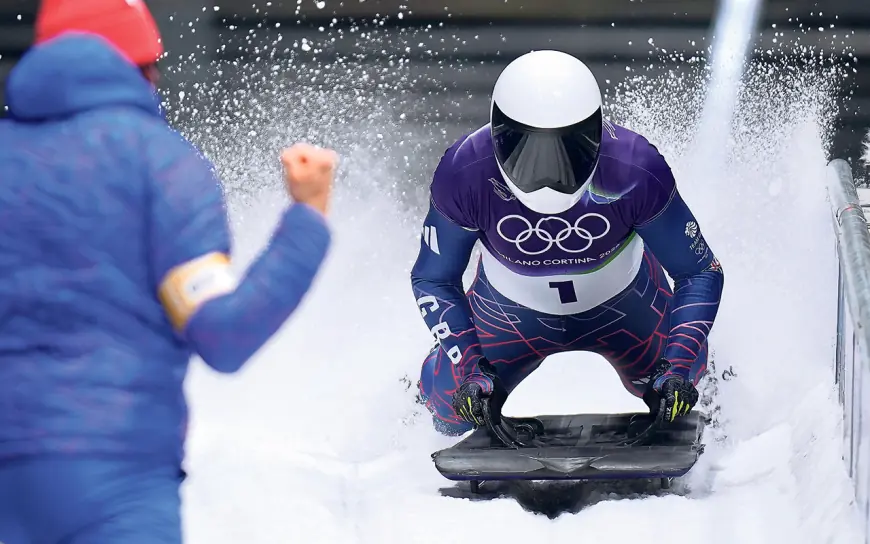
Matt Weston and Tabitha Stoecker combined for a comeback-packed victory in the debut mixed team skeleton event on Sunday (ET), delivering a golden finale that gave Great Britain its third gold of these Winter Games and made Weston the first Briton to claim two Winter Olympic golds.
Weston seals history with a sublime run
Stoecker, 25, opened for the British pair with a solid 1: 00. 77 run that left the top-seeded duo 0. 30 seconds behind the leading Germans. The pressure fell to Weston, who had already produced his nation’s first medal of these Games with an individual triumph days earlier. Weston answered in emphatic fashion, blasting down the track in 58. 59 seconds — the fastest men’s run of the session — to deliver a combined time of 1: 59: 36 and clinch gold.
The win pushed Weston into the history books: not only is he the first British athlete to win two Winter Olympic gold medals, he also became the most decorated man in British Winter Olympic history. Celebrating alongside his teammate, Weston called the team victory a special complement to his individual success and said he was looking forward to the celebrations that would follow.
Tight margins, dramatic penalties and national depth
The mixed relay format, making its Olympic debut in Milan–Cortina, requires sliders to launch in quick succession once five red lights go out. A false start carries severe penalties and at least one elite competitor paid the price: Austria’s Janine Flock, fresh from a recent women’s win, triggered a one-second penalty for an early push and saw her team’s medal hopes evaporate as a result. That hesitation underlined the razor-thin margins that decide medals in this sport.
Two German teams pushed hard and ultimately claimed silver and bronze. Christopher Grotheer paired with Jacqueline Pfeifer for silver, while Axel Jungk and Susanne Kreher took bronze. A second British entry — Marcus Wyatt and Freya Tarbit — missed the podium by a sliver, finishing just 0. 01 seconds off a medal position. In that sense, British strength in depth was unmistakable: both teams were in contention until the final runs.
What the result means for British skeleton and the wider Games
The mixed-team gold completes a landmark day for the British delegation: it marks the first time the nation has claimed two Winter Olympic titles on the same day, and the first time Great Britain has walked away from a single Winter Games with three gold medals. The result is likely to boost interest in sliding sports back home; previous Olympic success has translated directly into spikes in grassroots sign-ups and talent searches.
For Weston personally, the trajectory has been remarkable. A talent identification route and a rapid rise through international competition have delivered a breakthrough that seemed unlikely after a disappointing finish four years earlier. His two golds here underscore both his resilience and the long-term investment that has underpinned national skeleton success.
Stoecker’s composure in the opening leg and Weston’s clinical response under pressure combined to deliver a headline-making performance — one that both highlights the drama of Olympic skeleton and reinforces Britain’s place among the sport’s elite nations at these Games.