

















Rupert Lowe launches Restore Britain as national party after split with former colleagues

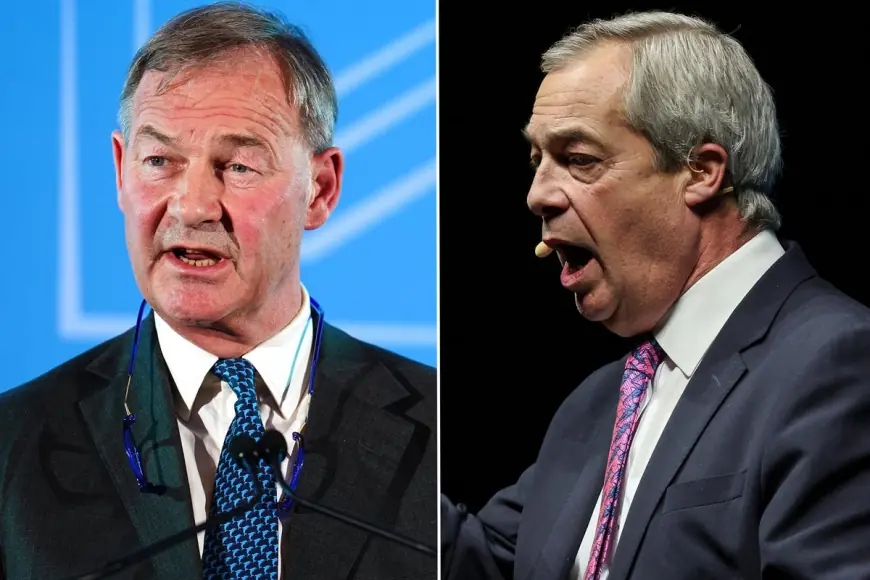
Rupert Lowe, the Great Yarmouth MP who was elected as a Reform UK representative in July 2024 and now sits as an independent, has formally launched Restore Britain as a national political party. The announcement was made on Friday night (ET), transforming a movement he created after his suspension from his former party into an umbrella organisation intended to partner with local groups.
From movement to party: an umbrella model
Lowe initially set up Restore Britain as a political movement following his suspension last March. He presented the new party as an umbrella vehicle that will accept partnerships from locally based political outfits rather than imposing a centralised structure. One immediate example is Great Yarmouth First, a local group expected to be a partner; Lowe is anticipated to stand again for the Great Yarmouth seat under that arrangement.
In media statements accompanying the launch, Lowe framed Restore Britain as filling a perceived gap on the right of the political spectrum, one that prides itself on independence of mind and a close connection to local voters. He has argued that mainstream politicians are out of touch with the public and points to his seaside constituency as evidence. Lowe had hoped his local creation would make an early impact in this year’s local elections, but those contests in his area were cancelled, strengthening the case he presented for a national-level vehicle.
Controversy, departures and reputation
The move to formalise Restore Britain comes after a turbulent period for Lowe. He was suspended from his previous party amid allegations that he made threats against the party chairman. Lowe has consistently denied the claims, describing the complaint as vexatious, and the Crown Prosecution Service later said there was insufficient evidence for a realistic prospect of conviction.
The shift from movement to party has prompted a reassessment among some figures who had been involved with Lowe’s project. Senior political operatives who sat on an advisory board while it was a movement are understood to be stepping back now the organisation is a registered national party. Those departures leave questions about the depth of wider political support and the future makeup of the party’s advisory structures.
A regional political editor described Lowe as a maverick MP who is not especially collegiate, a trait that contributed to his split with his former party. That same editor noted anecdotal private polling shown to both Labour and Lowe’s own team suggesting he would perform strongly in his constituency if a general election were held now. Those indications underpin Lowe’s confidence that there is space for another right‑of‑centre grouping willing to campaign on localism and independence from Westminster orthodoxy.
What next for Great Yarmouth and the wider right
With Restore Britain now a national party on paper, attention will turn to its organisational capacity and electoral strategy. The umbrella model could enable a loose federation of local parties and independent groups to coalesce under a single banner at key moments, but success will depend on building a coherent platform and team beyond its founder.
Locally, the spotlight will fall on Lowe’s plans to contest Great Yarmouth again, and on whether his personal following in the town translates into votes for partner organisations. Nationally, the new party will seek to attract voters and activists who feel disillusioned with existing options on the right. How much ground Restore Britain can capture — and whether it can maintain the involvement of prominent political figures who have been associated with it in the past — remains to be seen.
For now, Lowe has turned a post‑suspension movement into a formal political vehicle and positioned himself at its centre. The coming months will test whether that bet pays off electorally and whether Restore Britain can move beyond the contours of a personality‑led project to a sustainable political force.